

Three ways to enjoy and invest in Minnesota’s small towns and countryside attractions, which hold an abundance of value
1. Hit the road for farm fresh agritourism

Pick-your-own berries. Barn weddings. Instagrammable sunflower fields.
These aren’t just fun ways to spend a Saturday. Activities like these, known as agritourism, can provide valuable community connection and a diversification strategy for farms.
“Agritourism is where ag and tourism intersect,” says Ryan Pesch, Extension educator in agricultural business management. “Farmers are motivated by the idea of educating and engaging customers about agriculture while also diversifying their revenue stream. They want to get people on the farm.”
For Brenda Olson and her family, it began over a decade ago when they grew too many pumpkins. “So we ended up putting them in a wagon to sell with a sign that said, ‘Thea’s pumpkins.’” Thea, Olson’s daughter, was 4 years old at the time. Now Thea is in college, and Thea’s Pumpkin Patch in Otter Tail County has grown to include 30+ varieties of pumpkins, a u-pick flower patch, a corn maze, mini golf and more.
Extension resources on topics such as inventory and planning on how to get where they want to be have been helpful for their operation. “Extension is an integral part of our home life, our business, everything,” says Olson.
Thea hopes to take over at some point. And from Brenda’s perspective, “That would be a perfect part-time retirement.”
Business planning also helps manage risks, like pests, fluctuating markets and extreme weather. Agritourism can help balance income, but it has its own risks. Extension’s Tourism Center and the Center for Farm Financial Management are connecting agritourism operators in Minnesota to each other and to business planning resources so they can manage risk and protect themselves, their visitors and their property.
2. Start seeing art and culture
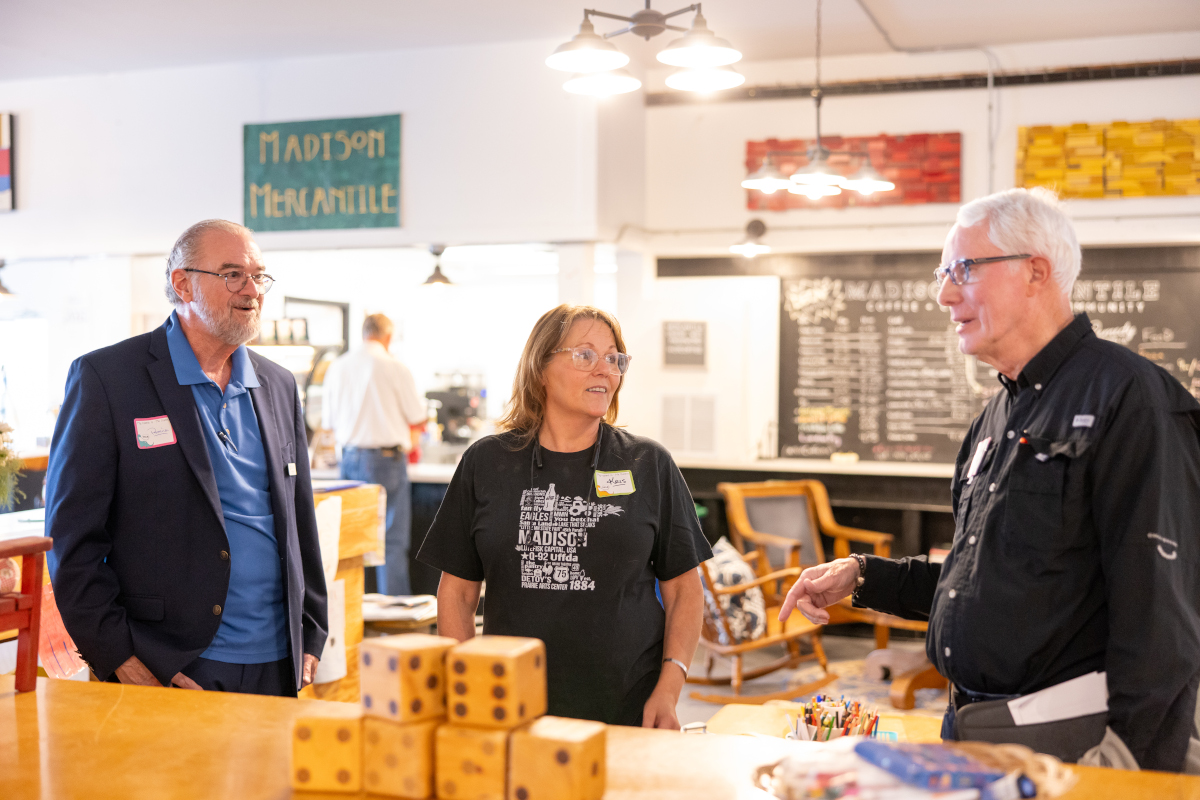
You don’t have to go into a big city to experience art. You do have to start seeing it. The Madison Mercantile in Madison, Minn. has made that easier by showcasing local arts and crafts.
“Sharing the space with art is baked into our mission,” says Kris Shelstad. She opened the community-oriented space in a repurposed lumber yard — more recently a hardware store — after moving home to Madison from life in the military and in Austin, Tex. “There is no place I would rather be than this, my hometown.”
In fall 2024, Extension hosted a day for leaders from across Minnesota at “the Merc” to learn about what it took from Shelstad, and other community leaders and members, to witness the town’s evolution. A tour explored storefront design, murals and sculptures, the Prairie Arts Center, and affordable housing. Conversation continued at The Sticks Bar and Grill, where new owners shared their entrepreneurial story.
“My colleagues and I are grateful to Kris and other Madison leaders for giving Extension participants an experience to see and hear about what a difference their actions have made,” says Neil Linscheid, Extension community economics educator.
From a local gym, to theater, to outdoor gathering spots and repurposed buildings, the results are building pride and attracting locals and visitors alike to town businesses.
In another example of art being “baked” into her mission, sourdough bread samples, also available for purchase by the loaf, made an appearance at the Madison Mercantile on the afternoon of the tour. The space hosts a variety of local foods distribution and grower networking opportunities.

3. Support local initiatives
Baby boomers’ wealth is transferring to the next generation. In fact, over the next 10 years, $61 billion will change hands as baby boomers sell homes and farms and pass their wealth to the next generation.
Historically, the next generation lived close to home, so wealth stayed in town. But in a more mobile society, children often move to another city, state, or country. That means the community that helped build the wealth doesn’t benefit from it long term.
“Communities often have much more wealth available than they realize,” says Ben Winchester, Extension’s rural sociologist.
Winchester and his team are calculating the amount of wealth transfer that will happen in Minnesota and in several other states. Their goal is to help communities recognize the potential for philanthropy — and to plan for the future.
“When we fail to see the wealth we have available, we fail to dream about the future,” says Winchester. “Baby boomers may appreciate the chance to invest some small percentage of their wealth in the future of their community — if they can buy into a vision created
by neighbors and friends.”
Extension’s website is the home of data about wealth transfer in Minnesota, including:
- A map that reveals key information for each Minnesota county about how much wealth will be transferred in the next decade, and what capturing just 5% of that wealth might bring to communities.
- In-depth county summary reports about wealth transfer in 2024.
- Regional and state reports about Minnesota’s wealth transfer.
- Guides for interpreting data correctly.
- Information about how Extension can help communities use their reports and plan for the future.
- Links to inspirational websites from other states that have taken advantage of wealth transfer.
- An opportunity to subscribe and receive future updates, analysis and community stories.

Minnesota’s baby boomers are preparing to hand down their collective wealth and assets — a whopping $61 billion (that’s billion with a B) — during the next 10 years.
University of Minnesota Extension educator and rural sociologist Ben Winchester believes that where those billions go could make a huge difference to communities for generations to come. Read Finding the hidden millions in Minnesota’s small towns to learn more and find county-specific data.
Permission is granted to news media to republish our news articles with credit to University of Minnesota Extension. Images also may be republished. Check for specific photographer credits or limited use restrictions in the photo title.