Identify beneficial insects and insect pests, and how to encourage or control them in your yard and garden.
Preventing pests in your yard and garden
Many yard and garden pests can be controlled successfully without pesticides.


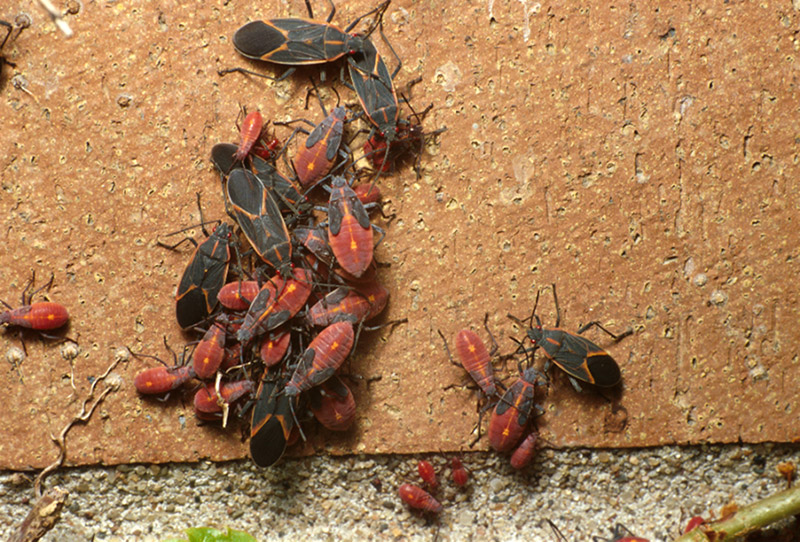
Find research-based information on both helpful and harmful insects, spiders, and other insect relatives.
Learn how to identify, prevent and control common household insect infestations, and when to tolerate beneficial insects.
These insects live in walls and crawl spaces and generally infest places where people live. Some can cause real damage and may need professional help to control them.
Carpenter ants are usually seen in homes in the spring. If you see carpenter ants indoors during winter, that means there is a nest inside your home.
Cockroaches can be major pests in restaurants, hospitals, warehouses, offices and buildings with food-handling areas.
Household ants — Ants are some of the most common pests in and around homes in the North Central states.
Termites are pretty rare in Minnesota. Here's how to tell the difference between a carpenter ant and a termite.
Found in and around homes and on humans and pets
Some insects enter homes in the fall to stay over the winter. They may seem intolerable, but they are generally just nuisances.
We offer strategies to keep them from getting into your home and how to deal with them if they do get in.
Flies, moths, wasps and hornets are just some of the insects that can be found flying inside and near the home. This list does not include insects with no obvious wings or that have them only when mating, such as carpenter ants.
You'll find these pests in cupboards and closets, on plants and in cold, damp corners. They infest flour, cereal, pet food, clothing, books and other materials.
Identify beneficial insects and insect pests, and how to encourage or control them in your yard and garden.
Many yard and garden pests can be controlled successfully without pesticides.
© 2026 Regents of the University of Minnesota. All rights reserved. The University of Minnesota is an equal opportunity educator and employer. This work is supported by the U.S. Department of Agriculture’s National Institute of Food and Agriculture.