

Swine
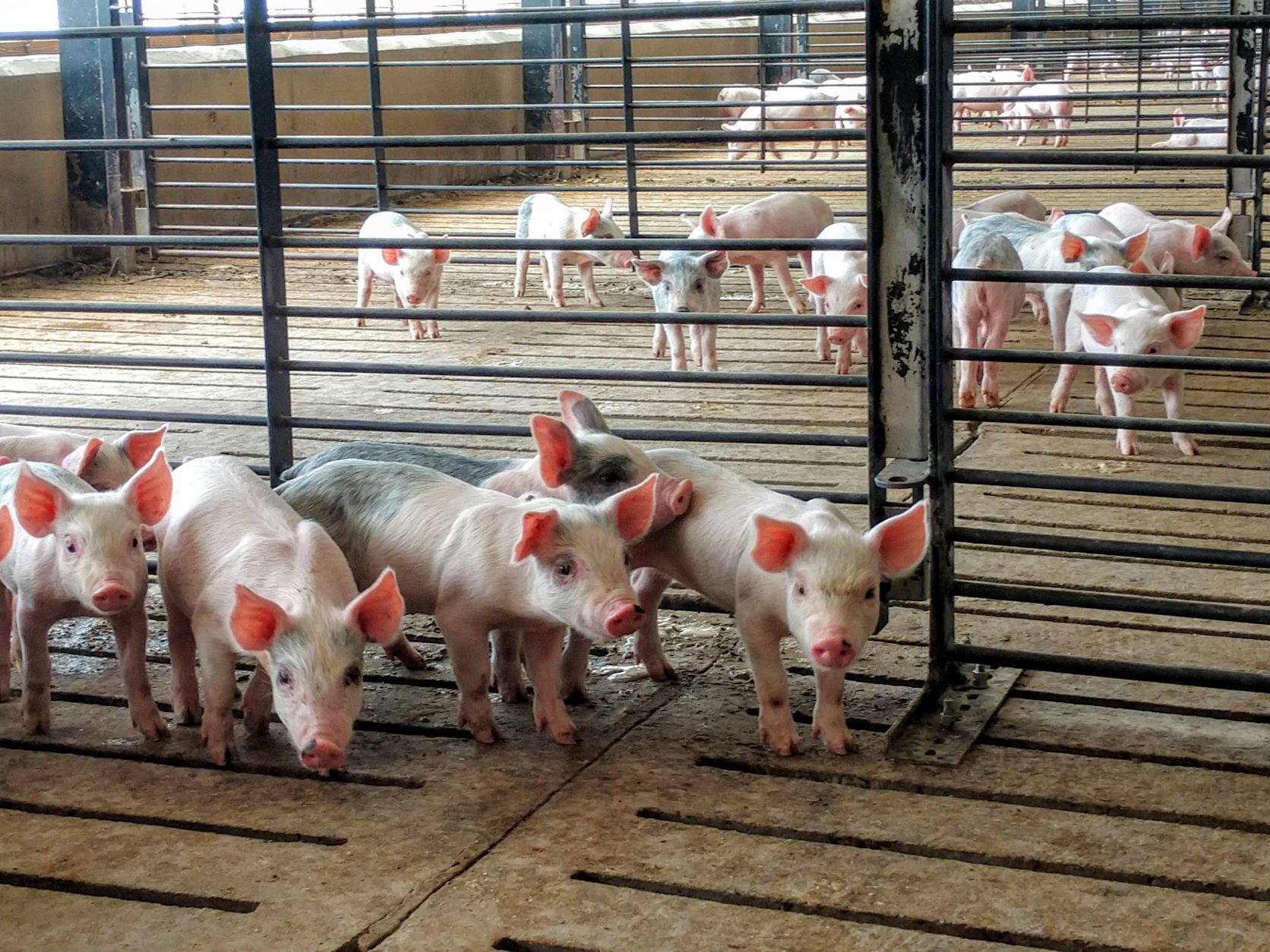
University of Minnesota Extension research and education seeks to improve the health and welfare of pigs, enhance the sustainability of pork production, and ensure a dependable, safe supply of pork for consumers.
We provide training and certification to Minnesota pork producers and processors.
Swine production in Minnesota
Whether you have a farrow-to-finish operation or are just raising a few pigs on your family farm, Extension has resources and guidance to help you ensure the health and wellbeing of your animals, farm workers and visitors.
Biosecurity for alternative pig farms —Tips and guidelines for smaller-scale pig producers using alternative production systems. Including videos on:
- Swine biosecurity basics
- All-in-all-out management system
- Tips for hoop houses and open areas
- Avoid contamination from clothing and footwear
- Download the fillable PDF to outline essential livestock care if you or your managers experience illness, injury, or another emergency when you may need outside people to provide care.
- This contingency plan covers essential care only; it is not a comprehensive care plan. Use the form to complete your farm’s Operations Contingency Plan.
What to do if your pork packing plant is closed — Temporary strategies for managing pigs during emergency processing plant closures.
Facilities management
- Effects of alternative housing and feed on pig growth and carcass quality — A study showing the costs and benefits of hoop barn housing.
- Group sow housing
- Using hovers in the farrowing room to save energy
Seasonal impacts
- Good gut health can help prevent disease in swine
- Heat stress in swine affects production
- Swine at-home health kit - Download the document
- Survival of swine coronaviruses in feed
- What pork producers need to know about FDA antibiotic regulations
Learn more about animal diseases and emerging topics from the .
Visit the site for information and instructions for submitting a sample for disease diagnosis.
Feeding strategies
- Keeping track of water intake to monitor pig performance
- Formulating farm-specific swine diets
- Good gut health can help prevent disease in swine
Ingredient quality
Alternative ingredients
- Common Swine Industry Audit (CSIA) — The CSIA serves as a single, common audit platform for the pork industry.
- Effects of alternative housing and feed on pig growth and carcass quality
- Heat stress in swine affects production
- More feeder space helps slow-growing pigs in the nursery phase
- What to do if your pork packing plant is closed — Temporary strategies for managing pigs during emergency processing plant closures.
Standards for organic livestock and poultry — The United States Department of Agriculture has published to increase consistency in animal welfare practices.
- Designing feeding programs for natural and organic pork production
- Early detection of sick pigs in organic production systems
- Improving the health of organic pigs
- Swine at-home health kit - Download the document (full text follows).
Swine at-home health kit
This list includes essential items to have on hand for regular pig care and emergencies. Consult your veterinarian if you are unsure about how to use the items below properly.
Consider attending a Pork Quality Assurance Plus training to improve pig well-being.
Basics
- Veterinarian’s phone number.
- Disposable gloves for handling dirty, sick, and dead pigs.
- Disposable booties to cover your barn-specific footwear when entering pens or rooms with dirty, sick, and dead pigs.
- Clean towels or paper towels, and rags for handling piglets.
- Stainless steel bucket to carry warm water and other supplies.
- Electrolytes and vitamins to support hydration during heat, transportation stress or disease.
- Scale or weight tape measure to monitor weight gain and maintenance.
- Thermometer. The average body temperature of a pig is 101.5-102.5 degrees F.
- Sorting boards, a snare, and a designated area for handling and inspecting pigs.
- Sick pen or designated area to prevent aggression from healthy pigs toward sick pigs.
- Ear notchers for litter and pig identification.
- Ear tags for pig identification.
- Dewormer to prevent parasite infection, especially roundworms.
- Needles and syringes for medication administration:
- 5/8 or 1/2-inch 18-gauge needles for younger pigs.
- 1 or 1.5-inch, 16-gauge needles for finisher and adult pigs.
- 6 cc syringes and 12 cc syringes.
- Isopropyl alcohol to clean needles and other tools.
- Sterile surgical blades and handles or sterile scalpels for lancing abscesses and castration.
- Antimicrobial wound spray.
- Marking spray or chalk to identify treated pigs.
- Broad-spectrum antibiotic, dependent on disease, pig weight and farm size.**
Farrowing care
- Long plastic gloves (Obstetrical (OB) sleeves) to examine the sow and assist farrowing.
- Disinfectant: Use mild soap and warm water or a suitable iodine preparation to wash the plastic gloves and sow’s vulva.
- Veterinary OB lubricant for assisting farrowing.
- OB snare or forceps to assist with difficult births. Be sure to consult with your veterinarian about the proper situations and usage of these items.
- Iodine for the navel cord.
- Oxytocin to stimulate uterine contractions only after the cervix is fully dilated.**
- Iron supplement for piglets. Consult with your veterinarian.
- Colostrum and milk replacer for orphaned piglets or a lack of milk production from the sow.
- Piglet-sized nipple and bottle for feeding milk replacer.
- Stomach tube feeder for administering colostrum or milk replacer when a piglet is unable to take a bottle.
**These items require prescriptions from your Veterinarian of Record, who holds your veterinary client-patient relationship (VCPR).
PQA+ and TQA certification
- Pork Quality Assurance Plus (PQA+) offers training in enhanced animal well-being and rigorous food safety standards, enabling producers to continually improve pig welfare.
- Transport Quality Assurance (TQA) helps swine transporters, producers and handlers understand how to handle, move and transport pigs.
SowBridge
SowBridge provides relevant and accurate information from university and industry experts online for people involved in managing or caring for sows, their litters and boars.
Contact the swine team
Learn more about swine
News | Events | | | Podcast | Newsletter sign-up
The University of Minnesota Extension swine team brings university research to producers and processors. Extension offers training, certification programs and seminars for pork producers.