


Find crop-specific nutrient needs for Minnesota, including guidelines for nitrogen, phosphate,
Weed management for Minnesota crops
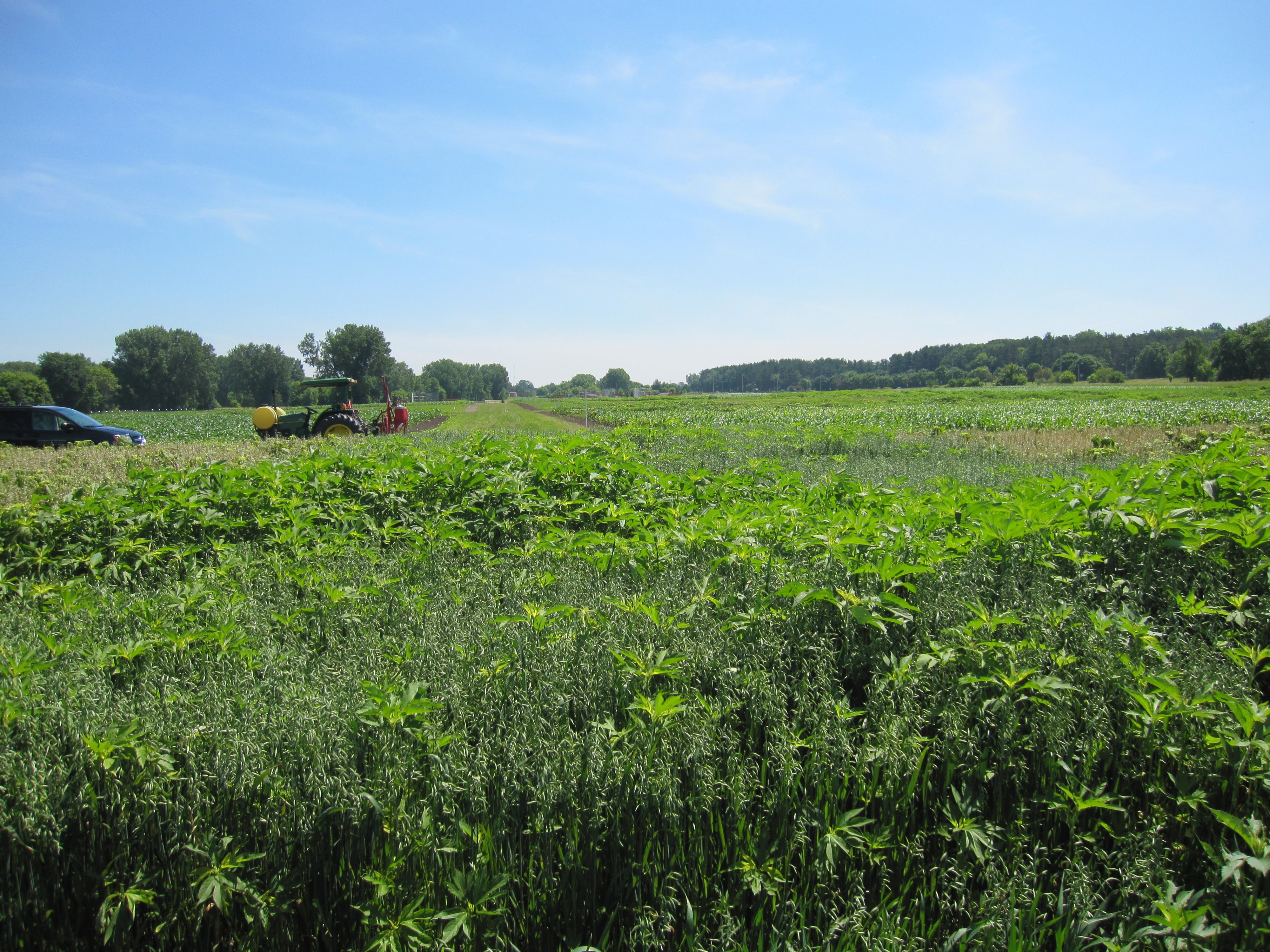
Extension conducts applied research on weed management at University of Minnesota Research and Outreach Centers and on working farms around the state to solve the real-world problems facing farmers and ag professionals. This serves as the foundation for Extension's educational programs.
We work with
- Farmers
- Crop advisers
- Ag professionals
Guides and resources for weed management in Minnesota
|
Annual weeds
- Barnyardgrass.
- Large crabgrass.
- Green, giant and yellow foxtail.
- Wild oat.
- Fall panicum.
- Wild proso millet.
- Amaranth family: Waterhemp, Palmer amaranth and redroot pigweed.
- Giant and common ragweed.
- Common cocklebur.
- Common lambsquarters.
- Velvetleaf and more.
Perennial weeds
- Jerusalem artichoke
- Field and hedge bindweeds
- Yellow nutsedge
- Quackgrass
- Canada thistle and perennial sowthistle.
Weed identification tools
Weed image search tool from the Strand Memorial Herbarium. Plants are searchable by common names, plant families or genera.
Archived PDF guide
Seedling identification key – A step-by-step key to identify seedlings using plant characteristics. Includes both broadleaf and grass seedlings. (1999)
- Herbicide mode of action and sugarbeet injury symptoms — An in-depth look at eight herbicide families, their modes of action, factors that influence their effectiveness, and injury symptoms.
- Herbicide classification chart — Groups herbicides by sites of action to help you maintain greater herbicide diversity and delay the development of resistance. Developed by Take Action: Herbicide-Resistance Management.
Applying herbicides
- Herbicide-resistant traits in Minnesota and North Dakota — This guide clarifies which herbicides can be applied to various trait packages for our major crops.
- How to calculate herbicide rates and calibrate herbicide applicators — Calculations for determining how much herbicide you need, plus calibration how-tos for sprayers and granule applicators.
- Managing risk when using herbicides and cover crops — How to successfully use herbicides when incorporating cover crops into corn and soybean systems. Research on sensitivity to herbicide carryover and weed-control strategies.
Archived PDF chart
- — Herbicide rotation intervals and diversification strategies for corn and soybeans, 2021.
Off-target dicamba movement
In 2017, low-volatility formulations of dicamba were released for use with dicamba-tolerant soybean. Non-tolerant soybeans are extremely sensitive to this chemical. Despite the new formulations, dicamba injury to non-target soybeans was widely reported in Minnesota and several other states.
- Understanding dicamba’s wayward ways
- Symptoms of dicamba exposure in soybean
- Effect of dicamba exposure on yield
See the Minnesota Department of Agriculture for Minnesota-specific Dicamba requirements.
Spray drift
- How to avoid pesticide drift — Strategies for nozzle selection, buffer zones, and wind speeds. Legal implications. How to report issues.
Videos
- (2014; 06:59) — This video shows the off-target movement of glyphosate in oat plots using six nozzle types with droplet sizes ranging from fine to ultra-coarse.
- (2017; 03:07) — This video addresses what temperature inversions are, when they occur, how to know if they’re occurring, and why they’re important when deciding if it’s the right time to spray. Look at current and predicted wind speed and rainfall conditions when deciding to spray.
Losing herbicide options significantly affects crop producers. Fortunately, there are things you can do to prevent and manage herbicide-resistant weeds.
Guide to preventing herbicide-resistant weeds in Minnesota – How resistance develops, management strategies, and herbicide lists by sites of action.
- How to test your waterhemp population for PPO-inhibiting herbicide resistance
A testing service for crop producers, plus details about the prevalence of herbicide-resistant waterhemp in Minnesota. - Pre-emergence (PRE) herbicides – How pre-emergence (PRE) herbicides affect weed control and soybean yield in Minnesota. On-farm research on PRE vs. postemergence-only herbicide applications.
- Using layered residual herbicides to manage waterhemp in soybean
Archived PDF guide
– Pre- and postemergence herbicide diversification options and rotation intervals for glyphosate-resistant corn and soybeans. Updated January, 2021.
Resources

Soil and water
Soil health, irrigation and agricultural drainage resources for Minnesota.

Growing forages
Find guidance on choosing the right forage legumes, grasses and mixes for your farm, and how to distinguish among species.
Pesticide safety recertification
We provide pesticide education and resources for certified and licensed applicators, those seeking certification, and other professionals needing related training.
The Integrated Pest Management podcast alerts growers, ag professionals, and educators to emerging pest concerns on Minnesota field crops, including corn, soybeans, small grains, and alfalfa. We also review recent pest trends and research updates.
Learn more about crop production
The University of Minnesota Extension crops team helps producers take control of their decisions to increase profitability and reduce economic and environmental risks. Our researchers and educators work in pest management, agricultural drainage and water management, soil management and health, climate and weather, and pesticide safety.
Page survey