


Soil health, irrigation and agricultural drainage resources for Minnesota.
Cover crops
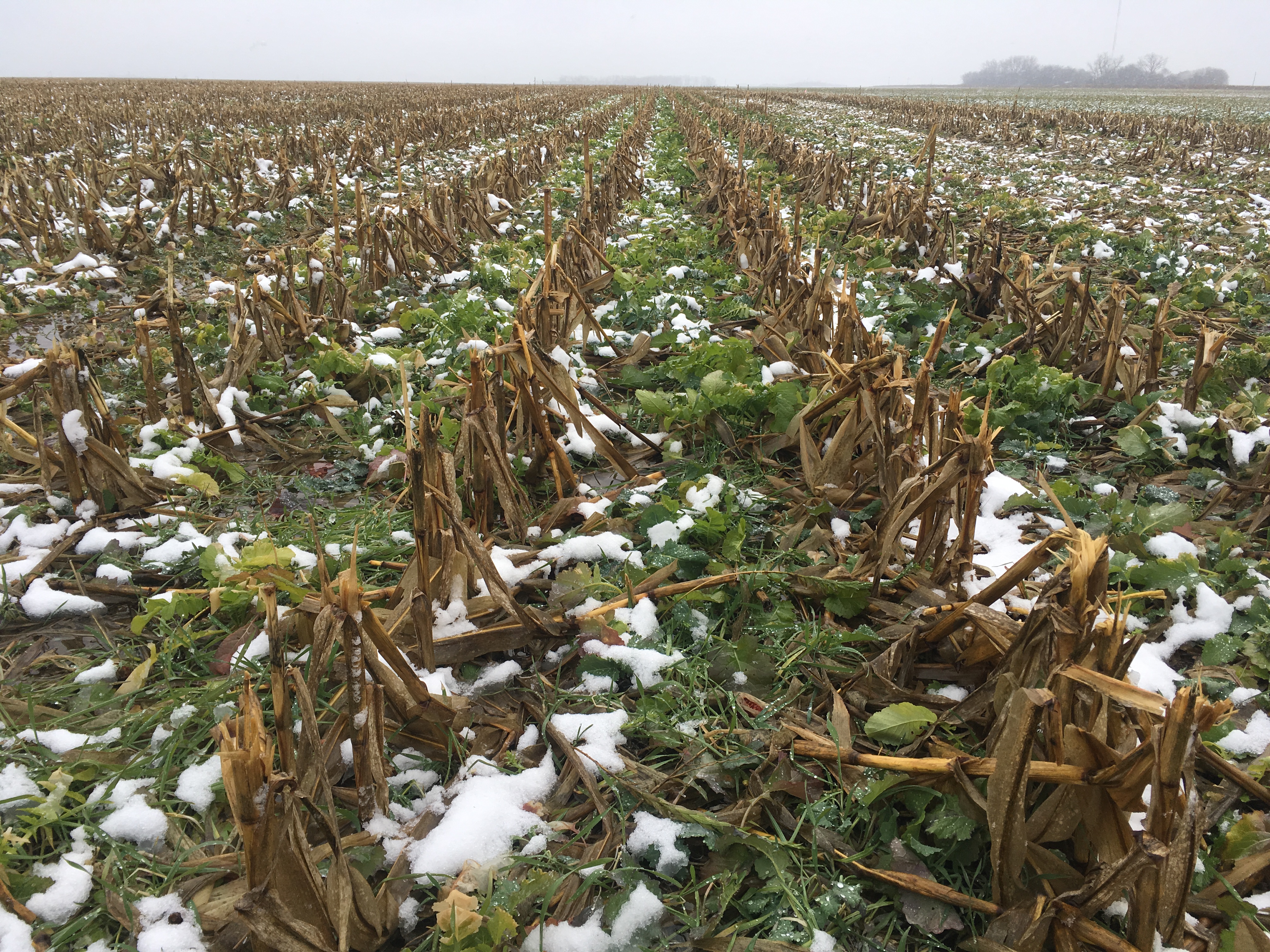
Cover crops are grown outside of the cash crop growing season, usually seeded in the fall and killed before spring planting.
Keeping living roots in the ground year-round can improve water management, soil protection, and nutrient scavenging, but cover crops need the same attention as a cash crop to ensure success.
We work with
- Farmers
- Crop advisers
- Ag professionals
Guides and resources for cover crops
|
Erosion control
Cover crops reduce erosion in several ways.
- Aboveground living cover crops protect the soil from the impact of rainfall and reduce the effects of wind. Runoff is reduced along the way.
- Belowground, roots hold soil in place during active erosion events and build structure. Better soil structure means the soil is less likely to erode even if left bare later in the season, such as between harvest and planting a cover crop.
- Runoff sediment also contains soil phosphorus, so reducing runoff is an important strategy to reduce P loading in surface waters.
Infiltration and water management
Cover crop root systems create large channels in the soil, increasing infiltration. This effect is especially significant for species with large taproots, but other cover crops also increase infiltration.
- Increased infiltration means fields are less likely to stay saturated during Minnesota’s rainy springs.
- Many farmers report drier field conditions more quickly after a rain event when using cover crops.
Cover crops can also help soil store water by building soil structure and creating a network of large and small pores.
- Once water enters the soil through infiltration, the pore network retains it for plants to take up as needed.
- This increase in soil water holding capacity can be especially beneficial in dry years.
Nitrate reduction
Soil nitrate reduction is well established in Minnesota across a variety of cover crops.
- Nitrate is often left in the soil after the fall corn harvest.
- A winter cover crop takes up soil nitrogen, so less nitrogen is leached. This is an important benefit for reducing groundwater nitrate contamination.
- Farmers should expect some nitrate drawdown by cover crops and plan the subsequent season’s fertility accordingly.
- Soil testing before applying N to cash crops can help with field-specific recommendations.
Getting started with cover crops – The best approach is to keep it simple. Use one or two cover crop species and plant them in early-harvested fields to set them up for long-term success. It’s important to try cover crops for a few years to get a feel for the possibilities.
The Midwest Cover Crop Council’s selection tool evaluates the pros and cons of different species. Expensive seed mixes aren’t necessary. The most popular choice in Minnesota is cereal rye, as it germinates at cool temperatures and grows fast in the spring.
Videos
Strategic Farming 2023: Let’s talk cover crops FAQs (2023; 59:35) – Researchers Monica Schauer, UW-Madison, and Anna Cates, UMN Extension educator, discuss fertility and crop rotation with cover crops.
Tillage and fertility strategies (2022; 05:02) – Learn more about reducing tillage and incorporating cover crops.
Resources

Nutrient management
Find crop-specific nutrient needs for Minnesota, including guidelines for nitrogen, phosphate, potash and other fertilizers, and strategies for ensuring crops get the nutrients they need.

Water Resources Center
The Water Resources Center provides leadership in freshwater management through cutting-edge research, educational opportunities for students and professionals, and community outreach.
Soil Management Summit
The Soil Management Summit is a farmer-oriented event dedicated to practical soil management in Minnesota. Experienced farmers, researchers and consultants speak on a variety of soil management topics.
Learn more about crop production
The University of Minnesota Extension crops team helps producers take control of their decisions to increase profitability and reduce economic and environmental risks. Our researchers and educators work in pest management, agricultural drainage and water management, soil management and health, climate and weather, and pesticide safety.
- Anna Cates, Extension Soil Scientist
- Axel Garcia y Garcia, Extension Cropping System Agronomist
- Gregg Johnson, Associate Professor, Dept. of Agronomy and Plant Genetics
- Claire LaCanne, Extension Educator, Crops
- Megan McCaghey, Assistant Professor, Dept. of Plant Pathology
- Liz Stahl, Extension Educator, Crops
- Bailey Tangen, Extension Educator, Water Resources and Soil Health
- Eric Yu, Extension Educator, Crops
Page survey