


Whether you’re a seasoned landscaper, just starting to garden, or need help with an established plot, we have guidelines and best practices for growing healthy plants in your yard and garden.
Yard and garden problems

Identify the weed, insect, disease or nonliving factors that are causing problems in your garden by submitting a question to Ask a Master Gardener.
For general advice on preventing diseases, infestations, and non-organic issues in your lawn or garden, see:
- Clean and disinfect gardening tools and containers
- How excessive heat affects the vegetable garden
- Managing plant diseases in the home garden
- Non-pest issues in cool-season vegetables
- Preventing plant diseases in the garden
Preventing pests in your yard and garden has advice for maintaining healthy landscapes without pesticides.
The University of Minnesota Plant Disease Clinic is a diagnostic laboratory that provides testing for fungal, bacterial, viral, and other plant health conditions for commercial growers and the general public on a fee-for-service basis.
Weeds in lawns and gardens
"A weed is a plant out of place." By this definition, any plant could be considered a weed if it is growing where it is not wanted, such as plantain in your lawn.
But weeds are more than just a visual intruder.
Weeds can be detrimental to the health of your lawn or garden and should be managed regularly using best cultural practices such as hand removal and mulching. If an infestation occurs, you may resort to using herbicides.
- Weeds compete with desirable plants for space, light, moisture, and nutrients.
- They can be hosts to diseases like aster yellows.
- Weeds can host insects that can carry disease from plant to plant or infect plants by feeding on them.
- They spread vigorously by seed, plant parts, rhizomes or stolons.
- Weeds tolerate a wide range of environmental growing conditions and establish easily in lawns and gardens.
- Some weeds are sometimes a source of allergens.
|
We do not cover all possible weeds, just the most common and troublesome ones in Minnesota. Some weeds are classified as invasive and should be reported to the appropriate authorities when found.
- Birdsfoot trefoil
- Canada thistle
- Crabgrass
- Creeping bellflower
- Dandelions
- Dutch white clover
- Garlic mustard
- Ground ivy (creeping Charlie)
- Plantain
- Quackgrass
- Wild violet (common blue violet)
- Yellow wood sorrel
Weed identification Find photos and descriptions of plant characteristics that can help you identify common Minnesota weeds.
Weed control
Some weedy plants may benefit pollinators, birds and other plants, and have medicinal benefits to humans. For example, Dutch white clover is rich in nectar; as it is a legume, it fixes nitrogen and makes it available to other plants nearby. Dandelions are native to Europe and were brought to the United States in the 1600s as an edible and medicinal plant. The flowers have abundant pollen for early-season pollinators.
Some plants are considered to be weeds in both managed and natural landscapes. An example is Canada thistle. These plants are listed as noxious weeds by the Minnesota Department of Agriculture and the Minnesota Department of Natural Resources, and eradication is strongly recommended.
Some plants are also considered invasive, but not noxious.
- According to the Minnesota Department of Agriculture, "Minnesota noxious weeds are annual, biennial, or perennial plants that the commissioner of agriculture designates as having the potential or are known to be detrimental to human or animal health, the environment, public roads, crops, livestock, or other property. The MDA Noxious Weed Program's goal is to protect Minnesota's citizens, economy, and agricultural and natural resources from the negative impacts of invasive plants and noxious weeds."
- According to the Minnesota Department of Natural Resources, "An invasive plant in Minnesota is a plant that is not native to Minnesota and causes economic or environmental harm or harm to human health."
- It's important to understand that not all non-native species are invasive. According to Minnesota Statute 84D.01, an invasive plant is a non-native species that:
- causes or may cause economic or environmental harm or harm to human health; or
- threatens or may threaten natural resources or the use of natural resources in the state.
If you have questions about managing noxious weeds, visit the Minnesota Department of Agriculture.
For questions about managing invasive species, visit the Minnesota Department of Natural Resources.
Common plant diseases
Leaf spots, fruit rot, wilt, and unusual plant growth or color can all be symptoms of a plant disease.
|
Preventing plant diseases in the garden provides simple practices to reduce disease pressure in gardens. Use these preventative maintenance strategies to keep your plants healthy.
Tomatoes
- Bacterial canker of tomato
- Bacterial spot of tomato and pepper
- Early blight of tomato
- Gray mold of tomato
- Late blight of tomato
- Tomato disorders
- Tomato leaf mold
- Tomato leaf spot diseases
- Tomato mosaic virus and tobacco mosaic virus
For farmers
Disease management for vegetable crops has resources for commercial vegetable farmers.
Preventing plant diseases on farms is a quick list of strategies for minimizing plant diseases in vegetable crops.
Diseases of apple
- Apple scab of apples and crabapples
- Black rot of apple
- Cedar-apple rust and related rust diseases
- Fire blight
- Sooty blotch and flyspeck
Diseases of blueberry
Diseases of raspberry
- Gray mold of strawberry and raspberry
- Late leaf rust on raspberry
- Orange rust on raspberry
- Raspberry cane diseases
- Raspberry leaf spot
- Viruses of backyard fruit
Diseases of stone fruit
Diseases of strawberry
- Angular leaf spot of strawberry
- Anthracnose fruit rot of strawberry
- Black root rot of strawberry
- Gray mold of strawberry and raspberry
- Leaf blight of strawberry
- Leaf scorch of strawberry
- Leaf spot of strawberry
- Leather rot of strawberry
Archived PDF guides
These integrated pest management guides for home gardeners recommend disease and insect control strategies for home fruit growing. They are multi-page, downloadable PDFs.
Many common tree diseases do not affect the overall health of the tree and trees can tolerate them. You can reduce the impact of some tree diseases through proper care and pruning.
Hire a tree care professional to apply fungicide treatments, prune large trees and remove trees.
Diseases and conditions that can affect many trees
Diseases of deciduous trees and shrubs
- Anthracnose in trees and shrubs
- Apple scab of apples and crabapples
- Black knot
- Black rot of apple
- Cedar-apple rust and related rust diseases
- Dutch elm disease
- Eutypella canker
- Fire blight
- Golden canker of pagoda dogwood
- Hypoxylon canker
- Leaf spot diseases of trees and shrubs
- Lilac issues and diseases
- Oak wilt
- Powdery mildew on trees and shrubs
- Sooty blotch and flyspeck
Diseases of evergreen trees and shrubs
- Brown spot needle blight
- Cedar-apple rust and related rust diseases
- Cytospora canker
- Diplodia shoot blight and canker
- Dothistroma needle blight
- Dwarf mistletoe
- Lirula needle blight
- Pine gall rusts
- Pine needle rust
- Rhizosphaera needle cast
- Sirococcus blight of conifers
- Spruce needle rust
- Tomentosus root rot
- White pine blister rust
Yard and garden resources
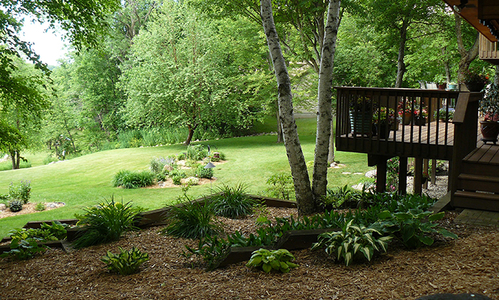
Lawns and landscapes in Minnesota
Find resources and advice on maintaining sustainable, environmentally responsible urban, suburban, and rural lawns and landscapes.

Yard and garden insects
Identify beneficial insects and insect pests, and how to encourage or control them in your yard and garden.
Learn more about yard and garden
Need help? Ask a Master Gardener about plant diseases, insects, and other yard and garden issues.
The University of Minnesota Extension yard and garden team educates the public on landscape design and plant selection, integrated pest management, and gardening best practices for beautiful, bountiful, environmentally sustainable gardens.
Page survey