

Quick facts
- River birch is a fast-growing, native shade tree from the Mississippi River flood plain in southeastern Minnesota.
- They are easily adaptable to a variety of soil types.
- River birch is known for its ornamental peeling bark in shades of ivory, tan, and cinnamon.
- They typically grow to 50 to 75 feet tall and 35 to 50 feet wide.
- In the spring and summer river birch leaves are bright green, and they turn gold in the fall.
- They are tolerant to heat and prefer sunlight.
- The recommended cultivars for Minnesota are Heritage®, Fox Valley®, ‘Summer Cascade’, and ‘Shiloh Splash’
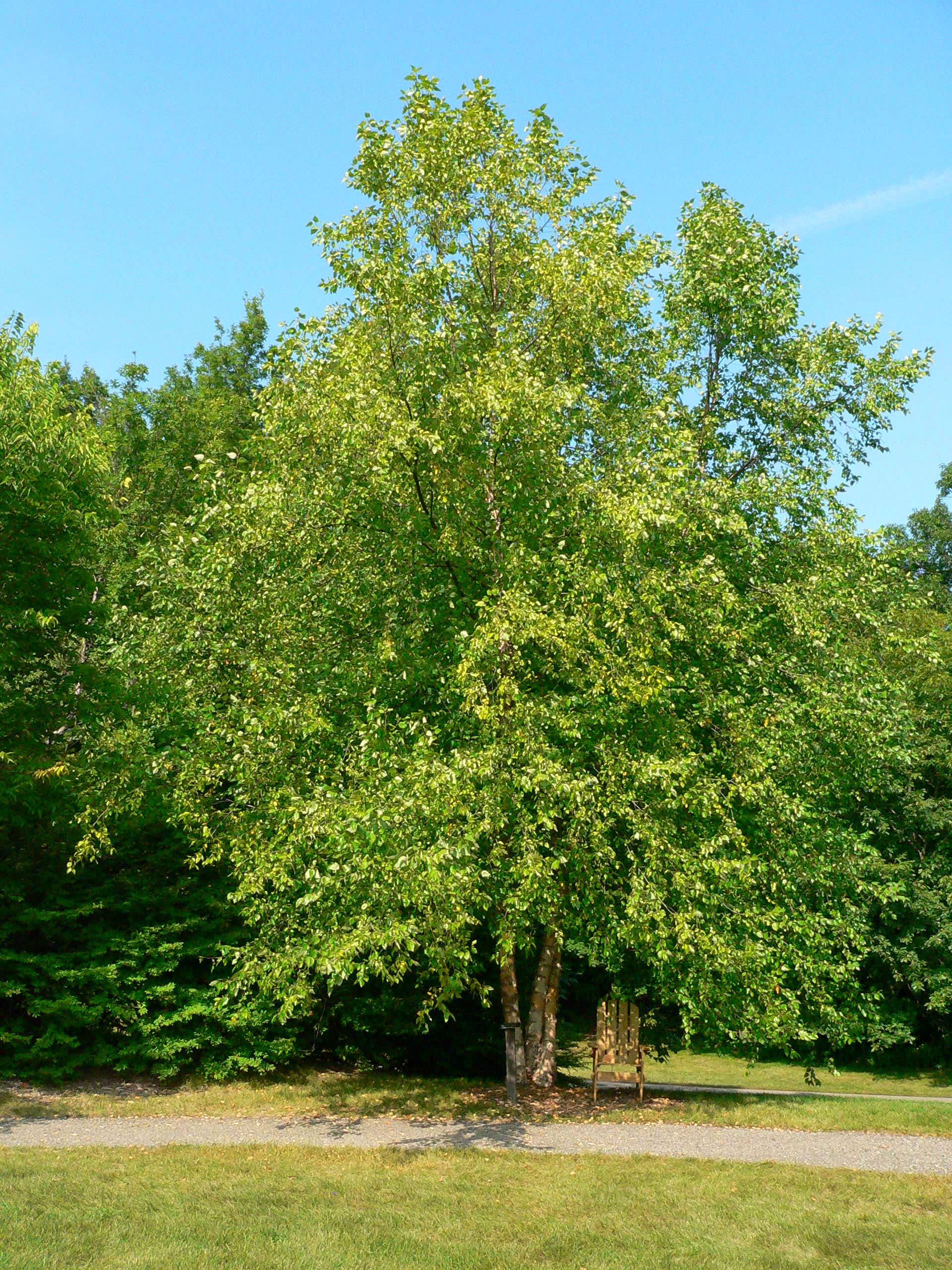
River birch (Betula nigra) is a fast-growing, shade tree native to the Mississippi River floodplain in southeastern Minnesota.
It is popular for its ornamental peeling bark.
As a landscape plant, it is grown as a single-stem tree or in a clump as a multi-stemmed tree with three or more trunks.
It transplants easily and grows quickly in a wide variety of soils.
Description
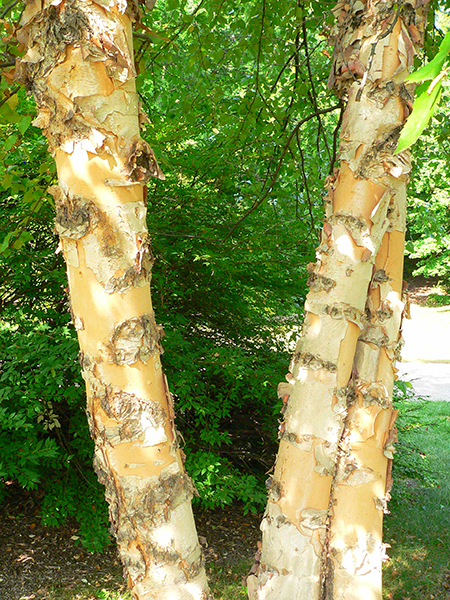
Deciduous tree; it drops its leaves in fall
Height: 50 to 75 feet; smaller cultivated varieties available
Width: 35 to 50 feet; smaller cultivated varieties available
Narrow form in youth to a more rounded shape at maturity
Ivory, tan, and cinnamon-colored peeling bark
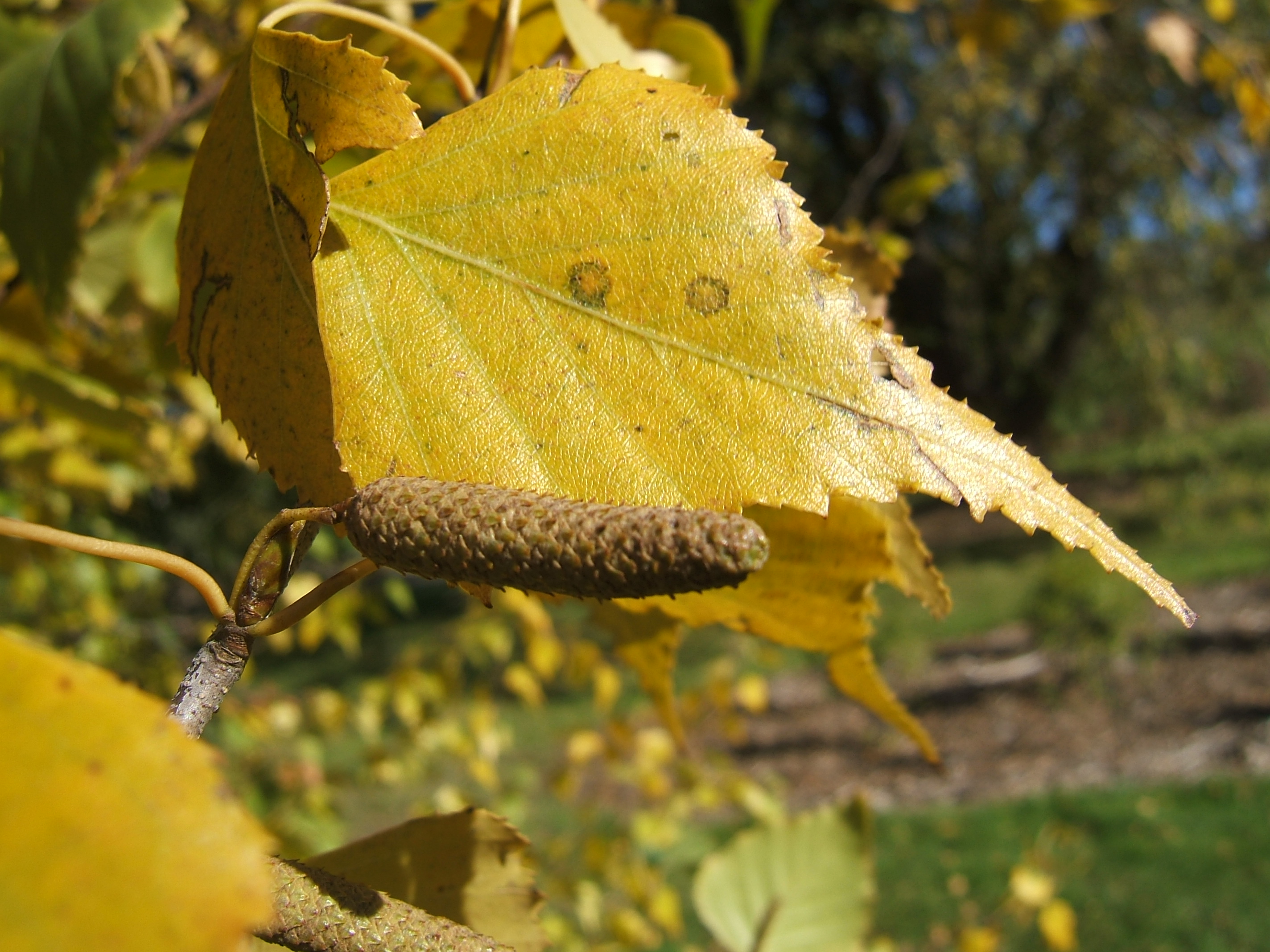
Male flowers: hanging catkins 2 to 4 inches long
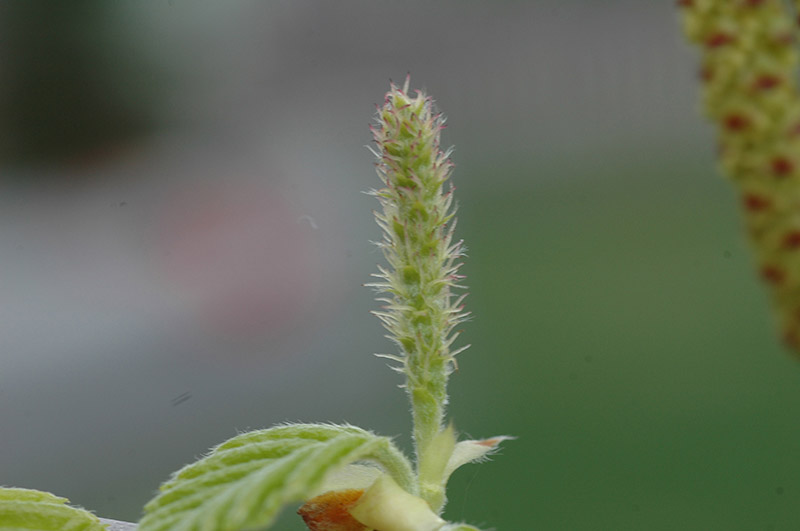
Female flowers: erect catkins ½- to 1½-inch tall
Leaves are bright and shiny green in spring and summer
Foliage turns golden in fall
Learn more about river birch
- Hardiness zone: 4 to 9
- Plant in full sun; tolerates heat
- Best soil properties for river birch:
- Sandy to clay soils
- Soil pH 4.0 to 6.5
Have your soil tested by the U of M Soil Testing Lab - Moist to wet, well-drained to poorly-drained soils. Tolerates some dryness and soil compaction.
Common problems
Brittle branches
Yellowing of leaves (chlorosis) when planted in alkaline soils (pH higher than 6.5)
Chlorotic trees will eventually die unless soil pH is reduced or supplemental iron is added.
River birch is resistant to bronze birch borer, a destructive pest on many other birch species
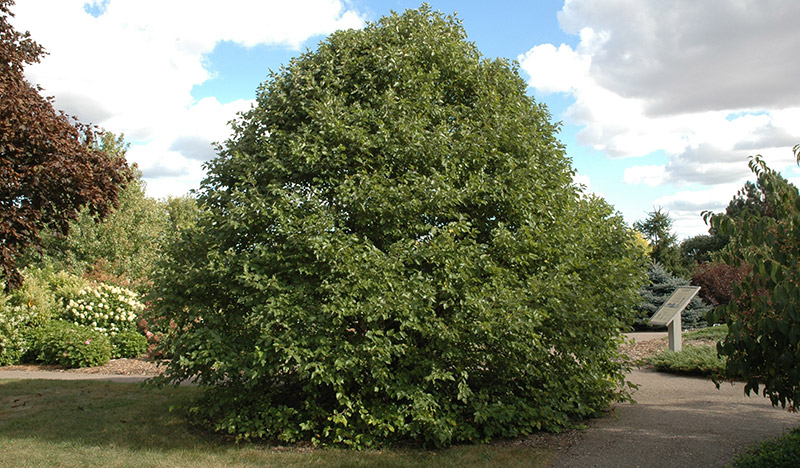
Cultivated varieties of river birch have been
selected for shorter heights, different shapes, improved bark color, and larger or variegated foliage.
- Heritage® — glossy green foliage, oval growth habit, 50 feet tall and 35 feet wide at maturity
- Fox Valley® — glossy green foliage, compact oval growth habit, 10 feet tall and 12 feet wide at maturity
- 'Summer Cascade' — green foliage, cascading growth habit, 8 feet tall and 12 feet wide at maturity
- 'Shiloh Splash' — green with white-edged leaves, pyramidal upright growth habit, 30 feet tall and 15 feet wide at maturity
Reviewed in 2026