

A quick guide to dill
- Dill grows best in a well drained, slightly acidic soil, rich in organic matter.
- Dill does not transplant easily. Sow seeds directly into the ground where the plants are to grow.
- Growing dill indoors is possible, as long as you provide enough light.
- Harvest green dill foliage anytime during the growing season until the umbrella-like flower clusters open.
- To harvest the seeds, cut the flower stalks just before seeds begin to ripen and turn a tan color.
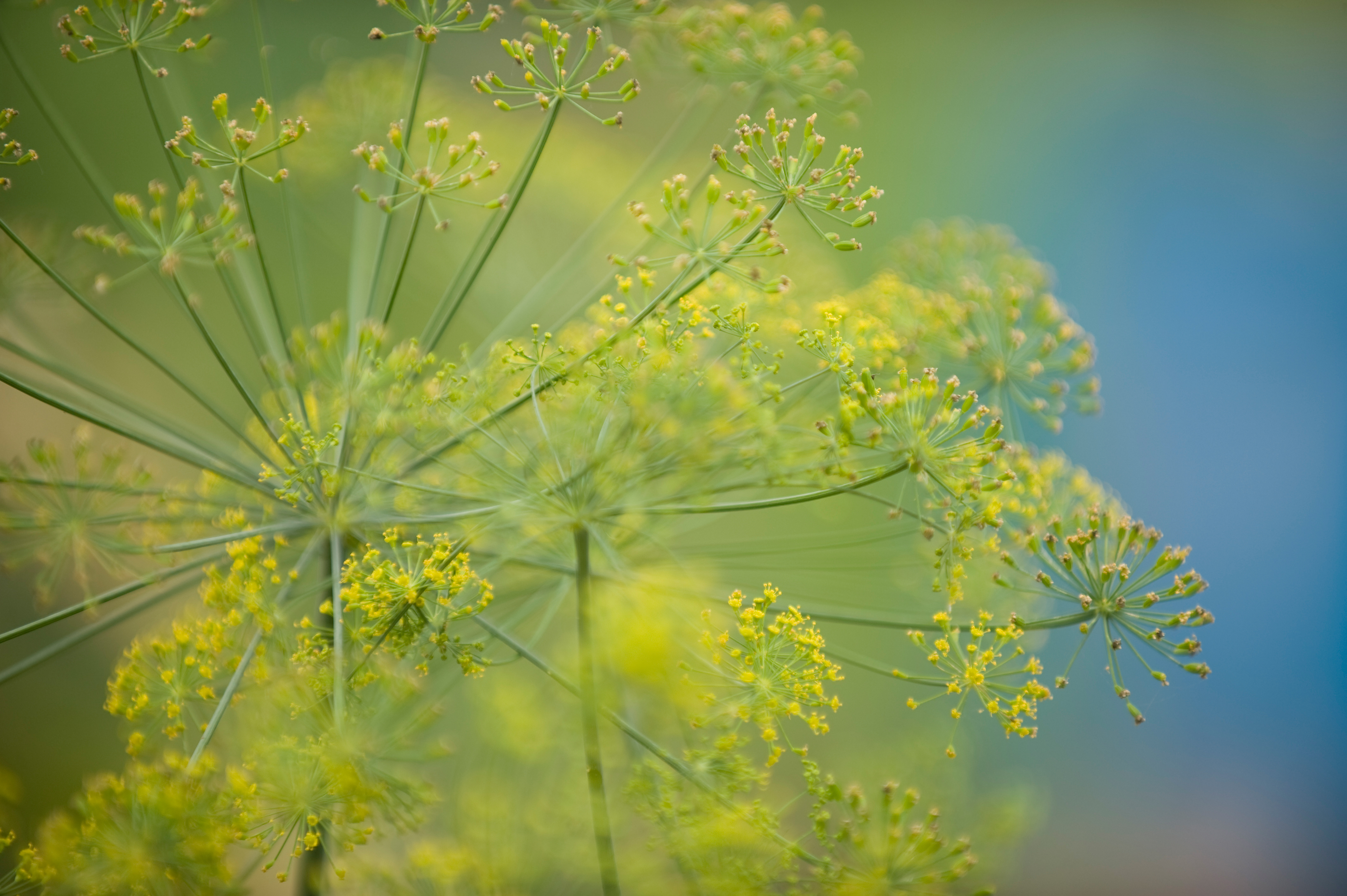
Dill, Anethum graveolens, is a tender annual in the carrot family (Apiaceae). It is native to Asia Minor and the Mediterranean region.
The tall, leggy plant is popular for pickling, but you may also use the leaves and seeds in soups, salads, breads, party dips and fish dishes.
Floral designers value dill as a feathery green filler in cut flower arrangements.
Planting and growing dill
The environment, plant diseases, insects and wildlife can cause changes in physical appearance and plant health. To address what you’re seeing, it is important to make a correct diagnosis.
You can find help identifying common pest problems by using Ask a Master Gardener to share pictures and get advice, or by sending a sample to the .
Soil pH and fertility
- Have your soil tested.
- Dill grows best in well-drained, slightly acidic soil, rich in organic matter.
- As with most herbs, dill does not require frequent fertilizing.
- A light feeding of a 5-10-5 fertilizer applied once in late spring should be enough. Use it at the rate of three ounces per ten feet of row.
- For dill grown outdoors in containers or indoors, use a liquid fertilizer at one-half the label-recommended strength every four to six weeks.
Direct seeding
- Plant dill in a location that receives at least six to eight hours of direct sunlight daily.
- Choose a spot protected from high winds because the tall, hollow stalks can easily blow over if you do not stake them.
- Dill does not transplant easily. Sow seeds directly into the ground where the plants are to grow.
- Begin sowing seeds after the danger of spring frost has passed.
- You can harvest several crops during the summer and fall by planting seeds every two to three weeks through midsummer.
- Set the seeds one-fourth of an inch deep in rows two feet apart.
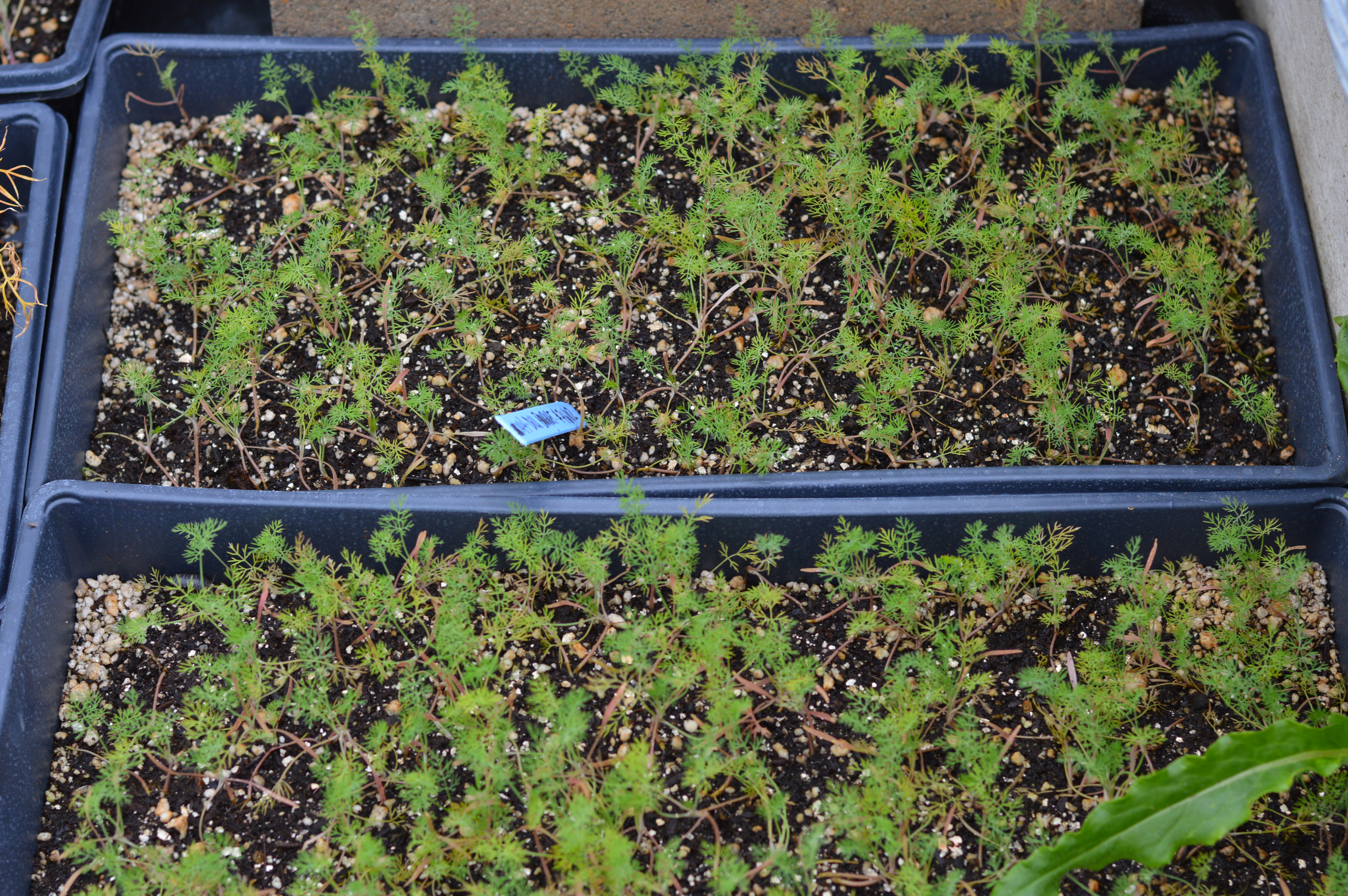
- When seedlings are two inches high, thin them to stand 10-12 inches apart.
- Keep the soil free of weeds and relatively moist.
Growing indoors
- Growing dill indoors is possible, as long as you provide enough light.
- A location that receives at least five to six hours of direct sunlight is best. Otherwise, use 12 hours of fluorescent light.
- Pots should be fairly deep and must have holes in the bottom to provide good drainage.
- Stake dill grown indoors because it will be even taller and spindlier than outside, due to lower light levels.
Dill leaf
- Harvest green dill foliage anytime during the growing season until the umbrella-like flower clusters open.
- Dill loses its flavor quickly. Use it fresh as soon after picking as possible.
- You can dry dill foliage by hanging the plant upside down in a warm, breezy place out of direct sunlight.
- Like many other herbs, drying loses most of the flavor. The bright color usually remains.
Dill seed
- To harvest the seeds, cut the flower stalks just before seeds begin to ripen and turn a tan color.
- Hang the stalks upside down in a warm, well-ventilated room away from direct light.
- Place a small paper bag up around the flower heads, fastened to the stalks. Poke a few holes in the sides of the bag for air circulation.
- As the seeds ripen, they will drop and collect on the bottom of the bag.
- You can store seeds for up to a year in airtight containers as long as they are away from heat and bright light.
- Make sure seeds are very dry before you store them. If any signs of moisture appear in the container shortly after storage, remove the seeds and dry them further.
Pickling
For dill pickles, place a whole flower head and leaves in each jar with the pickled vegetables. The head should still be green and flexible. Flowers should have given way to seeds, but the seeds do not need to be fully mature.
Reviewed in 2026