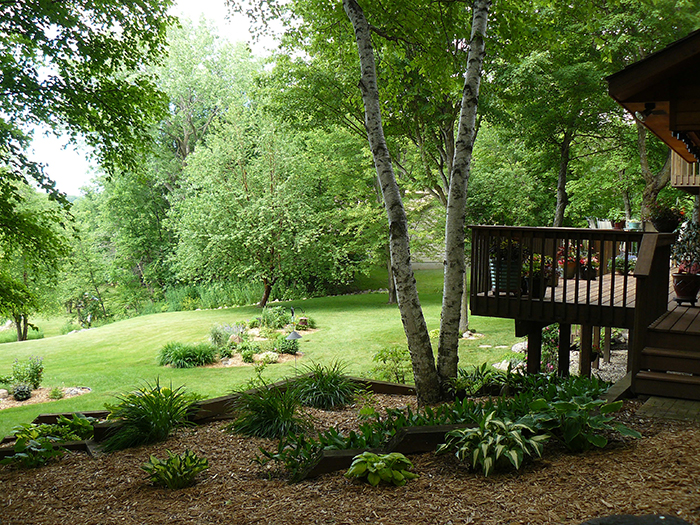
Whether you’re a seasoned landscaper, just starting to garden, or need help with an established plot, we have guidelines and best practices for growing healthy plants in your yard and garden.
Lawns and landscapes in Minnesota
University of Minnesota Extension research helps Minnesotans maintain sustainable, environmentally responsible urban, suburban, and rural lawns and landscapes.
Sustainable landscaping emphasizes plant health and longevity. It creates functional outdoor spaces that:
Use less water, time, and pesticides.
Support the natural environment and crucial species, such as pollinators.
Promote good plant performance and functionality, making them self-perpetuating over time.
Lawn care in Minnesota
The Minnesota lawn care calendar is a handy schedule of activities that will help you keep your lawn healthy throughout the year.
Learn more about the environmental benefits of healthy lawns.
Landscape design and plant selection
Creating a sustainable landscape involves:
- Understanding the site and growing conditions, such as the amount of light, soil type and planting space available for each plant.
- Knowing your needs and desires for the landscape.
- Following the design process from base plan to completed design.
- Proper plant selection for best plant performance.
- Using best practices to plant, install and maintain your landscape.
Landscaping can be exciting, fun and rewarding. But deciding how to start a project can be overwhelming. The five considerations of design and the following videos explain the process.
- Function: Support what you want to do and need to accomplish in your landscape.
- Entertaining, games, pet, access, firepit, rainwater harvesting, composting, garbage/recycling
- Maintenance: Reduce maintenance and support proper best maintenance practices in your landscape.
- Mowing, pruning, mulching, watering, snow removal
- Environmentally sound: Minimize or eliminate negative effects on the surrounding environment and animals.
- Reduce plant stress by selecting plants with growing requirements that match your site conditions (soil, sun, planting space).
- Plants that are growing in optimal conditions are less stressed and can tolerate or recover from insect damage, animal browsing, disease, weed competition and weather events.
- Cost-effective: Design within budget (cost, labor, time, etc.)
- Put the right plant in the right place to avoid having to replace plants that die or perform poorly because they are planted in the wrong growing conditions.
- Install hardscape correctly to eliminate future problems with heaving, cracking, failing walls, etc.
- Plant trees with enough room to grow so you don’t have to hire a tree care company every year to prevent them from growing over your roof.
- Visual appeal: Design for what you want to see in your landscape.
- Views from your windows, patio, or deck.
- Hardscape materials.
- Colors of flowers, foliage.
Videos
- (05:28)
- (06:24)
- (12:01)
- (03:46)
- (02:57)
- (02:49)
- (15:45)
Archived PDF guide
- — The Sustainable Urban Landscape Information Series (SULIS) is a collection of advice and how-to articles on landscape design, plant selection, implementation and maintenance. These articles form a curriculum for landscape designers and include easy-to-follow instructions for home landscapers.
Good plant selection reduces plant stress. Choosing plants with growing needs that match site conditions results in better plant resilience and recovery from damage caused by climate, weather, pests and diseases.
- It reduces pesticide use. Plants growing in optimal conditions are more resilient to disease and pests, reducing the need for pesticides.
- It’s economical. Selecting the right plant reduces the need to remove or replace plants that are poor performers. Healthy, attractive plants in a landscape can improve property value.
- It improves longevity. Finding the right plant for the right place and purpose leads to a long-lived, healthy landscape.
Understand your site conditions
How your landscape functions for you will affect the plants you select.
- Download and complete the to determine how you want to use your landscape, how it will be maintained, your budget, visual aspects, etc.
- Analyze and observe the areas in your landscape you plan to design.
- Download and complete the to help you consider features like structure, topography, existing plants, soil, etc. Note things that do and don’t work well, such as accessibility, utilities and service areas, storage, entertainment, etc.
- Consider for analysis, creating a light map, and noting microclimates in your landscape.
Watch the 5 Considerations of Sustainable Landscape Design videos to help you understand your landscape’s necessary functions and how to improve maintenance so that it has a positive impact on the environment, is cost-effective, and is visually pleasing.
This information will help you develop a list of “plant criteria” or attributes based on the site conditions in your landscape and the specific plant features you prefer.
Videos
The “Right plant, right place” 3-part video series shows you how to:
- (08:44)
- (07:54)
- (04:10)
Poor plant choices cause landscapes to fail. For a healthy and long-lived landscape, choose plants with growing requirements that match your site conditions, such as the amount of light, soil type and spacing.
Plant Elements of Design is a plant selection tool for upper Midwest yards and gardens.
- Create plant lists and data sheets.
- Download plant images.
- No subscription or login is required.
- Accessible on any computer, tablet, and mobile device.
The Plant Elements of Design plant selection tool uses 18 attribute groups to help you build a plant search. Each attribute group has a list of options that can help you define your site conditions and your plant interests.
Yard and garden problems
Identify and find solutions to the weed, insect, disease, or nonliving factors causing problems in your garden.
Trees and shrubs
Find advice on selecting and caring for trees and shrubs for your home landscape.
Resources for professionals
Resources and information for people working in lawn care, landscaping, and nursery and greenhouse management.
Commercial, noncommercial and structural pesticide applicators — Education for those who apply pesticides on their employer's or customer's land or sites.
— The University of Minnesota's Turfgrass Science Program conducts field-based research and offers education and consultation to both commercial turfgrass managers and homeowners caring for their yards.
— The lab serves University students, staff, and faculty, professional arborists, garden center employees, nursery growers, private citizens and urban foresters.
Learn more
| Events | |