

Quick facts
- Boxelder is most commonly found on river floodplains and along lakeshores and streams.
- They grow to be 35 to 60 feet tall and have a rounded irregular shape.
- Boxelders grow in many types of soil.
- These trees are easily damaged by harsh weather conditions, and female trees are damaged in the summer due to boxelder bugs.
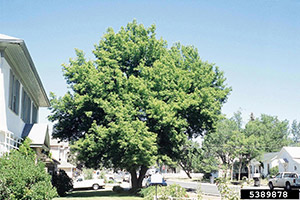
Boxelder (Acer negundo) is a native, fast-growing maple tree, found throughout Minnesota except for the far northeastern corner of the state.
It is most common on river floodplains and along lakeshores and streams, but also grows in young hardwood forests.
Boxelder can grow in a wide variety of soil types and spreads fast, especially in fence rows, abandoned fields and vacant or disturbed urban lots.
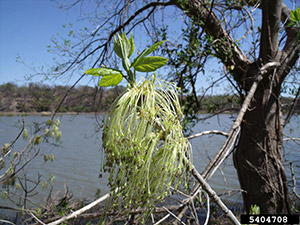
Yellow-green flowers add some color to spring landscapes, but boxelder is not a very popular choice, due to its low ornamental value.
Description
Deciduous; leaves drop in fall
Height: 35 to 60 feet
Width: 35 to 60 feet
Has a rounded to irregular form
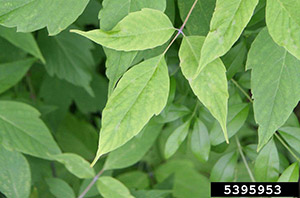
Leaves: emerge in mid-April to late May; are 3 to 7 inches and are made up of 3 to 7 leaflets. Only native maple with a compound leaf, leaves are opposite each other along branches.
Flowers: emerge in mid-April to late May; yellow-green wind-pollinated flowers on male and female trees
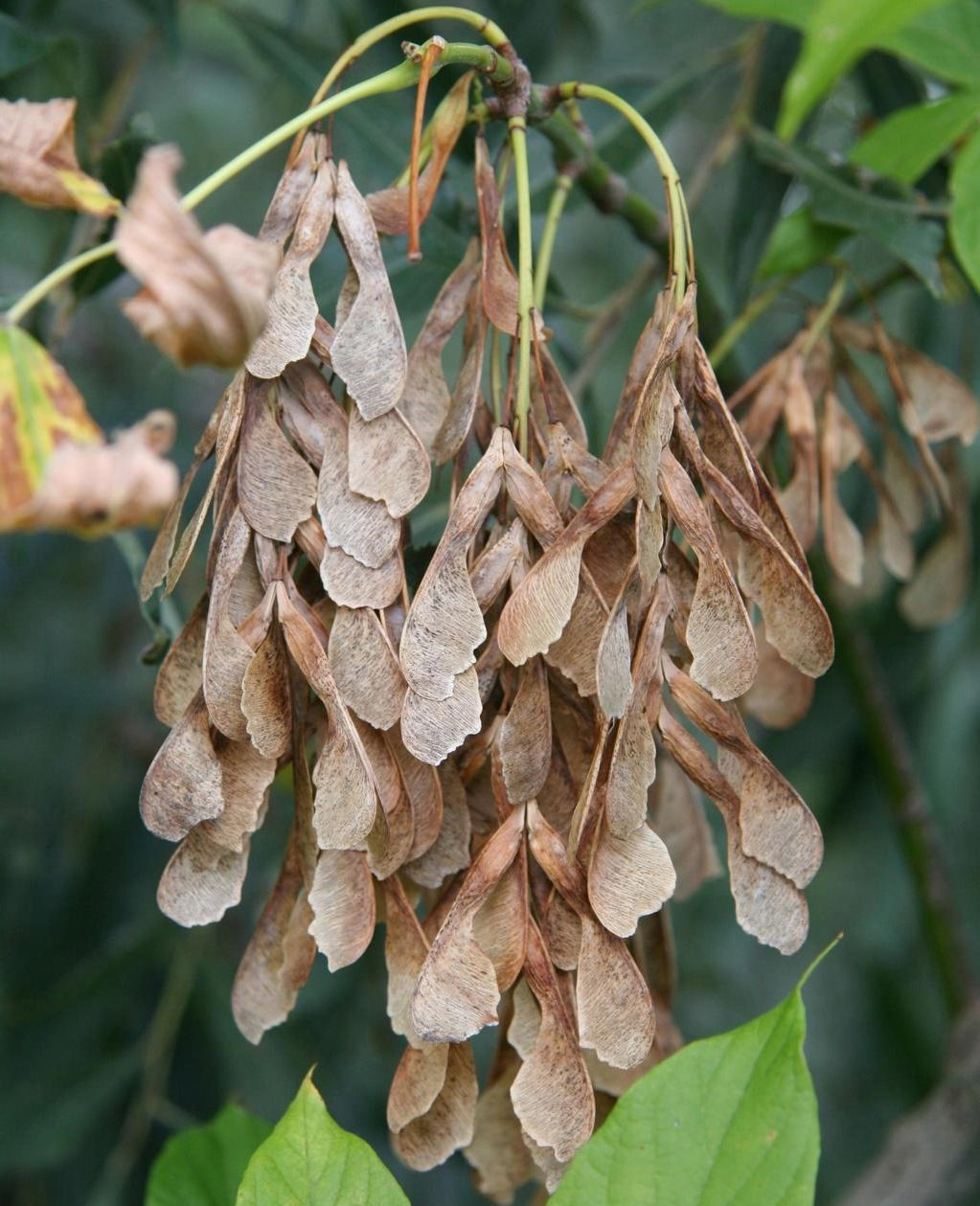
Fruit: winged nutlets or samaras ripen on female trees in August to September
Fruits shed through autumn and winter, produce seedlings in spring, and can prove to be weeds
Growing boxelder
Hardiness zone: 2 to 9
Prefers full sun, tolerates partial shade
Recommended soil properties:
Soil pH: 6.5 to 7.5, can tolerate 5.0 to 6.5
Sandy loam to clay
Dry to wet soils and excessively drained to poorly drained soils. Tolerates drought and flooding conditions
- Have your soil tested by the U of M Soil Testing Lab
Common problems
Female trees affected by attack from boxelder bugs in mid-summer
Brittle, weak wood easily damaged in wind and ice storms
Sensitive to salt spray and phenoxy herbicides such as 2,4-D
Cultivated varieties of boxelder for Minnesota
Cultivars have been developed with colorful foliage, improved plant habit and red fall color.
No cultivars are currently marketed in Minnesota. The species in Minnesota produces a yellow color in the fall.
Reviewed in 2026