

Quick facts
- Grouping sows by parity can improve the performance and well-being of young sows in group-gestation housing systems.
- Improving young sow performance can help improve the lifetime output of these sows.
- Ultimately, it can help improve the production efficiency of sow herds in group-housing systems.
Sow aggression in group-housing systems
Aggression among sows commonly occurs at mixing in group-gestation housing systems. The higher aggression may cause injuries, increased stress and reduced pregnancy rates of sows.
Sows use aggression to create a dominant ranking within a group. This aggression is likely to occur in group housing systems, regardless of available space, group size, bedding, pen design, or feeding plan.
Focus on protecting sows that are more prone to aggression. Sorting sows by the number of times they have given birth, or parity, can offer a better way to reduce aggression effects in sows.
Aggression between younger and older sows
Most producers who use group-housing systems house gilts separately to prevent aggression from older sows. However, after the first farrowing, producers typically house first-parity sows in pens with older sows.
On average, young sows have 25 percent less body weight than mature sows. Since young sows are smaller than mature sows, they usually rank lower in group-housing systems. As a result, compared to mature sows, young sows will lose most fights at mixing, suffer more injuries, and be more stressed (have higher cortisol levels).
Early aggression results in lower-ranking sows becoming fearful of further conflict when getting feed or water. This can lead to poor feed intake and reproductive loss. Producers may cull young sows early because of poor conception and lameness caused by aggression. Early culling reduces lifetime output and production efficiency of sow herds.
Sorting sows by parity
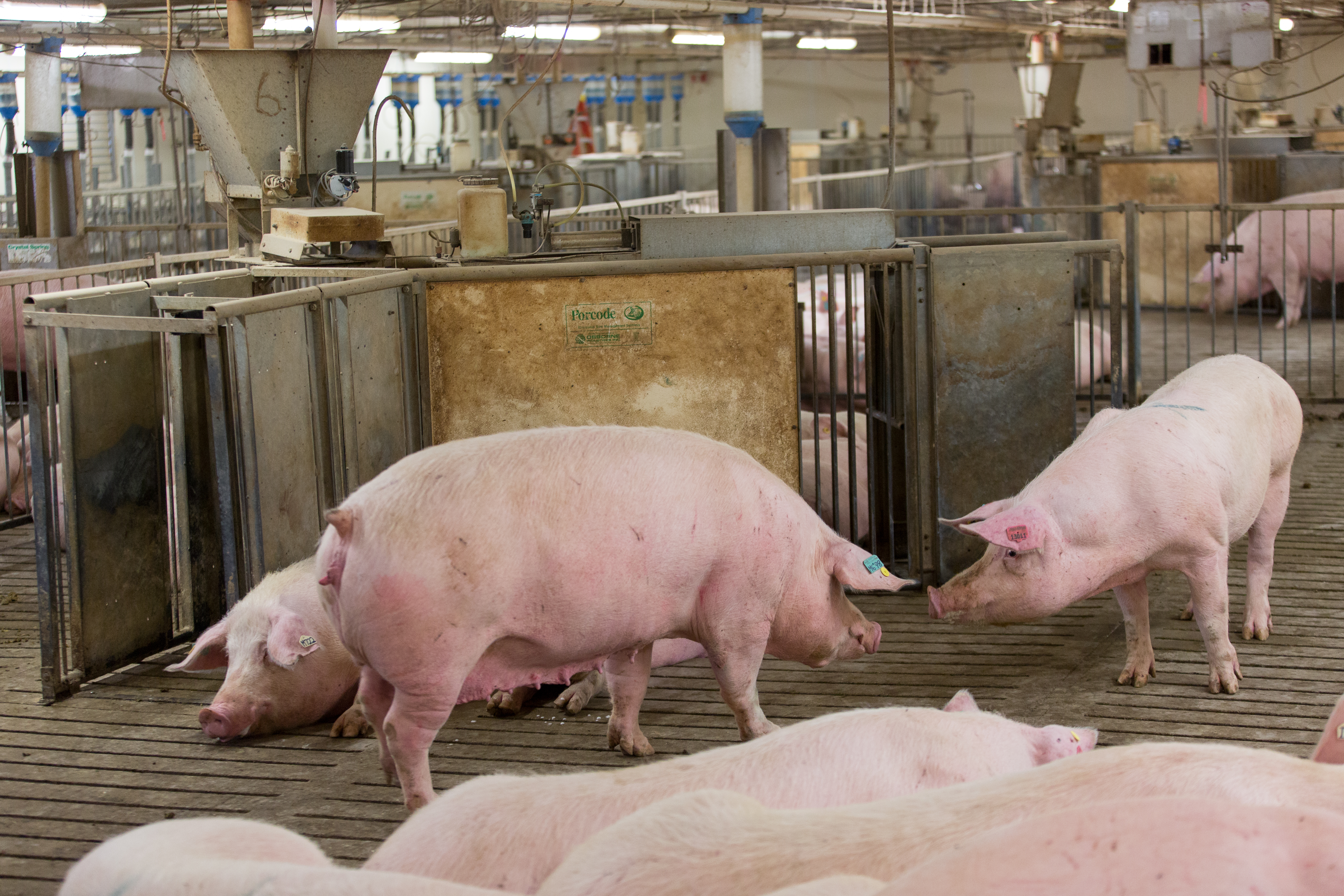
In terms of body weight and size, first-parity sows are more like gilts than mature sows. Housing first parity sows in gilt pens rather than in sow pens can help prevent young sows from exhibiting aggression. As a result, their performance and welfare may be less at risk in group-housing systems.
University of Minnesota researchers looked at the performance and well-being of young sows grouped by parity in group-housing systems. The Minnesota Pork Board financially supported this two-year project, which compared young first-parity sows housed in sow pens to young sows housed in gilt pens.
Data showed that young sows housed in gilt pens:
- Had fewer skin tears from aggression at mixing.
- Had more fights, but won more fights.
- Had a greater farrowing rate (the number of sows farrowed as a percentage of the number of sows used for breeding).
- Gained greater weight during the gestation period.
Reviewed in 2018