

Quick facts
- Amur corktree is a specially regulated plant in Minnesota.
- Amur corktree should be reported when found in wild areas.
- The Minnesota Department of Natural Resources provides detailed recommendations for reporting invasive species.
Only sales of named male cultivars of Amur corktree are permitted in Minnesota. Sales of all other Amur corktree (Phellodendron amurense) are prohibited.
All existing planted and escaped fruit-producing trees must be controlled by tree removal or other means so that no seed is disseminated.
How to identify Amur corktree
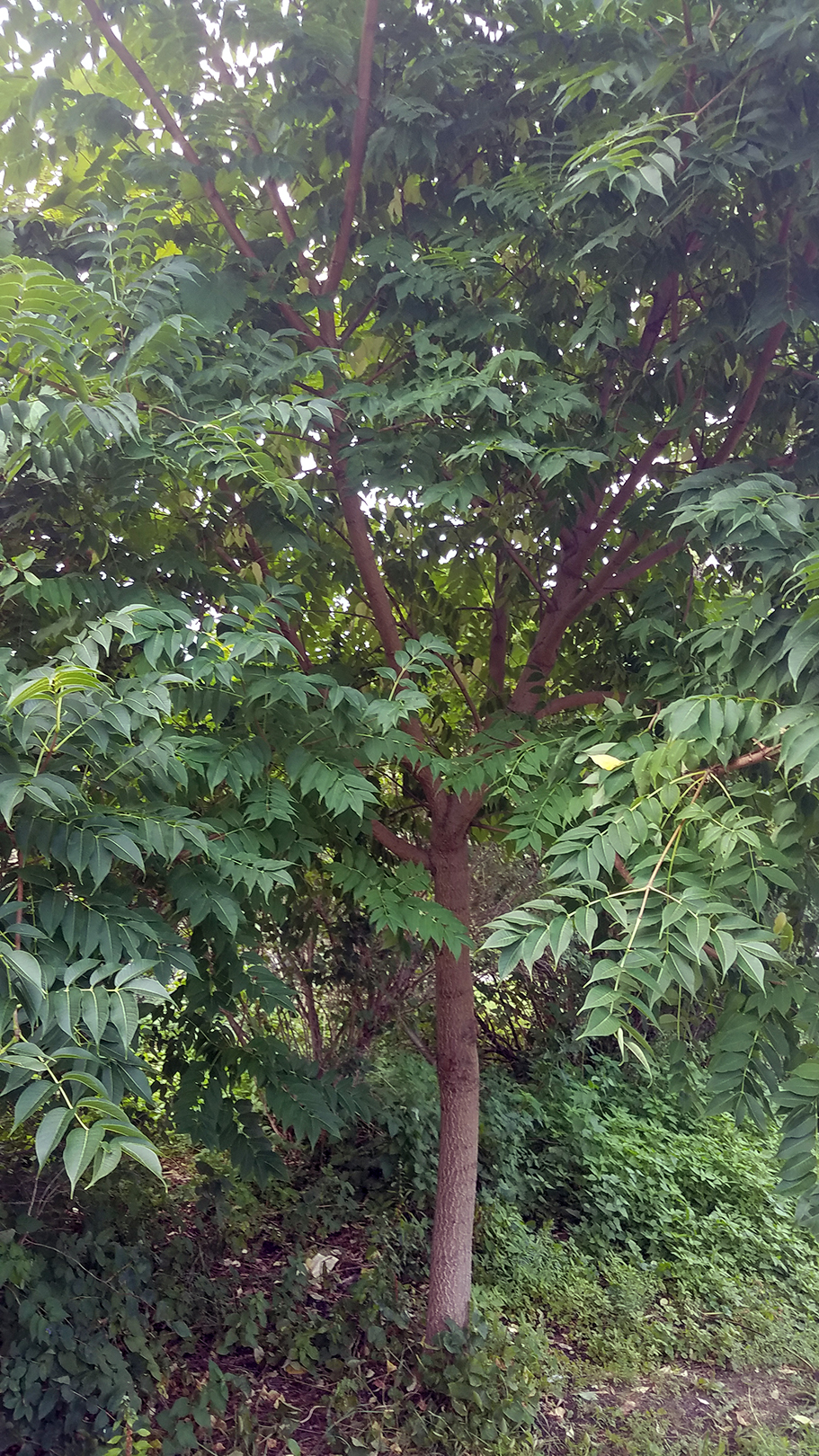
Amur corktree (Phellodendron amurense) is a deciduous small tree, 35–45 feet tall, with spreading branches.
Stem
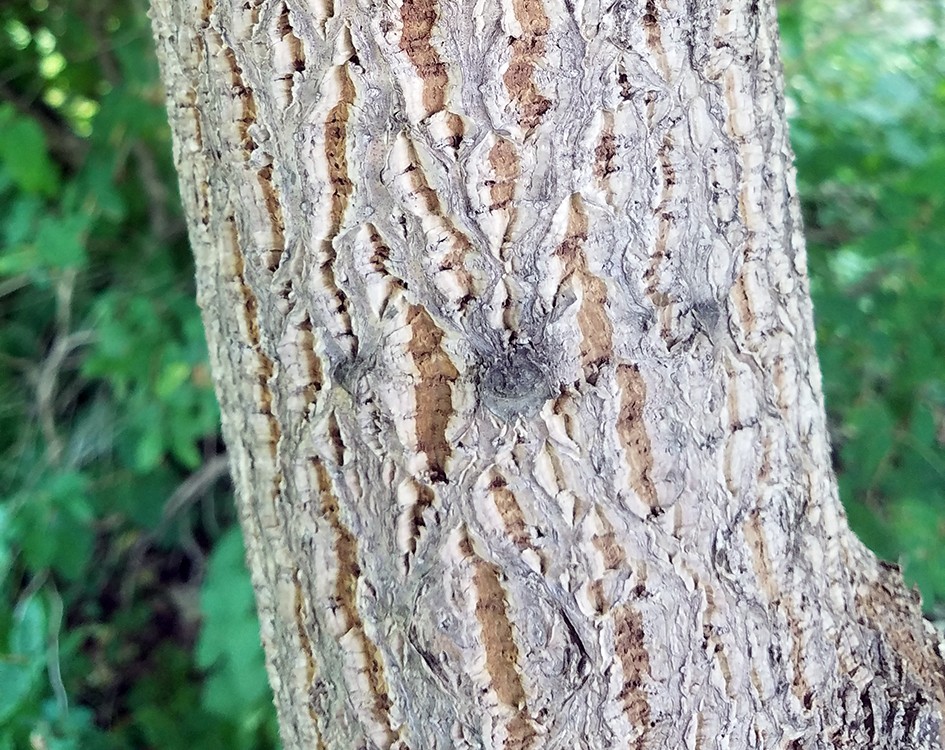
- Distinctive, thick, cork-like bark.
- Cutting into the bark reveals bright yellow inner bark.
Branches
- Opposite
Leaves
- Opposite, compound leaves that are 10 to 15 inches long with 5 to 13 elliptical leaflets that are each 2-1/2 to 4-1/2 inches long.
- Leaves can smell like turpentine when crushed.
- Leaves turn yellow in fall.
Flowers
- Male and female flowers occur on separate plants.
- Flowers in late spring, with bunches of small, upright, green flower clusters.
Fruit and seeds
- Abundant fleshy-skinned fruit with a large central seed, bright green until black at maturity, 1/4 to 1/2 inch across.
- Strongly scented seeds remain on trees into late fall and winter.

Reviewed in 2019