


When Amanda Taylor was a horse camp counselor 25 years ago, a lightning strike killed two beloved horses. Unhappy memories of their remains being hoisted onto a rendering truck with other animal remains stayed with her.
In the winter of 2022, Taylor’s own gelding, Eddie, became sick and died unexpectedly.
“This was my first experience managing the logistics of a large dead animal – all 1,100 pounds of him,” says Taylor, who lives in Mantorville. “I was unaware of any resources and couldn’t easily discern the rules and regulations of burying a horse on my property. The ground was frozen, which further narrowed an already limited set of options.”
Taylor’s veterinarian shared some ideas, but they ranged from potentially unfeasible to simply not the right choice for her and Eddie.

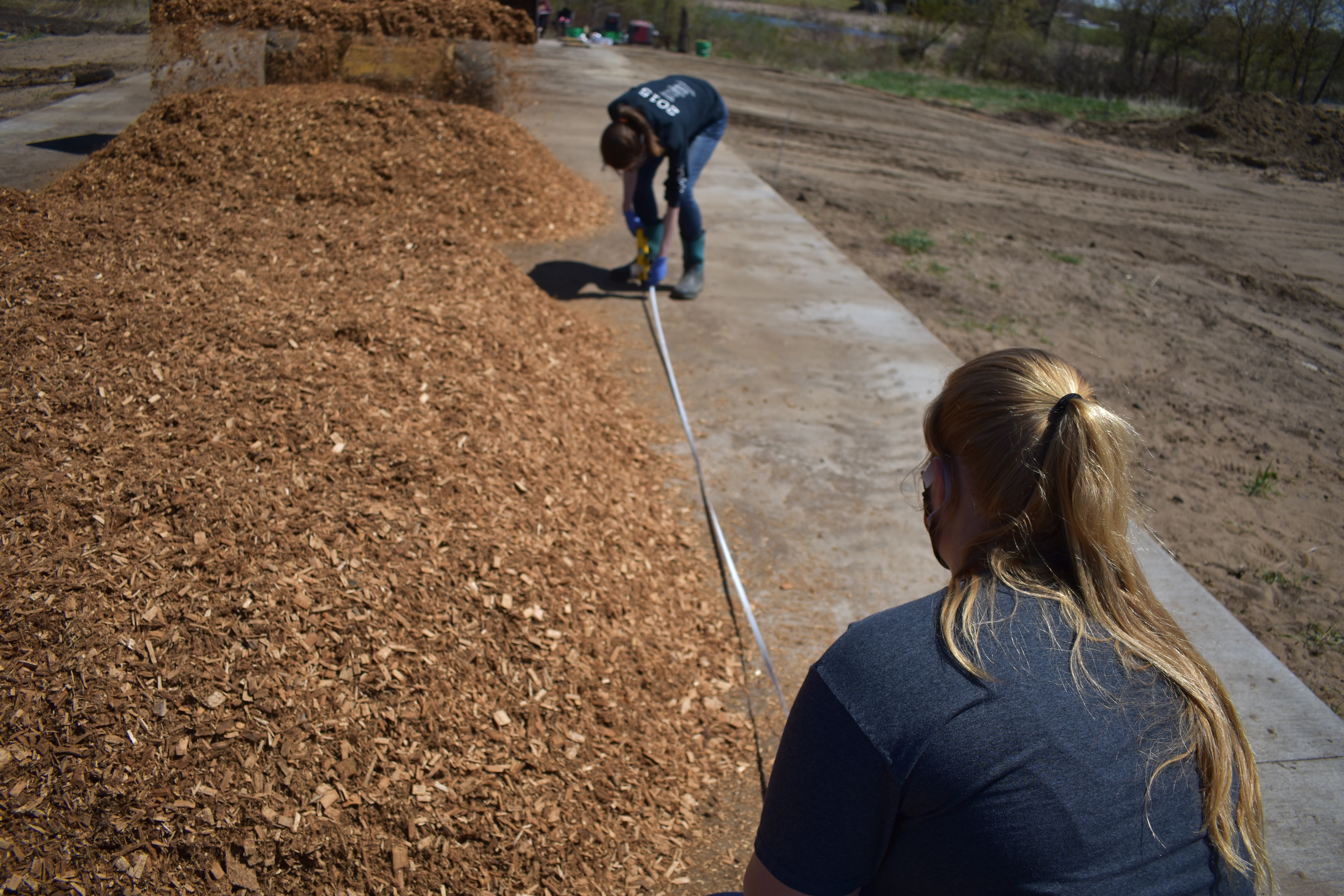
Horse composting taught by Extension
There is another option for grieving horse owners, and University of Minnesota Extension's equine team has educational resources for it. Taylor signed up for the online course for horse composting, one of nine courses offered. Participants who complete all assignments can receive a certificate of course completion.
“While not new, mortality composting is not a common practice for horse owners,” says Hannah Lochner, an Extension equine team member who completed a graduate-level research project — and held an educational field day — with Krishona Martinson, Extension equine specialist and livestock program leader.
At the field day, Lochner and Martinson demonstrated how a horse body had been fully composted with readily available materials like wood chips, stall shavings and manure.
A euthanized horse can be composted, with barbiturate concentrations greatly reduced by the end of the process, and the compost can be returned to the land. For some owners, that is a comfort.
Grief and hope
After additional study, Taylor is working to start a much-needed service: Tender Transport and Compost. She will be the first dedicated horse composting service in Minnesota, so much of her work for now is around state agency approvals, securing funding and building a compost facility.
“Krishona Martinson was a key source of guidance and connected me immediately with the course instructor, Hannah Lochner, who was a wealth of knowledge,” she says.
Many people who take Extension’s horse composting class have experienced the same kind of grief, and even through distance learning, bonds were formed. “I enjoyed learning about the other students and what led them to take the course,” says Taylor. “I think we all felt hopeful learning that sustainable methods are out there and we can use them.”

Minnesota journalist is back in the saddle, ‘thrilled’ with rural life
Each horse has an owner who needs reliable information about its care. Meet one such horse owner.
Permission is granted to news media to republish our news articles with credit to University of Minnesota Extension. Images also may be republished. Check for specific photographer credits or limited use restrictions in the photo title.