

It's recommended to mow your lawn a little shorter going into the winter, but not lower than two inches. This helps with collecting tree leaf litter, reduces the risk of snow mold diseases, and minimizes damage from burrowing rodents like voles, mice and shrews. Bagging the clippings and adding them to your compost pile will help “feed” your compost for next year’s use. You can also utilize dormant seeding. This technique involves spreading turfgrass seed when growing conditions are minimal, knowing that it will not germinate until the following spring. Dormant seeding can be done any time before the first major snowfall. You can patch bare spots and thicken your lawn for next year by seeding areas now. This is a helpful link on Dormant seeding to establish or improve your lawn.
You can also plant a bee lawn now. Bee lawns have flowers mixed in with turfgrasses such as fine fescues and Kentucky bluegrass. The flowers of a bee lawn provide food (nectar and pollen) for pollinators. They are environmentally friendly because they are managed using low-input methods that generally use less fertilizer and pesticides. Bee lawns can still be used recreationally by your household like a regular lawn. A bee lawn can attract over 50 species of native bees. Visit this link to find more information on planting and maintaining a bee lawn.
You can use a “winterizer” fertilizer. These fertilizers, typically containing urea nitrogen and potassium, help prepare your lawn for winter. However, their effectiveness can vary, and if your lawn is not deficient in potassium, the benefit may be minimal. The most important nutrient is the nitrogen which is easily utilized by lawns. Phosphorus rarely needs to be added to lawns as our midwestern soils are typically high in that
fertilizer.
If you are lucky enough to have an irrigation system, it is time to winterize it now. Ensure that irrigation lines are emptied and the system is blown out to prevent leaks from pipes expanding and contracting over the winter.
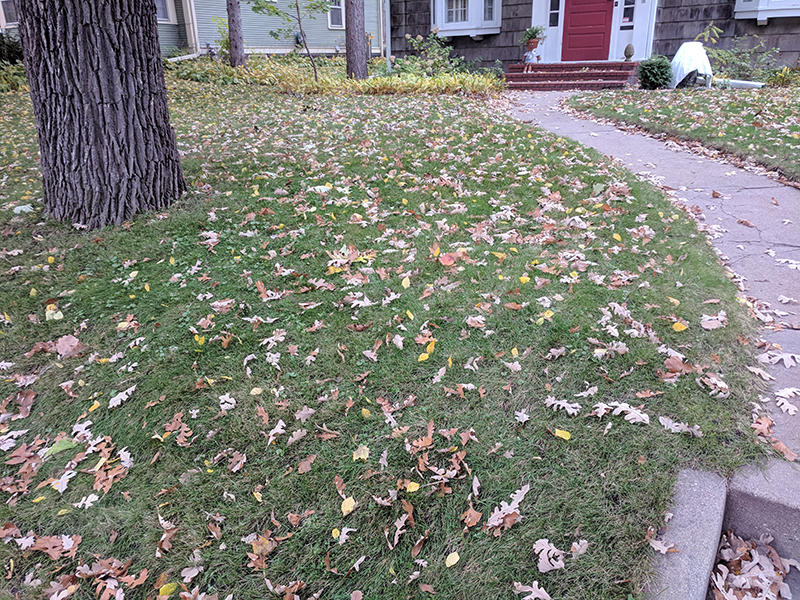
Even though the fall leaves are beautiful, they are not so pretty laying all over your lawn. Removing the fallen leaves and debris prevents them from blocking sunlight and trapping moisture, which can suffocate the grass. You may find yourself removing leaves several times before you remove most of them from your yard. Whole or shredded leaves added to your compost pile break down into much needed additions to your soil in the coming years. They also act as a mulch in flower beds, suppressing weed growth while, retaining moisture and as a soil amendment. By following these practices, you can help ensure your lawn remains healthy (though dormant) through the winter and will flourish in the spring.
The Beltrami County Master Gardeners operate a “Hotline” for gardeners who have questions from April 1 through October 31. Please call 218-444-7916 and leave a message with your name, phone number and a short description of your question or problem. Your call will be returned as soon as possible. We welcome your feedback on our articles as well. Please email us at [email protected]