

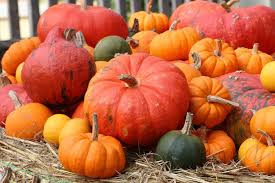
Just in case you were thinking of trying to make a pie with a jack o’ lantern pumpkin – don’t bother. The big pumpkins we carve for Halloween have stringy, bland tasting flesh, and are best used as decorations. The smaller pie pumpkins can be used decoratively too, as can other varieties of edible winter squashes. But save the jack o’lanterns, gourds and tiny mini pumpkins for your autumn decorative display.
If you’re unsure when to start harvesting, the seed packets will tell you the approximate days to maturity. Because weather conditions vary, your pumpkins or squash will most likely be ripe and ready to harvest “plus or minus” this timeframe.
Next, make sure you know what color the mature fruit should be – not all pumpkins are orange, and various winter squash varieties range in color from dark green to tan. When your pumpkin or squash is the appropriate color, test the rind with your finger – it should be hard and should not indent when you push on it. Also, the rind should have a dull appearance. When you thump the fruit, it sounds hollow. This indicates the interior has developed seeds and an air pocket (the hollow sound may not apply to some varieties of squash). You will probably also notice that the vines are starting to turn yellow and the leaves may be dying back. It’s okay to leave the squash or pumpkins on the vines after the vines are dead, but you should harvest before a hard freeze, or your fruit will be damaged.
If possible, choose a sunny, warm day to harvest your crop. Use your garden pruners to cut the stem (and wear gloves because those vines are prickly). Cut close to the vine, leaving a few inches of stem. This will help prevent rot if you’re storing your squash or pumpkins. The UMN Extension Service website recommends field-curing squash and pumpkins for 1-2 weeks following harvest if you’re planning to store them – just leave them in the garden in dry, sunny weather. However, it’s best not to leave them outside if it’s rainy and cold. If the weather turns rainy, bring them inside to cure at around 80 degrees, in a well-ventilated space. Then they can be stored in a cool, ventilated space for use throughout the winter. Alternately, you can use them right away, or preserve the edible portion by dehydrating, pressure canning or freezing. The following article has helpful hints.
Carved jack o’ lanterns will get moldy and collapse if the weather is warm, so save your pumpkin carving until closer to Halloween. Other decorative cucurbits (members of the pumpkin and squash family, including gourds) will start to decay if left out in the rain or hot sun. Critters like deer and squirrels enjoy eating them too! A few things to take into consideration if you’re planning an autumn display. Enjoy your pumpkins, squash, and all the beauty of autumn!
The Beltrami County Master Gardeners operate a “Hotline” for gardeners who have questions from April 1 through October 31. Please call 218-444-7916 and leave a message with your name, phone number and a short description of your question or problem. Your call will be returned as soon as possible. You don’t have to live in Beltrami County to call the hotline. We want to help as many people as we can.