


Identifying forage grasses correctly is crucial for effective pasture and hay management, as well as for achieving maximum yields and profits. Each type of grass is unique; they can be distinguished from each other by their leaves and flowers.
How to identify grasses
Leaf characteristics
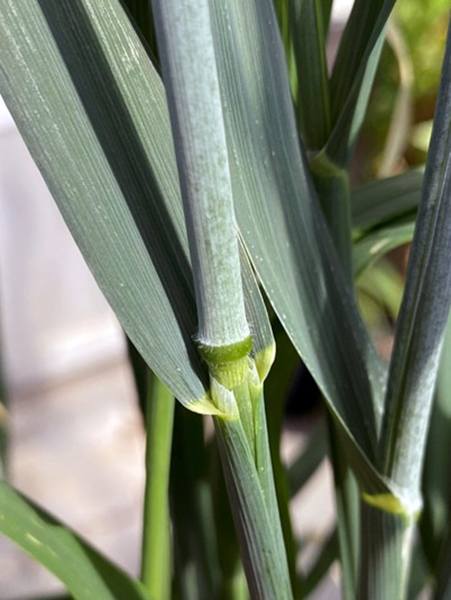
The grass leaf consists of a blade, ligule, auricle, and sheath. The region where the leaf blade and stem meet, called the collar, contains the most distinguishable leaf characteristics. These include auricles and ligules.
Auricles are finger-shaped projections or appendages that wrap around the stem. They can be absent or present, large or small and may have hairs.
A ligule is a thin appendage on the inner surface at the junction of the leaf blade and stem. Ligules can be membranous, hairy or absent. A membranous ligule is thin and translucent. Barley is an example of a grass with prominent auricles and ligules.
The blade is the expanded portion of the leaf, and the sheath is the lower part that surrounds or wraps around the stem.

Seedhead characteristics
Grasses also have distinguishing floral traits. The seedheads are made up of individual grass flowers, called florets, and are not showy.
Outer coverings called lemmas and paleas protect the male (stamen) and female (pistil) reproductive parts. Lemmas are the outer bracts of a flower in grasses, and they can be either awned (having a long, slender projection) or unawned. Like lemmas and paleas, glumes are also bracts, but are located outside of one or more florets.
Seedheads can be arranged in one of two basic ways. When florets are stacked together on a stem or rachis, the arrangement is called a spike. In contrast, a panicle has a branching structure.
For more details on grass flowers, see Gardening with Native Grasses in Cold Climates: Parts of the plant.
Examples of panicles and spikes.
(Select an image to enlarge.)


Distinguishing grass growth habits: bunch versus sod forming
Bunch grasses, such as orchardgrass, produce a single plant that spreads only by enlargement of the crown.
Sod-forming grasses spread by underground stems called rhizomes that can produce roots and new plants. Kentucky bluegrass is an example of a sod-forming grass. Sod-forming grasses have greater below-ground biomass and provide greater soil protection against erosion than bunch grasses.
Examples of bunch grass and sod-forming grass.
(Select an image to enlarge.)


Cool-season forage grasses
Thinopyrum intermedium (Host) Barkworth & D.R. Dewey

Grass type
- Cool season, persistent perennial.
Use
- Grazing or haymaking in pure stands and legume mixtures.
- Dual-use as a perennial grain (Kernza®) and forage crop.
- Soil conservation.
Adaptation
- Drought-tolerant and very winter hardy.
- Intolerant of wet soils and standing water.
Growth habit
- Sod forming, deeply rooted, rhizomatous.
- Early season growth, tall (3-4 feet).
Production
- Forage yield of 3-4 tons per acre, with most yield in the spring and fall.
- High-quality spring forage and moderate-quality fall forage.
- Good persistence when grazed or cut two to three times during a growing season.
Management
- Two to three harvests or grazing per year as a forage. In pastures, graze when plants are 10 inches tall; for haymaking, harvest at the boot stage.
- For dual-use grain and forage production: use as forage in spring before stem elongation, as straw after grain harvest, and again as forage in October.
- Apply 100 pounds of nitrogen per acre; 50 pounds in spring and 50 pounds after the first harvest.
- Easy establishment because of high seedling vigor.
Identification
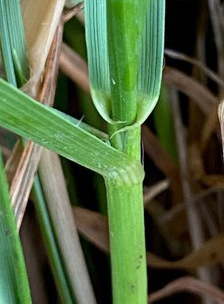
- Foliage is green-blue-green in color.
- Blade: flat and upright, 3/8 inch wide, deeply veined, sometimes with hairy margins.
- Ligule: membranous, 1/8 inch long.
- Auricles: needlelike.
- Seedhead: spike, 4-8 inches long, with spikelets edgewise along the stem.

Poa pratensis L.

Grass type
- Cool-season, long-lived perennial.
Use
- Grazing in permanent and rotational pastures when mixed with legumes like white clover.
- Erosion control on field edges and grass waterways.
- Lawn grass for recreational use.
Adaptation
- Widely distributed in Minnesota, with optimum growth in higher rainfall areas.
- Cold tolerant.
- Becomes dormant with summer heat and drought but regrows with cooler fall temperatures and rainfall.
- Persistent under close grazing.
- Grows on a range of soil types but prefers well-drained fine to medium-textured soil.
Growth habit
- Dense sod-forming with rhizomes 4-6 inches in length, shallow rooting.
- Early flowering in spring; subsequent regrowth is leafy vegetative.
- Short stature (12-18 inches).
Production profile

- Low yielding, with 70% production in spring and a significant slump in production in summer.
- High palatability with average quality.
Management
- Begin grazing pastures when grass is 5 inches tall and graze to a height of 1 to 2 inches. Rotational grazing will sustain sods.
- Fertilize with 50-100 pounds of nitrogen per acre in early spring and fall to increase production.
Identification
- Blade: 1/8 inch wide, smooth, with a boat-shaped keel at tip.
- Ligule: Short and membranous.
- Sheath: split and glabrous.
- Seedhead: panicle.

Dactilis glomerata L.

Grass type
- Cool-season, perennial.
Use
- Hay and grazing.
- Often grown in mixtures with legumes like alfalfa.
Adaptation
- Adapted to all of Minnesota.
- Fair drought tolerance, winter hardiness and persistence.
- Shade tolerant.
- Intolerant of wet soils.
Growth habit
- Bunch grass that spreads through tiller formation at the crown.
- Initial spring growth is flowering; subsequent growth is leafy vegetative.
- Rapid regrowth following harvest.
- Tolerates frequent grazing if 4 inches of stubble remains.
Production
- Average yields with 60% production in May and June.
- Earliest maturing tall grass.
- Low forage palatability with average forage quality.
- Rapid regrowth following harvest.
Management
- Graze when 10 inches tall and leave a 4-inch stubble; rotationally graze at 30-day intervals.
- For haymaking, harvest at boot stage for the first harvest; take subsequent harvests at 30-day intervals.
- Split apply nitrogen at 50-120 pounds per acre in spring and after the first or second harvest.
Identification
- Blade: 1/2 inch wide, folded, and V-shaped.
- Ligule: 1/4-inch tall, membranous.
- Sheath: open and flat sheath.
- Seedhead: compact panicle.
- Light green foliage.

Lolium perenne L.

Grass type
- Cool season, short-lived perennial.
Use
- Grazing and haymaking in mixtures with perennial grasses and legumes.
- Component of lawn and forage grass/legume mixtures to provide rapid ground cover and to increase seeding year yields.
Adaptation
- Lacks winter hardiness.
- Best yield and persistence in regions with adequate snow cover and growing season moisture, such as northern Minnesota.
- Intolerant of drought and high temperatures.
Growth habit
- Bunchgrass.
- High seedling vigor.
- Flowers in the spring; subsequent regrowth is leafy vegetative.
- Shallow root system.
Production
- In cool, moist regions, yields 3-4 tons/acre with most growth in spring and fall.
- High forage quality, but some varieties are prone to crown rust on leaves that reduces palatability.
Management
- Graze when 8 inches tall and leave a 4-inch stubble.
- In mixtures with legumes and other grasses, harvest according to the schedule of the predominant grass or legume.
Identification
- Blade: soft, shiny.
- Ligule: short (less than 1/10 inch long), membranous.
- Auricles: small and clawlike.
- Seedhead: spike with spikelets alternating edgewise up the stem.

Lolium multifolium L.


Grass type
- Cool-season annual with two life cycle types.
- Westerwold ryegrass is a true annual that produces seed heads in the year of seeding.
- Italian ryegrass does not flower in the seeding year. It produces a seed head the following spring if allowed to mature before harvest.
Use
- Grazing and haymaking, usually as a legume-grass mixture component.
- In grass mixtures, it provides rapid ground cover and increases seeding year yields.
- Cover crop or emergency grazing crop.
Adaptation
- Adapted to cool, moist conditions.
- Intolerant of hot, dry summer weather.
- Not winter hardy.
Growth habit
- Bunchgrass.
- Shallow root system.
- High seedling vigor.
- Grows 1-2 feet tall.
Production
- Low yielding (2-3 tons per acre), with most growth in spring and fall.
- Very high forage quality.
Management
- Graze when 8 inches tall and leave a 4-inch stubble height.
- In mixtures with legumes and other grasses, harvest according to the schedule of the predominant grass or legume.
Identification
- Blade: glossy.
- Ligule: small (less than 1/10 inch long), membranous.
- Auricles: large, fleshy.
- Seedhead: spike with spikelets alternating edgewise up the stem. Spikelets are often awned.

Elytrigia repens (L.) Beauv.


Grass type
- Cool season, very persistent perennial.
Use
- Considered a weed. Seed is not available for purchase.
- Volunteer regrowth in old pastures and hayfields.
- Soil conservation and erosion control on roadways and waterways.
Adaptation
- Found throughout the state on a wide range of soils.
- Volunteers on roadsides, lawns, and pastures.
- Drought-tolerant and very winter hardy.
Growth habit
- Sod forming with rhizomes 6-12 inches long.
- Early flowering: Spring regrowth will flower, but subsequent regrowth is stemmy and vegetative.
- Tall growing (3-4 feet).
Production
- Forage yield of 3-5 tons per acre, with most production in the spring and fall.
- Forage quality similar to smooth bromegrass.
- Exceptional persistence.
Management
- In pure stands, harvest at boot stage with subsequent harvests at 30-day intervals.
- In mixtures, harvest according to the predominant grass or legume in the mixture.
- Apply 50-100 pounds per acre of N fertilizer to increase yields.
Identification
- Blade: wide.
- Ligule: short and membranous.
- Auricles: claw-like.
- Sheath: hairy in spring.
- Rhizomes: extensive, underground stems that have sharp tips.
- Seedhead: spike.

Phalaris arundinacea L.


Grass type
- Cool season, long-lived perennial.
Use
- Hay and grazing. For livestock use, select low-alkaloid types to prevent anti-quality effects.
- Nutrient uptake at wastewater application sites.
Adaptation
- Widely distributed; found most frequently in wetlands.
- Persistent on poorly drained and periodically flooded soils.
- Grows on a range of soil types.
- Cold and drought tolerant.
- Tolerates frequent or infrequent harvests.
Growth habit
- Sod forming with 1-foot-long rhizomes.
- Tall growing grass (3-5 feet) with thick stems.
- Flowers in spring with non-flowering elongated stem growth at subsequent harvests.
Production
- High yielding, with 75 percent of its production from May to July.
- Average forage quality if harvested at vegetative stages, but very poor quality if harvested after stem elongation.
Management
- Graze when 10 inches tall and leave a 4-inch stubble height.
- For haymaking, harvest at boot stage.
- Split apply 100 pounds of nitrogen per acre: 50 pounds in spring and 50 pounds after the first harvest.
- Establishment is challenging due to low seedling vigor.
Identification

Bromus inermis Leyss


Grass type
- Cool season, long-lived perennial.
Use
- Hay and grazing when grown alone or in mixture with legumes like alfalfa.
Adaptation
- Widely distributed in Minnesota, found on roadsides, old hayfields and pastures.
- Very cold and drought tolerant.
- Grows on a range of soil types from clay to sand.
Growth habit
- Sod forming with 4–6-inch rhizomes.
- Early flowering.
- Initial spring growth will flower, and subsequent regrowth is stemmy vegetative.
- Tall growing (3-4 feet).
Production
- High yielding, with 6 percent of production in May and June.
- Average quality if harvested at vegetative stages, but poor quality if harvested at flowering.
Management
- Graze when 10 inches tall and leave 4 inches of stubble.
- Rotationally graze with 30-day rest periods.
- For haymaking, harvest after the boot stage, allowing 45-day rest periods, which results in 2-3 harvests per year.
- Split apply 50-120 pounds of nitrogen per acre in spring and after the first harvest.
Identification
- Blade: 1/2 inch wide, often with a distinct “W” midway up the leaf blade.
- Sheath: round and closed at top.
- Ligule: short, membranous.
- Seedhead: panicle.

Schedonorus arundinaceus (Schreb.) Dumort. and Schedonorus pratensis (Huds.) P. Beauv.


Type
- Cool-season perennials with similar morphological characteristics.
Use
- Grazing and haymaking alone or in mixtures with legumes like alfalfa and red clover.
- 3-5 harvests per year.
Adaptation
- Adapted to all of Minnesota.
- Very tolerant of drought, heat, and flooding.
- Intermediate winter hardiness: stand loss occurs in years without snow cover.
- Adaptable to a range of soil types.
- Tolerates low soil fertility and shade.
Growth habit
- Bunchgrass spreads with short rhizomes.
- Initial spring growth reproductive; later regrowth leafy vegetative with no stem elongation.
Production
- High yielding.
- Produces 50 percent of its forage from May 1 to July 1.
- Average forage quality in spring and summer.
- Can be stockpiled in place from August till late fall for fall grazing.
- Select endophyte-free varieties of tall fescue to avoid fescue toxicosis issues.
- Meadow fescue has higher forage quality than tall fescue.
Management
- Initial grazing when 10 inches tall and leave a 4-inch residual height. Rotate grazing at 30-day intervals.
- For haymaking, first harvest at boot stage with subsequent harvests at 30-day intervals.
- For monocultures, split-apply 50-100 pounds of nitrogen between early spring and after the first grazing.
- For stockpiling in late fall, apply 50 pounds of nitrogen per acre in August.
Identification
- Blade: wide (1/2 in) with distinct veins and waxy coating, shiny lower surface, coarse hairs on leaf margins.
- Ligule: short, about 1/10 inch long.
- Auricles: small and stubby.
- Seedhead: panicle.

Phleum pretense L.

Type
- Cool-season perennial.
Use
- Haymaking and grazing in mixtures with tall-growing legumes like alfalfa and red clover.
- Recreational: turf types have been developed.
Adaptation
- Adapted to all of Minnesota, but best growth and persistence in northern regions with dependable rainfall and lower growing season air temperatures.
- Very winter hardy.
- Lacks drought and heat tolerance.
- Intolerant of frequent or close grazing.
- Best adapted to medium or fine-textured soils.
Growth habit
- Bunch grass that stores energy in stem base structures called corms.
- Flowers in spring and at subsequent regrowth during the summer.
- Late maturing.
- Shallow root system.
Production
- 65 percent of production before July, with the highest yields at the first harvest.
- Forage quality is lower than that of other tall-growing grasses harvested at leafy stages because of stemmy growth at each harvest.
Management
- Initial grazing when 10 inches tall and leave a 4-inch stubble.
- For haymaking, harvest at flowering for maximum persistence. Leave a 4-inch stubble.
- Split apply 50-100 pounds of nitrogen per acre: 50 pounds in spring and the remainder after the first harvest.
Identification
- Blade: flat about 1/2 inch wide and often twisted.
- Ligule: high, membranous with a distinctive notch.
- Seedhead: distinct seed head, spikelike panicle.

Alopecurus pratensis L.
Type
- Cool-season perennial.
Use
- Grazing and haymaking.
- Used on flooded wet soils where the choice of more productive grasses is limited.
- Soil conservation and erosion control on roadsides and waterways.
Adaptation
- Limited distribution; found in wetlands and poorly drained soils.
- Drought-tolerant and very winter hardy.
- Tolerates acidic and saline soils.
Growth habit
- Bunchgrass.
- Early flowering in late May.
- Spring growth flowers, but subsequent regrowth is vegetative.
- Short growing (1-2 feet tall).
Production
- Forage yield of 1-2 tons per acre, with 70 percent produced in May and June.
- Very early maturity in spring.
- Low forage quality due to stemminess if not grazed when vegetative.
Management
- Graze or hay when vegetative before stem elongation.
- Manage according to the predominant grass or legume in the mixture.
Identification
- Blade: short and pointed.
- Prominent nodes on stems.
- Ligule: membranous; 1/4 inch long.
- Seedhead: reduced panicle.
Warm-season forage grasses
Panicum virgatum L.
Grass type
- Warm-season perennial.
Uses
- Grazing and haymaking.
- Prairie restoration and land conservation programs.
- Wildlife habitat.
Adaptation
- Statewide in Minnesota.
- Tolerates poorly drained soils.
- Adapted to a diversity of soils.
Growth habit
- Bunchgrass.
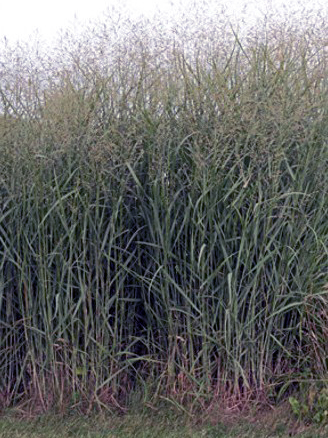
- 3-4 feet tall.
Production
- Forage yield of 2-4 tons per acre from July to August, with 2-3 harvests.
- High palatability and forage nutritive value when vegetative.
Management
- Graze when 12 inches tall and leave 6 inches of stubble.
- For haymaking, harvest at boot stage and leave a 6-inch stubble.
- Do not graze or make hay after September 1.
- Apply 50 pounds of N per acre in spring.
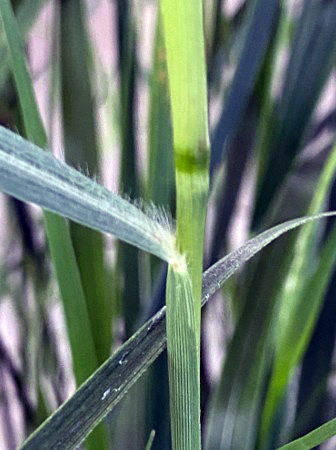
Identification
- Blade: 1/2 inch wide with rough margins.
- Ligule: dense ring of hair.
- Seedhead: wide panicle.

Eragrostis tef
Grass type
- Warm-season annual.
Use
- Grazing and haymaking during summer.
- Adapted to wet soils where the choice of more productive grasses is limited.
- Soil conservation and erosion control on roadsides and waterways.
- Emergency forage if alfalfa winterkills.
Adaptation
- Adapted to a diversity of soil types.
- Drought and heat tolerance.
- Killed by frost.
Growth habit
- Non-spreading bunch grass.
- Early flowering (50 days following seeding).
- Short growing (1-2 feet tall).
Production
- Forage yield of 2-4 tons per acre from July to August, with 2-3 harvests.
- High palatability and forage nutritive value.
Management
- Plant in June when soil temperatures are 60 degrees Fahrenheit and above.
- Graze or harvest for hay when 12 inches tall; Hay harvest at boot stage.
- Will not regrow if allowed to flower.
- Apply 50 pounds of N per acre at planting and after the first harvest.
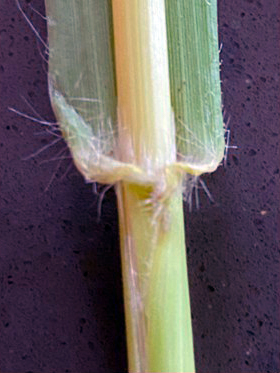
Identification
- Blade: 1/4 inch wide and fine.
- Collar: tufts of hair.
- Seedhead: panicle.

Sorghum bicolor (L.) Moench


Grass type
- Warm-season annual.
- Cross between sudangrass and sorghum.
Use
- Grazing and haymaking during summer.
- Emergency forage if perennial crops experience winterkill.
Adaptation
- Adapted to a diversity of soil types.
- High drought tolerance.
- Killed by frost.
- Tolerates soil pH as low as 5.5.
Growth habit
- Bunchgrass.
- Tall growing; 10+ feet tall.
Production
- Forage yield of 3-7 tons per acre from July to August, with 2-3 harvests if grazed or made into hay.
- Forage quality is high for grazing livestock that can selectively graze.
- Brown midrib (low lignin) and dwarf varieties are available.
- Accumulates nitrates in stems during drought, limit use in rations.
- If frosted, prussic acid poisoning can occur. Delay grazing for 10 days or make hay.
Management
- Plant in June when soil temperatures are 60 degrees Fahrenheit and above.
- Graze when 24 inches tall.
- For haymaking, harvest at 36 inches.
- Cut forage dries slowly if made into hay because the species is stemmy.
- Leave a 6-inch stubble.
- Apply 50 pounds of N per acre at planting and after grazing.
Identification
- Blades: 1-3 inches wide, waxy coating; flat with coarse edges.
- Ligule: short, membranous.
- Seedhead: open, branched panicle.

Pennisetum americanum (L.) Leeke

Grass type
- Warm-season annual.
Use
- Grazing and haymaking during summer.
- Emergency forage if alfalfa winterkills.
Adaptation
- Adapted to a diversity of well-drained soil types.
- High drought tolerance.
- Killed by frost.
- Tolerates soil pH as low as 5.5.
Growth habit
- Tall growing (8 feet tall), non-spreading grass.
- Dwarf varieties (3-4 feet tall) are available.
Production
- Forage yield of 2-6 tons per acre from July to August, with 2-3 harvests when grazed or made into hay.
- Forage quality is high.
- Brown midrib (low lignin) varieties are available.
- Accumulates nitrates in stems during drought.
- No risk of prussic acid poisoning.
Management
- Plant in June when soil temperatures are 60 degrees Fahrenheit and above.
- Graze when 24 inches tall.
- For haymaking, harvest at 36 inches.
- Leave a 6-inch stubble after harvesting.
- Apply 50 pounds of N per acre at planting and after grazing.
Identification
- Blades: 2-3 inches wide; flat with coarse edges.
- Ligule: short and hairy; hairy collar region.
- Seedhead: compacted spike-like panicle.

Panicum miliaceum L.
Grass type
- Warm-season annual.
Use
- Grazing and haymaking during summer.
- Seed harvested for livestock and birdseed.
- Gluten-free human food.
- Emergency forage if alfalfa winterkills.
Adaptation
- Adapted to a diversity of soil types.
- High level of drought tolerance.
- Killed by frost.
- Tolerates soil pH as low as 5.5.
Growth habit
- Three feet tall at maturity.
- Multiple stems per plant.
Production
- Forage yield of 2-3 tons per acre from July to August.
- Forage quality is high if harvested before flowering.
- Earliest maturing millet.
- Single harvest; will not regrow following harvest.
Management
- Plant in June when the minimum soil temperature is 60 degrees Fahrenheit.
- Graze when 24 inches tall.
- For haymaking, harvest at 36 inches.
- Leave a 6-inch stubble.
- Apply 50 pounds of N per acre at planting and after grazing.
Identification
- Blades: 1-3 inches wide; can reach 1 foot long.
- Hairy stems and leaves.
- Ligule: short and membranous.
- Seedhead: open, branched panicle.

Setaria italica (L.) P. Beauv.

Grass type
- Warm-season annual.
Use
- Grazing and haymaking during summer.
- Emergency forage.
- Wildlife and bird food; human food.
Adaptation
- Adapted to a diversity of soils.
- High level of drought tolerance.
- Killed by frost.
- Tolerates soil pH as low as 5.5.
Growth habit
- Tall growing (3-4 feet).
- Non-spreading, multi-stemmed grass.
Production profile
- Forage yield of 2-3 tons per acre from July to August.
- Forage quality is high if harvested before flowering.
- A single harvest crop that will not regrow after harvest.
- Will accumulate nitrates under drought stress; restrict inclusion in the ration.
Management
- Plant in June when soil temperatures are 60 degrees Fahrenheit and above.
- Graze when 24 inches tall.
- For haymaking, harvest at boot stage.
- Leave a 6-inch stubble when harvested.
- Apply 50 pounds of N per acre at planting and after grazing.
Identification
- Blades: 1-3 inches wide, waxy coating, flat with coarse edges.
- Ligule: short, membranous.
- Seedhead: spike-like panicle; bristly seedheads.

Echinochloa esculenta (A. Braun) H. Scholz
Grass type
- Warm-season annual.
Use
- Grazing and haymaking during the summer slump.
- Emergency forage.
- Wildlife food; human food.
Adaptation
- Best adapted to wetter soils.
- Drought intolerant.
- Killed by frost.
- Tolerates soil pH of 5.5.
Growth habit
- Tall growing (2-3 feet).
- Non-spreading bunch grass.
Production
- Forage yield of 2-3 tons per acre from July to August.
- Forage quality is high if harvested before flowering.
- A single harvest crop; will not regrow after harvest.
Management
- Plant in June when soil temperatures are 60 degrees Fahrenheit and above.
- Graze when 24 inches tall.
- For haymaking, harvest at boot stage at 36 inches.
- Leave a 6-inch stubble.
- Apply 50 pounds of N per acre at planting and after grazing.
Identification
- Blades: 2-3 inches wide; hairless.
- Ligule: short, membranous.
- Seedhead: panicle.
- Stem has a greater diameter than foxtail or proso millet.
Forage grasses: small grains


Grass type
- Cool season, spring annual.
Use
- Hay or silage.
- Grazed in spring following spring planting or in fall following summer seeding.
- Fall-winter cover crop.
- Legume companion crop.
- Feed grain and malting if allowed to mature.
Adaptation
- Adapted to a diversity of soil types.
- Killed by frost.
- Adaptable to saline soils and soils with a pH of 6 to 8.
Growth habit
- Crown forming bunch grass with multiple stems (tillers).
- Tall growing (3 feet tall).
Production
- Forage yield potential of 2-4 tons per acre from a single harvest during July.
- Forage quality is greatest when vegetative and declines with stem elongation.
Management
- Plant in early spring.
- Graze before stem elongation.
- For haymaking, harvest at boot to soft dough stage.
- Apply 50 pounds of N per acre at planting.
Identification
- Blade: 1/2 inch wide with prominent midvein; waxy coating on leaves.
- Ligule: prominent, membranous.
- Auricles: large, clasping, white, and smooth.
- Sheath: slightly keeled, no hairs.
- Seedhead: spike with awns present.
Avena sativa L.

Grass type
- Cool-season, spring annual.
Use
- Hay or silage.
- Grazed in spring following spring planting or in fall following summer seeding.
- Fall-winter cover crop.
- Companion crop for legume seeding.
- Feed grain for horses if allowed to mature.
Adaptation
- Adapted to a diversity of soil types.
- Killed by frost.
- Adaptable to saline soils and soils with a pH of 6 to 8.
Growth habit
- Crown-forming bunch grass with multiple stems.
- Tall growing (3 feet).
Production profile
- Forage yield potential of 2-4 tons per acre from a single harvest during July.
- Forage quality is greatest when vegetative and declines with stem elongation.
Management
- Graze before stem elongation.
- For haymaking, harvest at boot to soft dough stage.
- Apply 50 pounds of N per acre at planting.
Identification
- Blade: 1/2-3/4 inches wide with prominent midvein; waxy coating on leaves.
- Ligule: prominent, membranous.
- Sheath: slightly keeled, split, no hairs.
- Seedhead: spreading panicle.

Grass type
- Cool-season, winter annual.
Use
- Hay or silage.
- Grazed in spring following overwintering, or in fall, following summer seeding.
- Fall-winter cover crop.
- Feed grain.
Adaptation
- Adapted to a diversity of soil types.
- Cold tolerant.
- Drought tolerant.
- Tolerates low fertility and low pH soils.
Growth habit
- Crown-forming bunch grass with multiple stems.
- Tall growing (3-5 feet).
Production
- Forage yield potential of 2-4 tons per acre from a single hay harvest during July.
- Forage quality is greatest when vegetative and declines with stem elongation.
Management
- Plant from August to November.
- Graze in fall or spring when vegetative.
- For haymaking, harvest at boot to soft dough stage.
- Apply 50 pounds of N per acre at planting and after grazing.
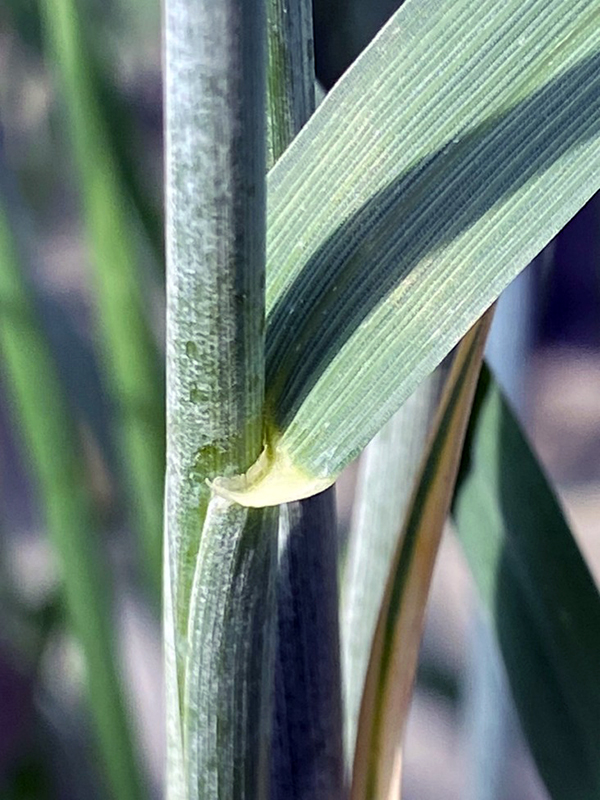
Identification
- Blades and stems: bluish-green.
- Ligule: short, tooth-like, membranous.
- Auricles: short.
- Sheath: sometimes hairy.
- Seedhead: spike with short awns present.

Triticum aestivum L.


Grass type
- Cool season, spring and winter annual types.
Use
- Hay or silage.
- Grazed in spring following overwintering of winter types.
- Spring grazing of spring-seeded annual type.
- Fall grazing of summer-seeded spring types.
- Fall-winter cover crop.
- Use of spring types as a companion crop.
- Human and livestock grain.
Adaptation
- Adapted to a diversity of soil types.
- Tolerates salinity.
- Soil pH range 5.5-8.0.
- Spring types lack cold tolerance; winter types have moderate cold tolerance.
Growth habit
- Crown-forming bunch grass with multiple stems.
- Tall growing (3-4 feet).
Production
- Forage yield potential of 2-4 tons per acre from a single harvest during July.
- Forage quality is greatest when vegetative and declines with stem elongation.
Management
- Plant spring types in early spring.
- Plant winter annuals in late summer.
- Graze when vegetative before stem elongation.
- For haymaking, harvest at boot to soft dough stage.
- Apply 50 pounds of N per acre at planting.
Identification
- Blade: 1/2 to 3/4 inch wide.
- Ligule: membranous.
- Auricles: short.
- Hairs on the auricles and collar.
- Seedhead: spike, short awned and awnless types.
Meyer, Mary Hockenberry and Diane M. Narem. Gardening with Native Grasses in Cold Climates. 2020.
Sheaffer, Craig C. and Kristine M. Moncada. Introduction to agronomy: food, crops, and environment, 2d ed. Delmar. 2012.
Reviewed in 2026