

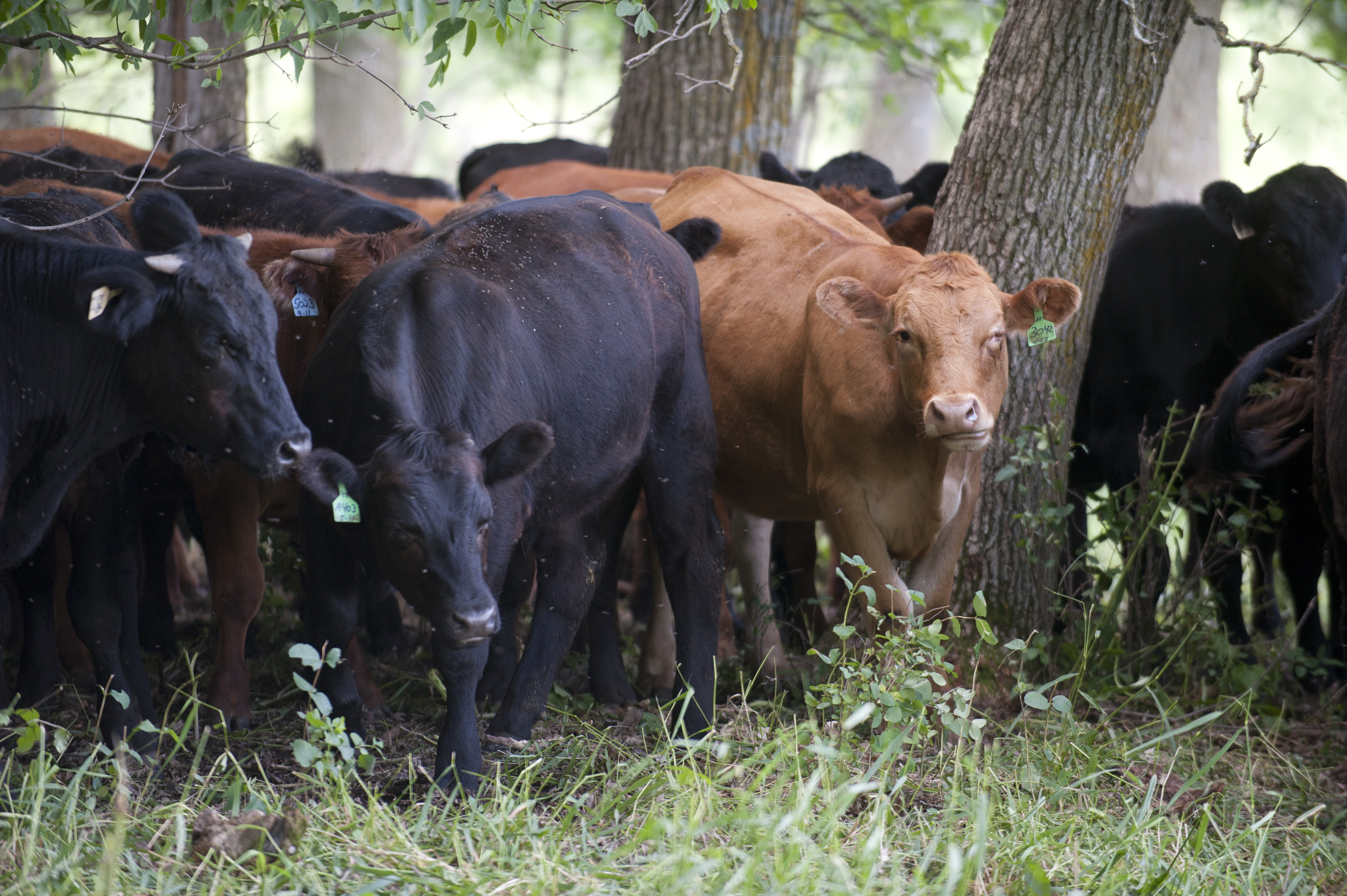
Silvopasture is a planned system that combines trees, forage and livestock on the same land. When designed and managed well, it can produce both agricultural and forest benefits.
Simply allowing livestock to graze in the woods is not silvopasture. The system depends on active management of trees, light, forage and grazing.
Two approaches to silvopasture
Establish trees in an existing pasture
Planting trees in pasture allows you to maintain a livestock operation while creating long-term value in timber or specialty forest products.
- Young trees allow plenty of light for forage production.
- As trees mature, they provide shade and wind protection that can improve livestock health and performance.
- Over time, trees can be thinned to maintain forage light requirements, and the timber, fruits or nuts can be used for additional income.
Establish forages in an existing woodland
Silvopasture can also be created by introducing forages into a managed forest. In this system, the area can be jointly managed for grazing and timber production.
To properly support forage production in a woodland, landowners must:
- Maintain adequate sunlight by thinning trees and managing spacing.
- Test and amend soil as needed.
- Select tree species that match the site.
- Choose forage crops suited to light conditions and grazing objectives.
Benefits and limitations
Silvopasture has many benefits, including:
- Seeded grasses and legumes reduce erosion and suppress unwanted trees and brush.
- Livestock recycle nutrients through manure, which helps reduce fertilizer needs.
- Trees provide long-term income through thinning or harvest.
- Integrating trees and livestock diversifies farm income.
- Timber and specialty forest product quality improve due to intensive management.
- Shade reduces animal heat stress and improves productivity.
- Diverse vegetation supports wildlife habitat.
However, there are also some challenges, such as:
- Distance and access to water.
- Establishing and protecting young trees.
- Establishing forages in shaded woodlands.
- Maintaining proper light levels.
- Installing and maintaining fencing.
Silvopasture design
Before establishing silvopasture, consider both economic and environmental factors. Land-use zoning, tax implications, plant selection and potential markets all influence long-term success.
Tree species should:
- Be well-suited to the site
- Produce marketable, high-quality timber
- Grow at a rate that aligns with your income goals
Forage species should:
- Be palatable to livestock
- Tolerate expected light conditions
- Respond well to rotational grazing
Recommended trees and plants for silvopasture in Minnesota
You can foster a healthy, resilient silvopastoral system by planting species that are projected to adapt well to climate change. The following species have been reviewed by local agroforestry professionals, are projected to do well in our future climate, and have other ecological or production benefits.
Grasses
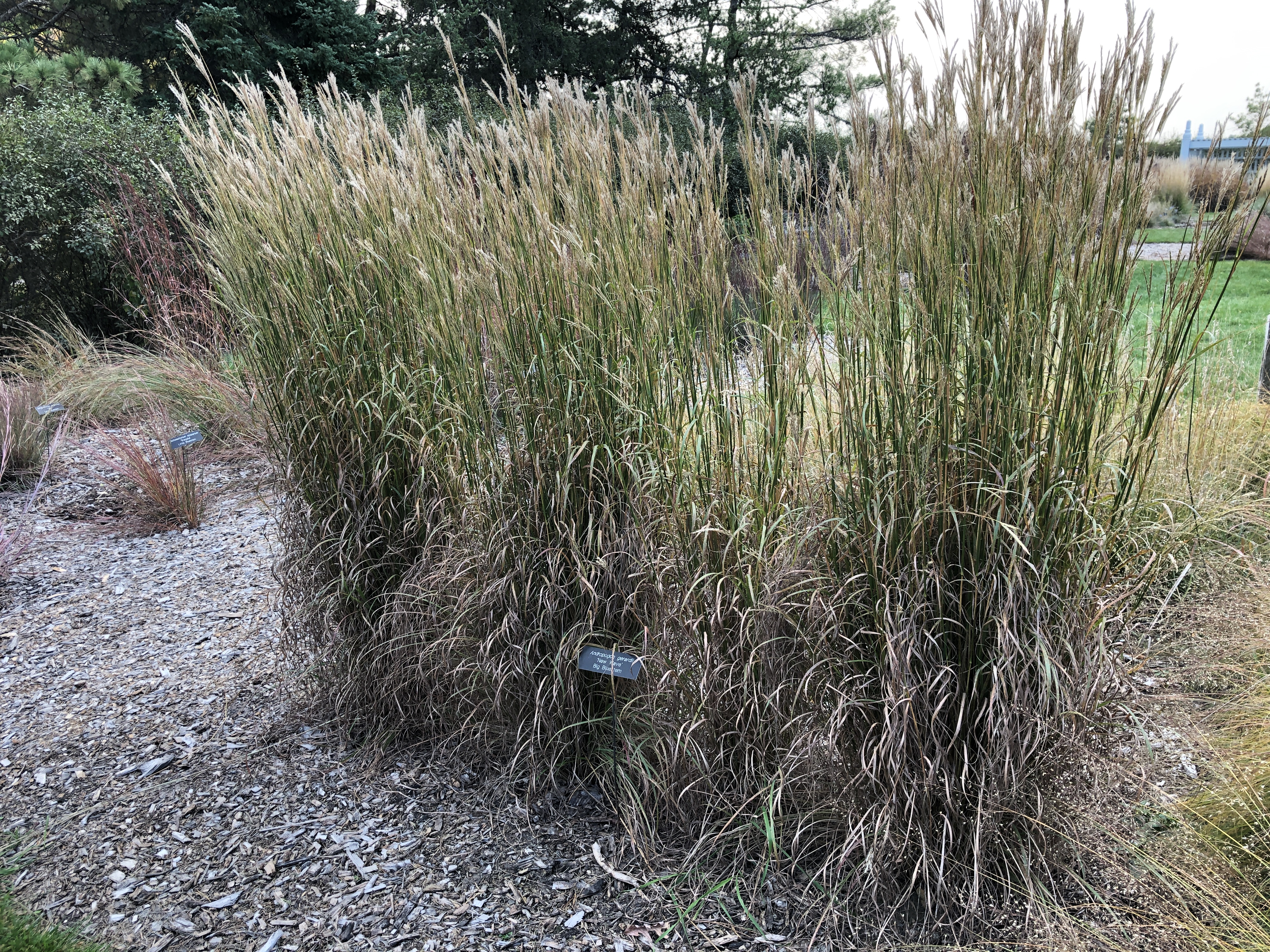
Big bluestem, Andropogon gerardii
Switchgrass, Panicum virgatum
Indian grass, Sorghastrum nutans
Plants and shrubs
Low serviceberry, Amelanchier humilis
American hazelnut, Corylus americana
Missouri gooseberry, Ribes missouriense*
Red raspberry, Rubus idaeus
Wild grape, Vitis riparia
Coniferous trees
Eastern redcedar, Juniperus virginiana*
Red pine, Pinus resinosa
White pine, Pinus strobus*
Deciduous trees
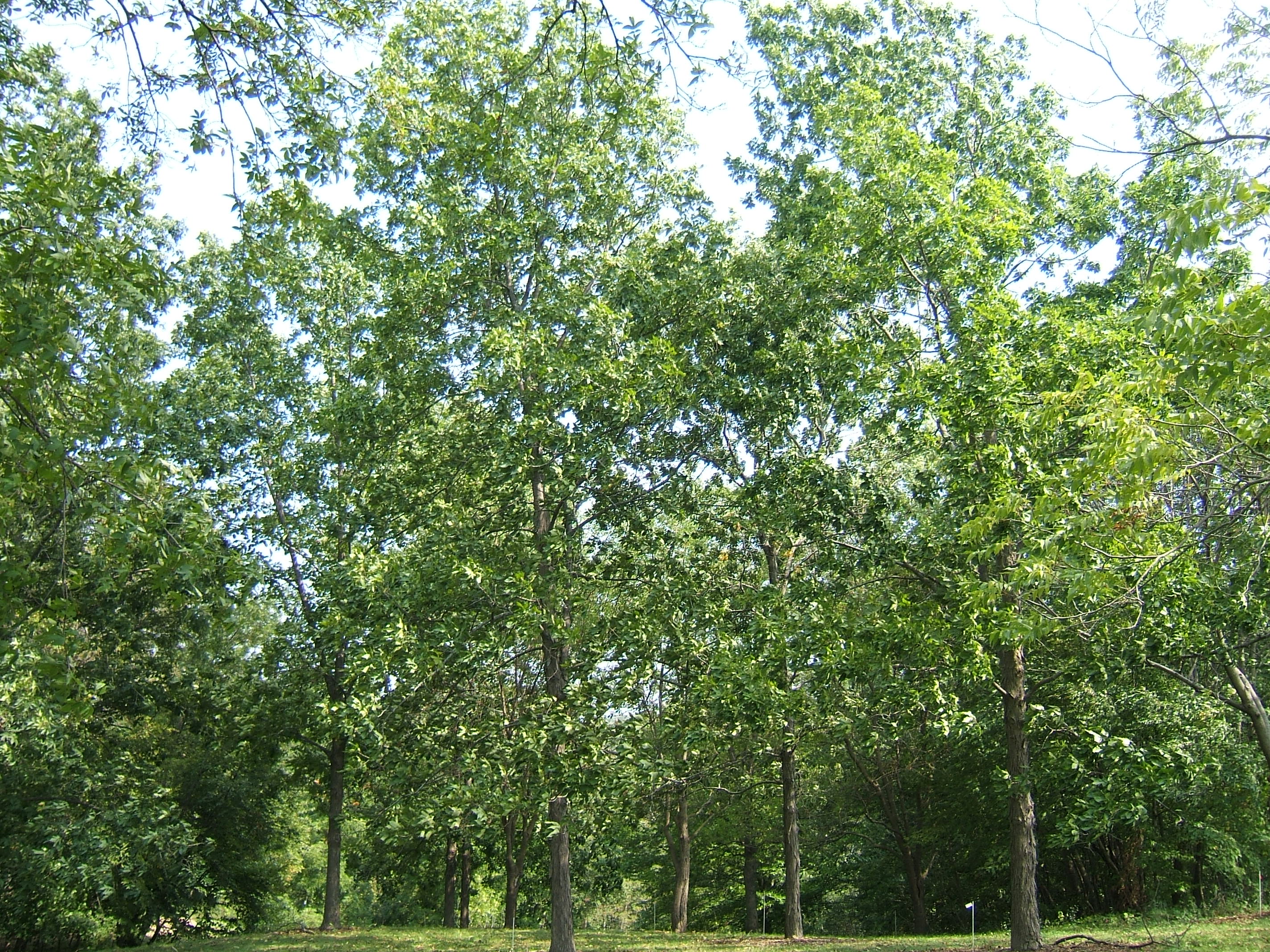
Sugar maple, Acer saccharum*
Bitternut hickory, Carya cordiformis
Shagbark hickory, Carya ovata
Hackberry, Celtis occidentalis
Black walnut, Juglans nigra*
White oak, Quercus alba
Swamp white oak, Quercus bicolor
Northern pin oak, Quercus ellipsoidalis*
Bur oak, Quercus macrocarpa
Northern red oak, Quercus rubra*
Black oak, Quercus velutina*
American elm, Ulmus americana*
* Please see “Selection and planting considerations” below for more information on these species.
Experimenting with near-native tree species

As Minnesota’s climate changes, some areas may become suitable habitat for species more commonly found to our south. In order to maintain resilient silvopasture, producers may want to consider planting some near-native tree species interspersed with established natives. The following near-native trees are projected to have suitable habitat in Minnesota’s future climate, but should be considered experimental.
Northern pecan, Carya illinoinensis
Mockernut hickory, Carya tomentosa
Common persimmon, Diospyros virginiana
Osage-orange, Maclura pomifera
Chinkapin oak, Quercus muehlenbergii
Pin oak, Quercus palustris*
Selection and planting considerations
Care should be taken to match plant growth requirements to the site conditions. Some tree species may present additional challenges in certain situations.
Tree diseases
- Eastern redcedar is an aggressive spreader and needs to be managed. Apple and hawthorn trees shouldn’t be planted near redcedar trees due to disease problems (cedar-apple rust).
- American elm can be killed by Dutch elm disease (DED). Always ensure you buy and plant DED-resistant cultivars.
- Red oak species (including pin oak, northern pin oak, northern red oak, and black oak) are most susceptible to rapid declines due to oak wilt disease. White oak species can also be infected with oak wilt disease, but are less susceptible. Make sure you are not in an area affected by oak wilt before planting red oaks.
- White pine trees are susceptible to white pine blister rust, a fungus that needs to infect both white pine and a Ribes spp. plant to complete its life cycle. Don’t plant white pine and currants or gooseberry together in the landscape unless resistant cultivars are used.
Livestock health concerns
- Wilted maple leaves are toxic to horses in large amounts. Fence horses out of areas with a lot of wilted maple leaves and keep maple branches out of reach.
- Black walnut wood shavings and nuts may be toxic to livestock.
Silvopasture examples in Minnesota
Raising cattle in aspen woodlands
In this video, Eric Mousel, University of Minnesota Extension educator and cattle producer, and forest ecologist Sawyer Scherer of Blandin Paper Company walk through a working silvopasture system on Eric’s family farm. Together, they explore issues of aspen forest health, forage productivity under tree cover, water quality considerations, and design decisions that support both timber and livestock production. The video offers a practical look at how grazing and forest management can be integrated to improve long-term productivity and ecological health.
Watch: Cattle in your aspen woodlands: Growing forage and wood products (08:58)
High-density grazing in red and white pine
The goal of Early Boots Farm is to provide shade for cattle and improve feed quality. The owner is focused on having tree and forage cultivars that are available in large quantities, hardy, cold- and drought-tolerant, and trees that will eventually produce high-quality timber.
Early Boots Farm grazes over 80 lowline Angus cattle. They use a grazing system known as Ultra High Density Grazing, in which they move the cattle multiple times daily across small areas of land.
Design at Early Boots Farm
- The farm has a double-row alley of red pine and white pine trees planted 10 feet apart with 40–48 feet between trees.
- Forage includes legumes of white clover, chicory, and bird’s foot trefoil.
- Grasses include timothy, tall fescue, meadow brome and perennial ryegrass.
- A piping system runs along the pasture surface to feed a portable stock tank, which helps during multiple cattle moves.
What they learned
- Match each site to the species’ requirements.
- Plan the tree spacing in the design to accommodate the width of mowing and other farm equipment.
- Get soils and pasture ready before planting trees.
Learn more about silvopasture
Silvopasture: Establishment and Management Principles for Minnesota. A best management practices manual covering site selection, design, and long-term management.
Agroforestry and Silvopasture, Sustainable Farming Association. This program works with farmers, agricultural and natural resource professionals, and conservationists throughout the state to help them use silvopasture.
Reviewed in 2026