

Quick facts
- Hardy, adaptable native shrub in Minnesota that tolerates a wide range of soils, moisture levels, pH, and even salt and compaction
- Commonly used for landscaping and erosion control, especially in wet areas, due to its suckering growth and ability to form dense plantings
- Produces high-antioxidant fruit used in jams, juice, wine, and baking; fruit persists into winter and supports wildlife
- Offers strong seasonal interest with white spring flowers and vibrant red, orange, and purple fall foliage
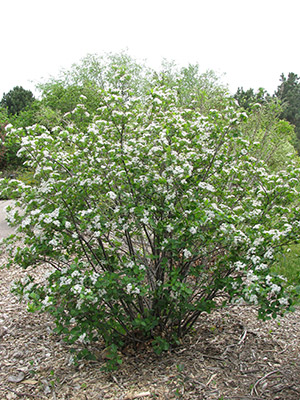
Black chokeberry (Aronia melanocarpa) is an adaptable shrub native to Minnesota with hardiness and wide tolerance to a variety of soil textures, densities, pH levels and moisture conditions.
Because of suckering and its tolerance to wet soils, this species is typically used in mass planting, in naturalized and woodland gardens, for erosion control, in windbreaks and in excessively wet soils.
Black chokeberry can also be used as an edible fruit crop although the fruit is too astringent to eat raw.
The high-antioxidant fruit is used in baking and to make jams, jellies, syrup, tea, juice and wine. Fruit can persist into winter and serves as a food source for birds and other wildlife.
In spring, it has showy white flower clusters. In autumn, leaves change from green to vibrant tones of red, orange and purple.
Description
Deciduous tree; it drops its leaves in fall
Height: 3 to 8 feet
Width: 2 to 6 feet
Upright, rounded plant form
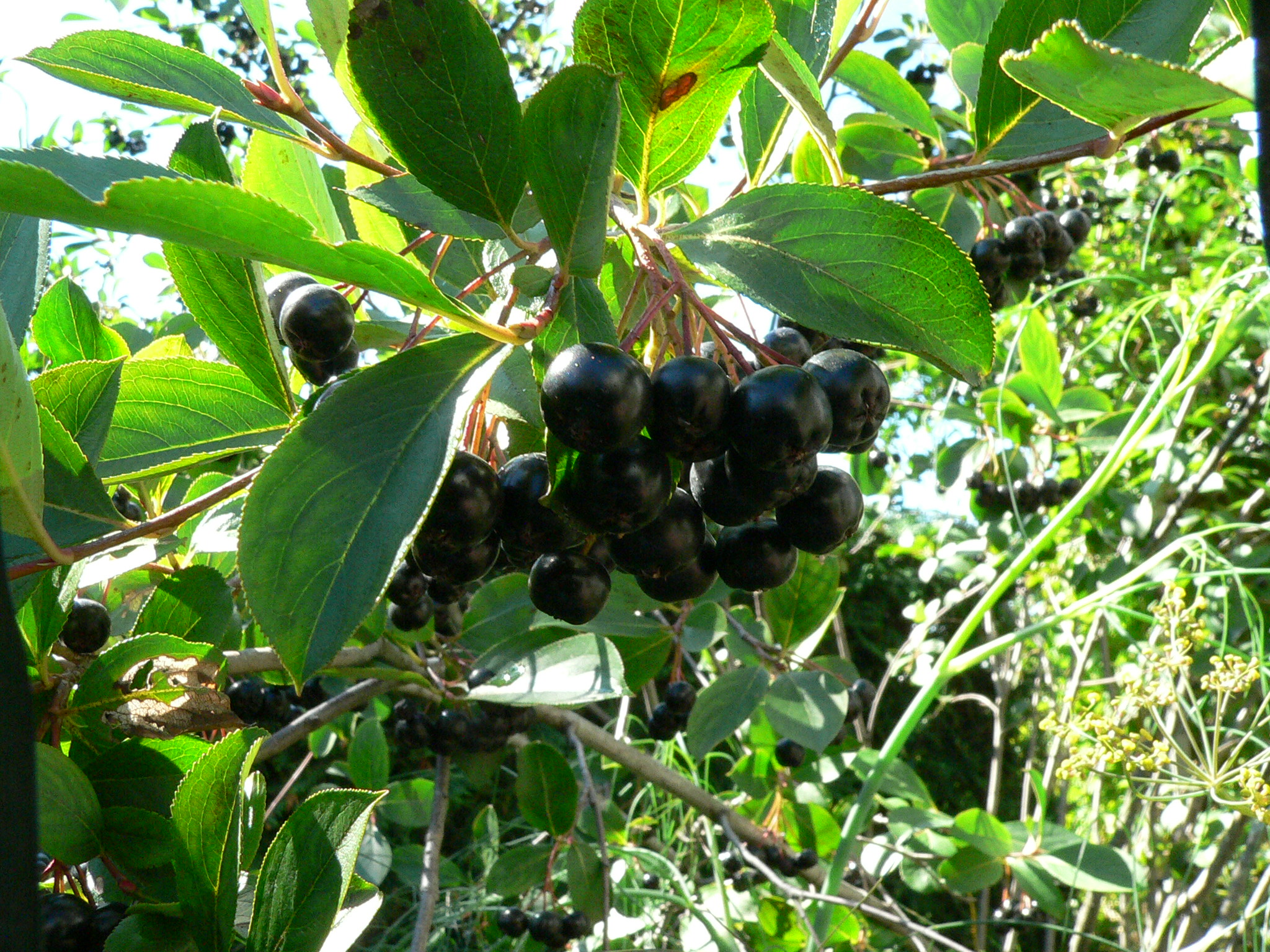
Dark green glossy, finely-toothed 1 to 3-inch leaves
2- to 3-inch clusters of white flowers in spring have showy pink anthers
Clusters of ¼ to ½ inch fruit turn purplish-black or black in late summer and autumn
Growing black chokeberry
Hardiness zone: 3 to 8
Plant in full sun; tolerates partial shade
Best soil properties:
Adaptable - sandy to clay soils
Soil pH 5.1 to 6.5; tolerates higher
Poorly-drained to well-drained; moist to wet soils
Tolerant of salt and compacted soil
Common problems
In cultivated landscapes, where chokeberries have less competition and receive more fertility and care, they become strongly suckering plants.
Browsed by deer and rabbits.
Pests and stresses: None serious.

Cultivated varieties of black chokeberry for Minnesota
Black chokeberry varieties have been selected for less suckering, compact growth, improved fruit yields and fall color.
‘Autumn Magic’ - compact habit, fall color, large abundant fruit clusters
var. Elata - fall color, large abundant fruit clusters, reduced suckering
Iroquois Beauty™ - compact habit, fall color
‘Viking’ - fall color, large abundant fruit clusters
Reviewed in 2026