

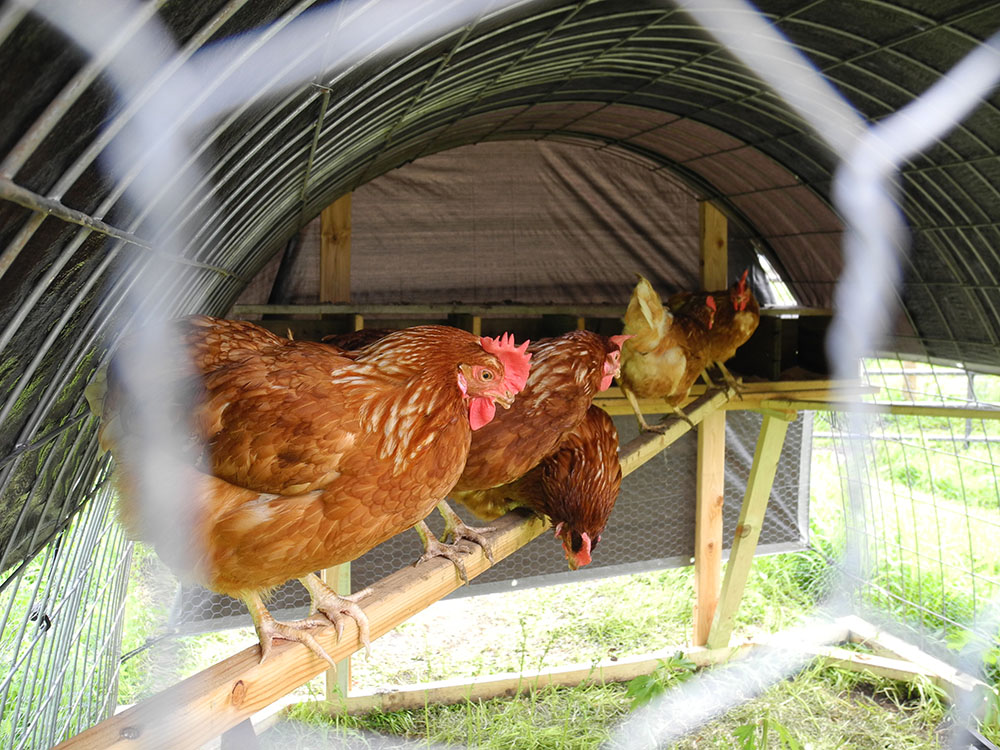
In Minnesota, people who sell or donate eggs from their own flock do not need a food handler license. Registration is voluntary, but encouraged, and some retailers or restaurants will want proof that you are an approved seller.
Whether you raise, sell, give away or purchase farm fresh shell eggs, you can enjoy safe fresh local eggs when they are properly cleaned, candled, graded, sized, packed and stored.
Food safety checklist for farm fresh eggs
|
- Wash hands with soap and warm water before and after cleaning eggs.
- Collect or pick eggs two to three times a day.
- Discard eggs with broken or cracked shells.
- Keep eggs dry. If shell gets wet, bacteria can pass through the shell. Clean shells using a dry cleaning method such as fine sandpaper, a brush or emery cloth. Do not use rags or sponges to scrub the eggs.
- Wet cleaning must meet water and egg temperature requirement, and eggs must be spray-rinsed with a sanitizing agent.
Storage
- Refrigerate eggs at 45 degrees Fahrenheit or less after grading.
- Keep eggs in the carton.
- Store in the coldest part of your refrigerator away from fresh fruits and vegetables.
- Inspect eggs. Do not use if shell is cracked.
- Check carton's pack date. Eggs have a shelf life of four to five weeks from pack date.
Preparation
- Crack eggs into bowl before using. Throw away if you see any defects.
- According to the American Egg Board, a blood spot found on an egg yolk is most often a ruptured blood vessel which happens during the yolk formation. Eggs with blood spots are safe to eat. You can remove the spot with a spoon or knife.
- Wash hands, utensils and equipment with hot, soapy water after contact with eggs.
- Never eat raw eggs. Outbreaks for Salmonella illnesses are associated with undercooked egg whites and yolks.
- To avoid illness, cook eggs until yolks are firm.
- Cook foods containing eggs to 160 degrees Fahrenheit as measured by a food thermometer.
- Throw away raw or cooked eggs left at room temperature for more than two hours.
- The chicken house is clean and dry.
- Floor litter is in good condition.
- Nests are cleaned once a week and nesting materials are replaced.
- A perch is mounted away from the nest to allow birds to sleep.
- Place a wire-mesh box under the perch to collect feces.
- There is a plan to control Salmonella carriers such as rodents, flies, beetles, wild birds and cats.
- Feed is stored to prevent contamination.
- Feeding and watering equipment cleaned in a sink other than the kitchen sink.
- Look for defects inside the shell by holding the egg up to a bright light.
- Discard eggs with abnormal shape, spots, cracks or other irregularities.
- After candling, eggs that are clean and well-shaped with no evidence of defects, meet USDA Grade AA quality standard if less than 15 days old.
- After 15 days without temperature and humidity control, the quality decreases to Grade A.
- After 30 days, egg quality decreases to Grade B.
- Eggs older than 30 days cannot be sold.
- The weight per dozen eggs determines the carton egg size.
Weight per dozen egg sizing
| Size | Weight per dozen |
|---|---|
| Jumbo | 30 oz. |
| Extra large | 27 oz. |
| Large | 24 oz. |
| Medium | 21 oz. |
| Small | 18 oz. |
- Fiber egg cartons can be reused if they are clean.
- Remove prior packing information from the label.
- Blacken out the dates, the packers name and contact information with a permanent marker.
- Containers (cartons, flats, and cases) of eggs must be labeled with the following mandatory information:
- Grade and size of the eggs.
- Your name, address, and zip code.
- The statement: "Perishable. Keep Refrigerated."
- A pack date in Julian calendar.
- A freshness date not to exceed 30 days from the date of pack.
- The freshness date must also have an explanation such as "exp...," "Best if used by...," or a similar statement.
- The safe handling instructions: "To prevent illness from bacteria: Keep eggs refrigerated, cook eggs until yolks are firm, and cook foods containing eggs thoroughly."
Reviewed in 2026