

Diverse woodlands provide excellent habitats for native pollinators. Learn how woodlands can be managed with pollinators in mind.
Minnesota has over 500 species of native bees and thousands of pollinators, including bees, moths, butterflies, ants, beetles, flies and birds. This diverse group requires a wide range of plants to live and thrive.
Prairies are often thought of as pollinator havens, but woodlands with their downed wood, standing dead trees, huge leaf canopies, and diversity of herbaceous plants and trees also provide important habitat for many life stages of Minnesota’s pollinators.
Pollinator facts
- Native pollinators support plants that help build soils, filter water, and sequester carbon.
- 85% of the world’s flowering plants and two-thirds of food crops require pollinators.
- Some species of flies can look like bees. You can tell them apart by counting their wings: bees have two sets of wings while flies have only one set.
- 25% of all birds need food produced from plants that require pollinators.
- All flowers need pollination to produce fruit, but some are wind-pollinated. However, even wind-pollinated plants are often used by pollinators for food and shelter, even though they are not required for pollination.
- Honey bees are non-native and most are managed like livestock to produce honey and pollinate crops. They are often regulated like chickens in Minnesota ordinances.
- Some plants rely on native pollinators’ buzzing to shake the flower and release pollen.
- Native pollinators, including mason and bumble bees, are essential fruit crop pollinators.
While developing our climate-ready woodlands information, we researched how each tree and plant species on those lists benefits wildlife, including pollinators.
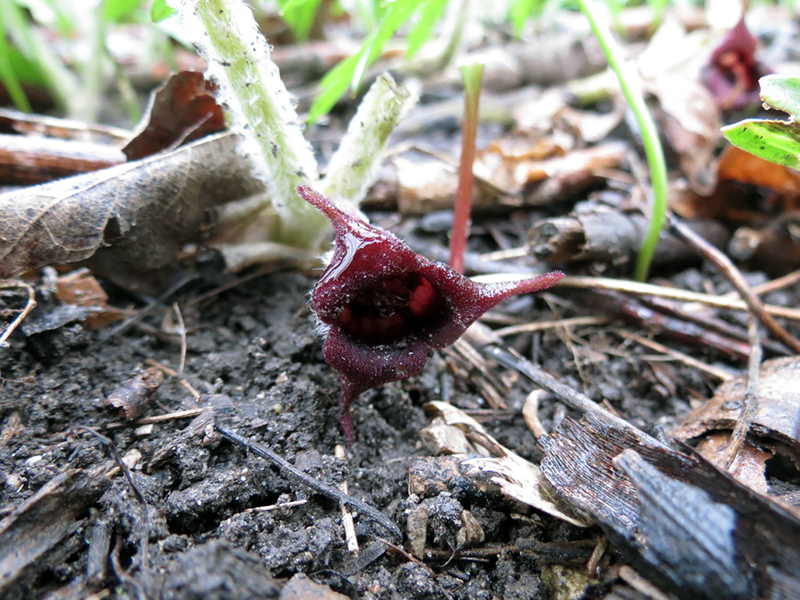
Early-blooming trees and spring ephemerals can be crucial as early spring food sources for many emerging pollinators. Insects will seek out the spring blooms of maples, hawthorns, dogwoods, cherries, willows, serviceberry, and eastern redbud. Insects pollinate spring ephemerals, including trout lily, trillium, Dutchman’s breeches, violets, wild geranium, and wild ginger, among many others.
We also researched tree and plant benefits for beetles, ants and flies. We know that beetles pollinate pipsissewa, Canadian mayflower and bluebead lily; ants pollinate common marsh marigold, leatherleaf and chokecherry; and flies (which often mimic bees) pollinate bog rosemary, wood anemone, skunk cabbage and creeping snowberry, to name a few of the many, many plants that benefit our diverse pollinators.
Just as trees and plants provide food for pollinators, pollinators are also a good food source for other woodland wildlife, including birds, amphibians, mammals, and other insects.
Woodland management for pollinators
Forests meet the full habitat requirements for many pollinators throughout their life stages, from eggs, caterpillars and grubs, to mature butterflies, moths, beetles and ants.
Pollinators benefit from woodlands that have some open canopy, which provides more sunlight and flying space, allowing more herbaceous flowering plants to thrive.
Pollinators also benefit from wood and brush piles, as well as snags (standing dead trees), which create habitat for wood-boring beetles whose tunnels are used by cavity-nesting bees.
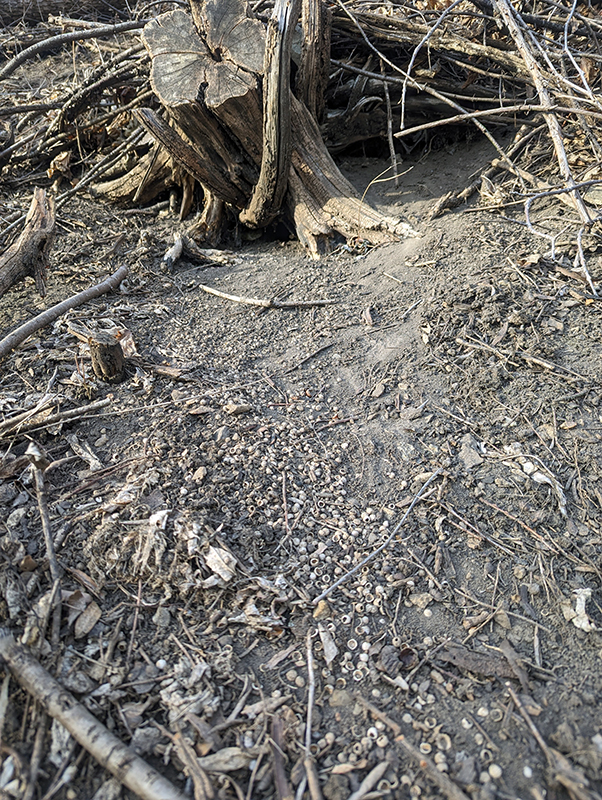
Some pollinators also nest in burrows created by small mammals under brush piles.
Because diverse woodlands are home to many species of trees and plants, plants will flower at different times, supplying a continuous source of nectar and pollen. Woody plants support 10 times more butterflies and moths than herbaceous plants. Lepidoptera (winged insects that include butterflies and moths) use native woody plants for shelter, pupation and feeding.
There are many ways woodland stewards can enhance pollinator habitat across the forest. A few important ones are preventing forest fragmentation, reducing troublesome deer browsing, minimizing pesticide use, and avoiding over-harvesting of wild plants.
Good woodland stewardship, including invasive plant removal, thoughtful timber harvesting, and corridor management, is also important.
Invasive plant removal
We know invasive plant removal is good woodland stewardship, but it is also important for pollinators. Research shows that 15 times more native Lepidopteran species use native woody plant species as larval hosts than non-native ornamental woody species.
In addition to being less useful, some invasive plants can actively harm native pollinator populations. Female monarchs will lay their eggs on black swallow-wort instead of their preferred milkweed, even though larvae cannot feed on these plants and soon die.
Invasive species control commonly uses pesticides, and timing basal bark or trunk injection treatments until after flowering can help limit non-target damage. Because some pollinators use invasive plants, it is important to replace invasives with native plants to ensure continued pollen sources.
Woodland edges
Many woodland owners or stewards have woodland edges throughout the property. Creating a gradual transition between habitat types, called feathering, can enhance bumblebee and butterfly abundance. Many folks also find feathered edges more aesthetically appealing and natural-looking than straight edges.
Timber harvesting
Timber harvests are often essential management tools for resilient woodlands. Creating small canopy gaps can increase herbaceous plant flowering and allow butterflies to sun themselves.
Timber harvesting is also a good time to improve the climate resilience of the forest by diversifying tree and plant species. Species diversity is critical for optimal pollinator habitat.
Log landings are areas where logs are piled before hauling off-site during a timber harvest. These woodland openings are often reseeded after logging is complete, and some will have residual wood. To manage these areas for pollinators, reseed with native perennial wildflowers and allow loose, bare ground to persist along the edges, as this can be valuable for ground-nesting and mason bees. The wood piles can be used as habitat for overwintering pollinators, reptiles and amphibians.
Corridor management
Managed trails and roads that run through the woods can enhance pollinator habitat. If the corridor is wide enough for sun to reach flowering herbaceous plants, they can provide nectar and pollen later in the season. If the corridors or road edges are shaded, they may harbor spring ephemerals that are critical for early-season pollinators.
Mowing as a vegetation management tool must be used with care. For some plants, waiting until after they’ve flowered may be preferable.
For invasive species, such as wild parsnip, it’s essential to ensure the mower does not spread propagating parts or seeds.
Rough or high mowing can leave behind herbaceous stems that pollinators use for overwintering or nesting habitat.
Mowing information from the DNR offers this advice: “Roadsides that have not been mowed for three years have up to three times as many [bird] nests per acre as those mowed annually. Mowing every three years is sufficient to control brush. Mow grass high to leave cover over winter.” The DNR also recommends spot mowing or spraying for weed control.
Benefits for wildlife from bees to bears
The improvements you make to your woodland benefit not only pollinators but also other wildlife. Forests are incredibly valuable for many large wildlife species, including deer, turkey, bear, moose, elk, wolves and bobcats.
Recent work from the University of Minnesota’s Offal Wildlife Watching project reveals that birds, which locate food primarily through sight, visit gut piles in deciduous forests most frequently, followed by prairies and then conifer forests.
Carnivores, who detect food by smell, arrive at gut piles later than birds and are more common in conifer forests, followed by deciduous forests and then prairies.
Another interesting tidbit: barred owls are common gut pile visitors, eating both the gut pile and the small mammals those piles attract.