

Quick facts
Burning bush (Euonymus alatus), also known as winged burning bush or winged Euonymus, is a popular exotic landscape plant that can become invasive.
Burning bush is a Restricted Noxious Weed; it is prohibited from sale, propagation and transport in the state of Minnesota.
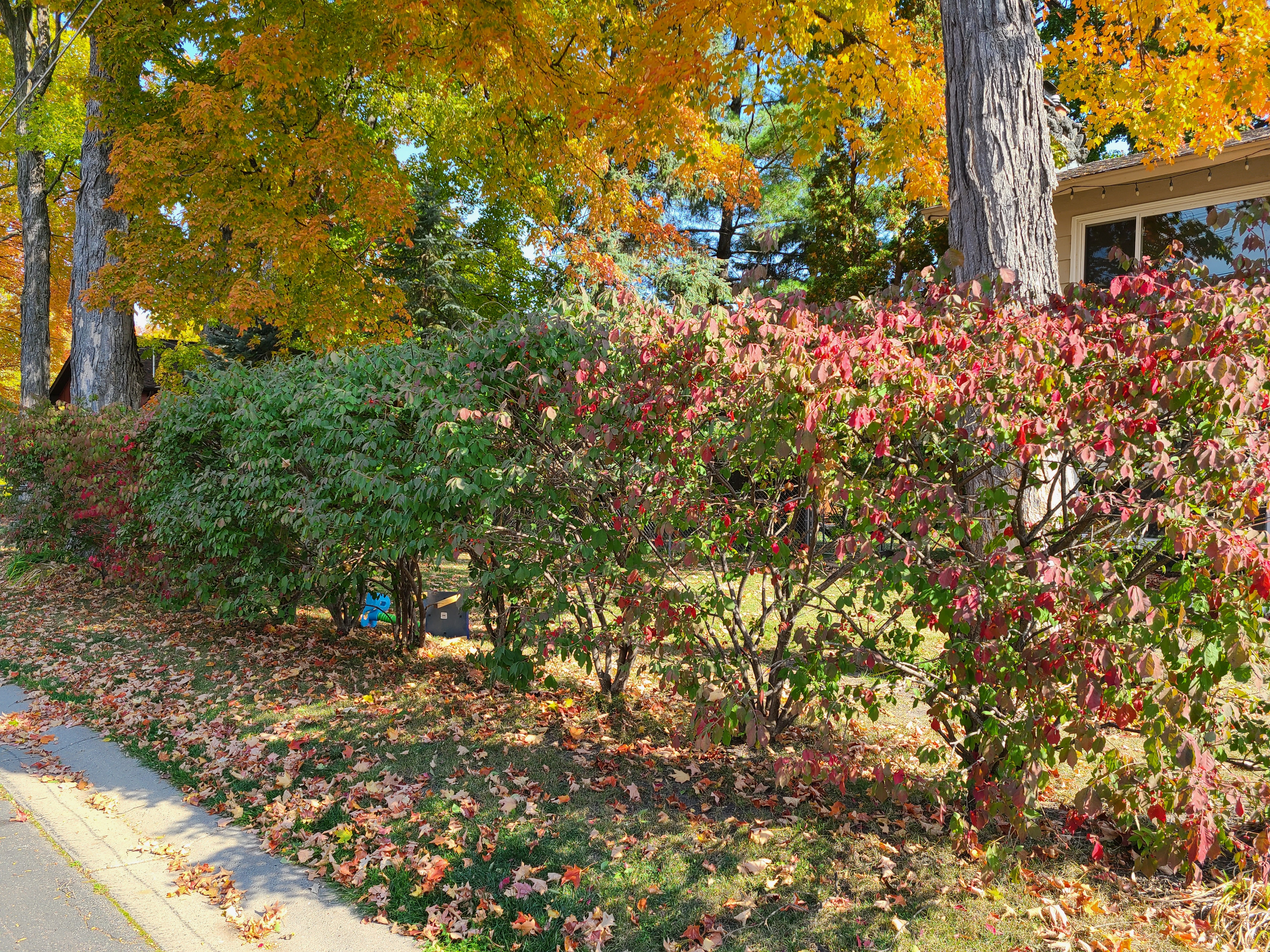
Winged Euonymus or burning bush (Euonymus alatus) has been a popular landscape shrub since it arrived in North America in the mid-1800s. A member of the bittersweet family (Celastraceae), Euonymus alatus is indigenous to Northeastern Asia, Japan and Central China.
Its brilliant red fall foliage, corky “winged” branches, and orange-red fruits, as well as its adaptability, have made it a desirable ornamental landscape plant with four-season interest.
Unfortunately, the seediness of the plant has caused it to escape the managed landscape to inhabit the natural landscape where it outcompetes native vegetation for sunlight, soil nutrients and space.
While homeowners are not required to remove E. alatus from their landscape, the MDA and UMN Extension encourage people to consider alternative shrubs with similar characteristics and growing conditions such as glossy black chokeberry (Aronia melanocarpa), regent serviceberry (Amelanchier alnifolia ‘Regent’) and 'Little Devil™' ninebark (Physocarpus opulifolius 'Donna May' PP22,634).
How to identify burning bush

- Deciduous shrub up to 20 feet tall.
- Brilliant red fall foliage.
Stem
- Distinctive wide, corky ridges form along the length of the stem.
Sometimes called “winged wahoo” because of these ridges.
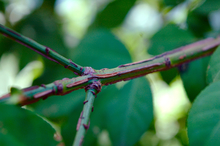
Burning bush stems
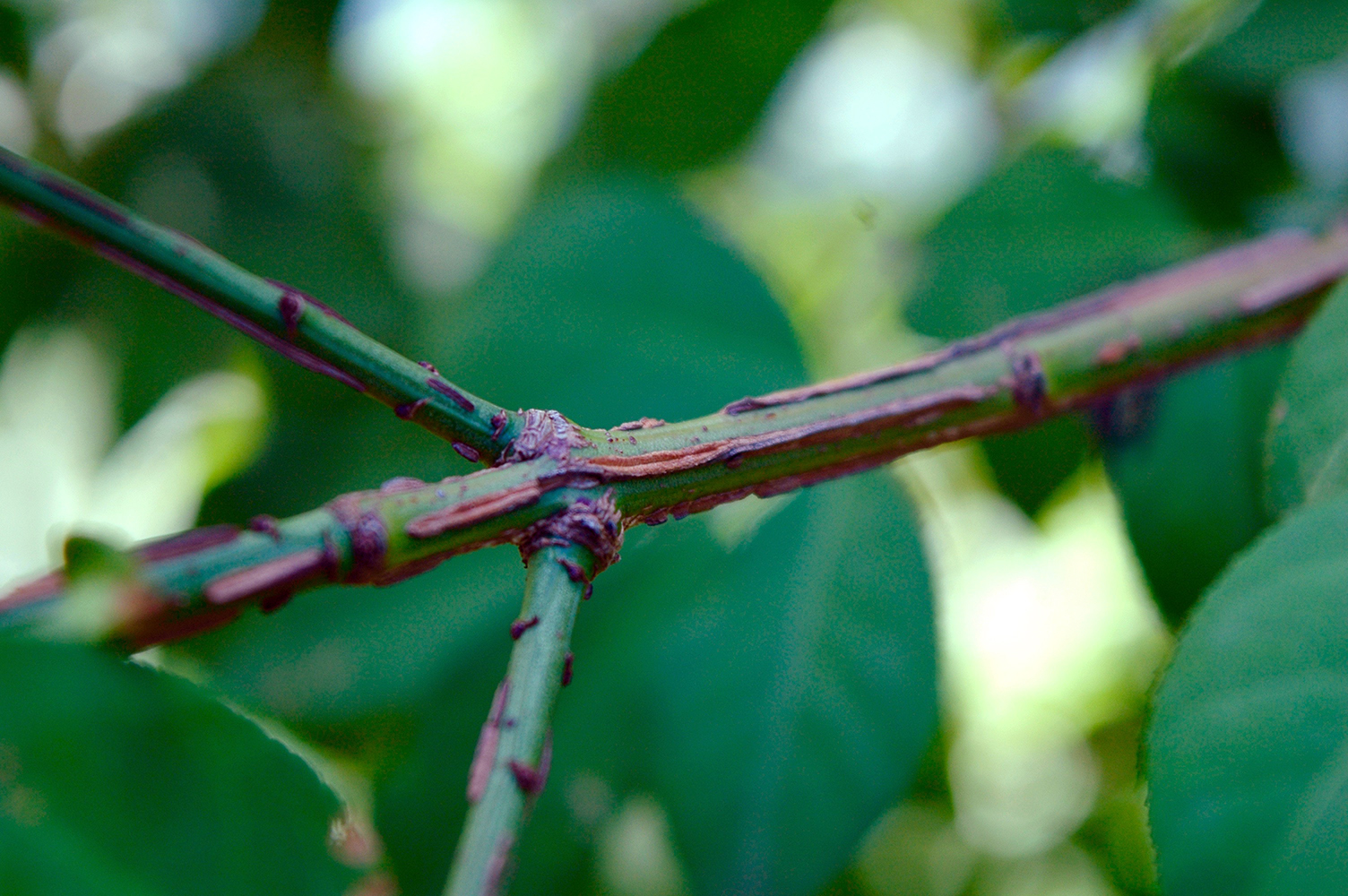
Branches
- Opposite
Leaves
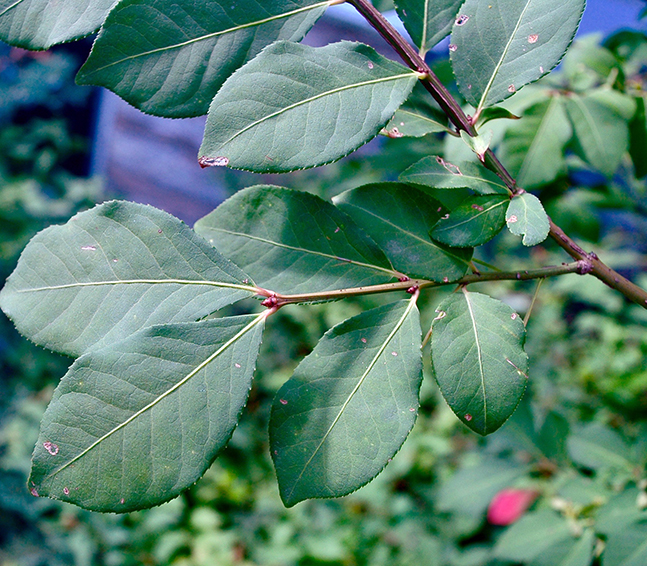
- Opposite, simple, elliptical, dark green in the summer and bright red in the fall.
- 2 to 3 inches long, smooth to fine-toothed margins, tapering at tips.
Flowers
- Inconspicuous, greenish yellow, with four petals.
- Blooms May to June.
Fruit and seeds
- Smooth, orange-red fleshy seeds appear from reddish capsules.
- Up to four seeds per fruit.
Reviewed in 2022