

Quick facts
Your farm might qualify for an exemption from the major regulations in the Produce Safety Rule based on your annual sales and the types of buyers you sell to.
If your farm is eligible for a qualified exemption:
- You will not be subject to routine FSMA inspections.
- You need to follow rules regarding labeling and signage.
- You need to keep sales records to prove you qualify for the exemption.
What does it mean to be Qualified Exempt?
Many farms may be eligible for a Qualified Exemption from the FSMA Produce Safety Rule (PSR). This means that a farm is eligible for an exemption from the majority of the regulations in the rule.
Eligibility for the exemption is based on your annual sales and the types of buyers you sell to. Broadly, to qualify for an exemption from the FSMA PSR, your sales records must show that your rolling 3-year average annual food sales are below $500,000, and that more than 50% of sales are to qualified end users.
If your farm is eligible for a qualified exemption:
- You will not be subject to routine FSMA inspections.
- You need to follow rules regarding labeling and signage.
- You need to keep sales records to prove you qualify for the exemption.
Labeling and signage requirements
The labeling requirements described here apply to packaged produce.
When is a label required on a package?
In Minnesota, all farms that sell packaged fruits and vegetables to consumers (whether fresh, frozen, or otherwise) must include a food label on these packages, as required by Minnesota Statutes Chapter 31 and FDA 21 CFR 101 labeling regulations. You can find details on when a label is required, along with additional information required, on the Minnesota Department of Agriculture’s Labeling Requirements for Produce Farms webpage.
If your produce will have a label, the FSMA Produce Safety Rule requires that Qualified Exempt farms must prominently display the name and complete business address of the farm where the produce was grown on the label..


Signage requirements
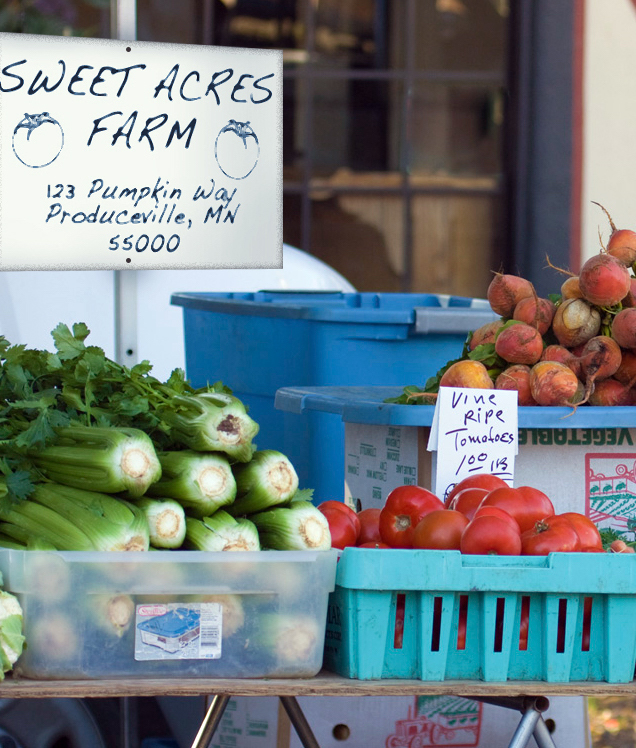
Qualified exempt farms must also follow signage rules when selling covered produce that is not packaged, such as bulk produce, either at a farmers’ market or via a CSA. This helps customers get in touch with the farm in case of an issue with the produce.
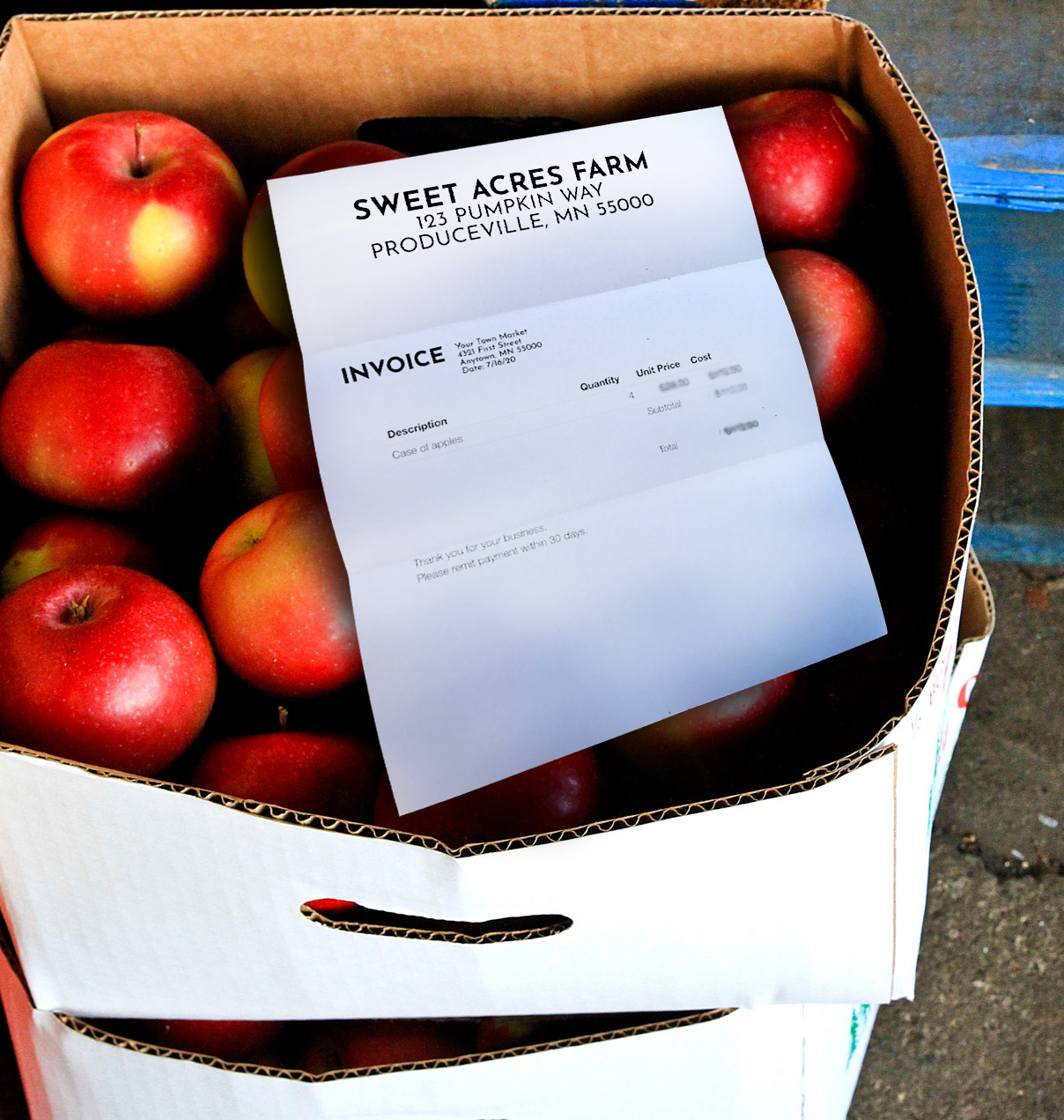
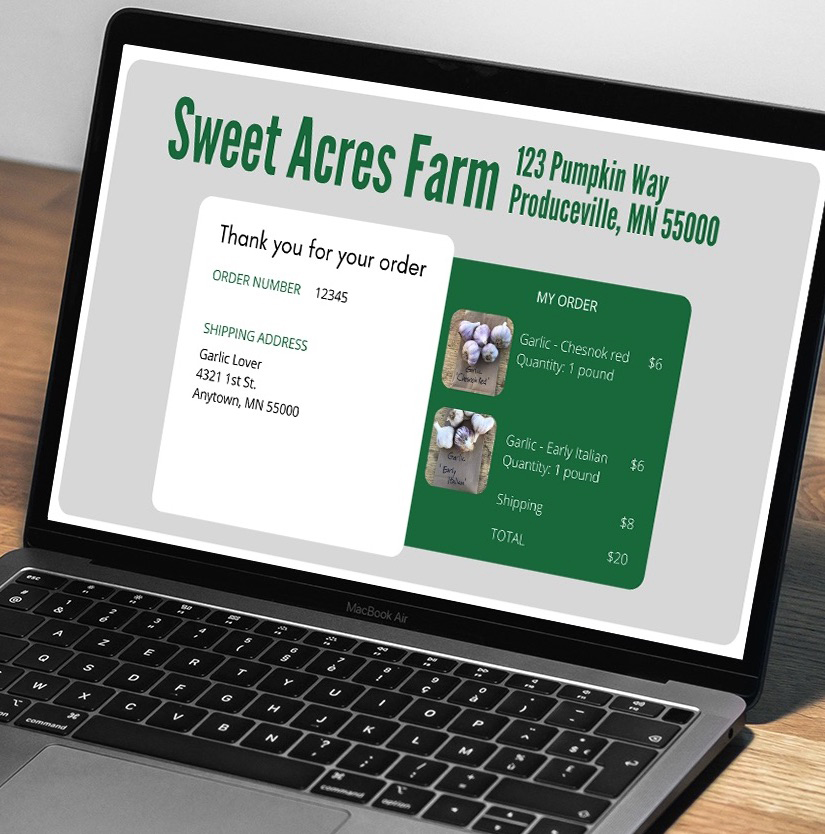
Signage requirements state that Qualified Exempt farms must prominently display at the point of purchase the name and complete business address of the farm where the produce was grown. This can be on a sign, poster, placard, or on documents delivered with the produce, and can be handwritten or printed. In the case of internet sales, this can be an electronic notice.
What crops do the signage rules apply to?
Signage requirements apply to produce that is considered covered under the Produce Safety Rule. Covered produce includes all fruits, vegetables, herbs, sprouts, and mushrooms that are not on the FDA’s list of items considered rarely consumed raw.
What needs to be included in the complete business address of my farm?
In all cases, the address must be that of the farm where the produce was grown. The address must include:
- Street address or post office box, city, state, and zip code OR
- Comparable full address if the farm is outside of the U.S.
Minnesota Grown labeling and signage cost share
If you are developing a new label, tag, bag, box, or permanent sign and would like to add the Minnesota Grown logo, you may be eligible for reimbursement in the current fiscal year (July 1– June 30). Visit Minnesota Grown to learn more about this cost-share program.
Documentation requirements for Qualified Exempt farms
In addition to labeling and signage requirements, you must keep some records to demonstrate that your farm meets the criteria for a qualified exemption. You can find details about standard practices for all recordkeeping in Subpart O of the Produce Safety Rule.
Required documents
- Sales records showing your rolling 3-year annual average food sales are below $500,000, and that the majority of your sales are to qualified end users. Sales receipts must be dated, but do not require a signature or initials.
- Written record that you performed an annual review and verification of your farm’s continued eligibility for the qualified exemption.
$500,000 is the original 2011 value. It is adjusted each year for inflation. For the most current number, please visit the Minnesota Department of Agriculture Produce Safety Program. A qualified end-user is either the consumer of the food, regardless of location, or a restaurant or retail food establishment that is located in your state or on your Indian reservation, or not more than 275 miles away from your farm.
How do I keep annual records to show I meet the criteria for a qualified exemption?
We recommend that you make and keep a sales report for each calendar year to track your eligibility for the qualified exemption.
- Fill out the record on at least an annual basis.
- Keep any supporting documentation (receipts, etc.) to help verify your eligibility for a qualified exemption.
- Keep these records for the previous 3 years to demonstrate the 3-year rolling annual average required for eligibility.
The Produce Safety Alliance has templates you can download for recordkeeping.
How do I keep records for sales at farmers’ markets or similar sales to consumers?
In situations where sales are directly to consumers, you could keep track of daily sales totals rather than tracking each individual sale. If you have Internet sales, you could run reports on your total weekly online sales. You must date each sales record.
As a farm that qualifies for an exemption from the Produce Safety Rule, it’s a good idea to get familiar with the written regulations. The Electronic Code of Federal Regulations breaks it down into the different subparts (like subpart O mentioned above) so it’s easy to find what you’re looking for.
- Minnesota Department of Agriculture Produce Safety Program
- Produce Safety Alliance has a wealth of information and resources on the FSMA Produce Safety Rule.
- Visit the U.S. Food and Drug Administration for the full text of the FSMA Final Rule on Produce Safety.
Funding for this publication was provided in part by the Minnesota Department of Agriculture’s Specialty Crop Block Grant Program; by a grant from the U.S. Department of Agriculture (USDA) National Institute of Food and Agriculture Food Safety Outreach Program; and by the Food and Drug Administration through grant PAR-16-137. Its contents are solely the responsibility of the authors and do not necessarily represent the official views of FDA or USDA.
Reviewed in 2025