

Identification of Thistle caterpillar (Vanessa cardui)
Adults
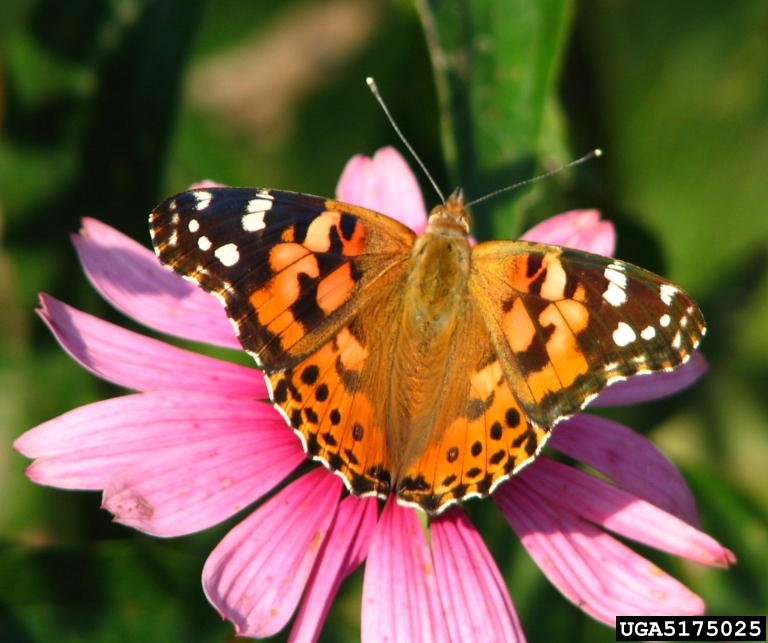
- The upper side of the front wings are red-orange and brown, with black and white spots.
- Hindwings are red-orange and brown, with four black eye spots along the edge.
Eggs
Eggs are light green and barrel-shaped.
Caterpillar/larva
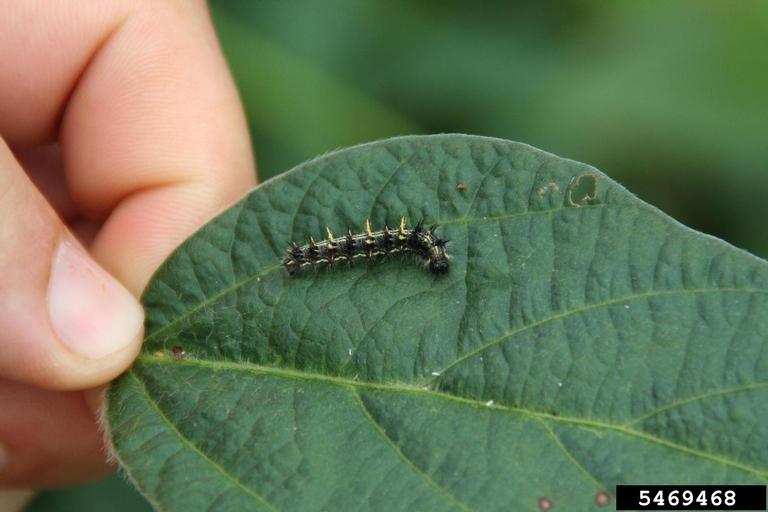
- The body is 1-1/4 inch long and brown–black with yellow striping on both sides.
- Branched, spiny hairs covering the body give the caterpillar a prickly appearance.
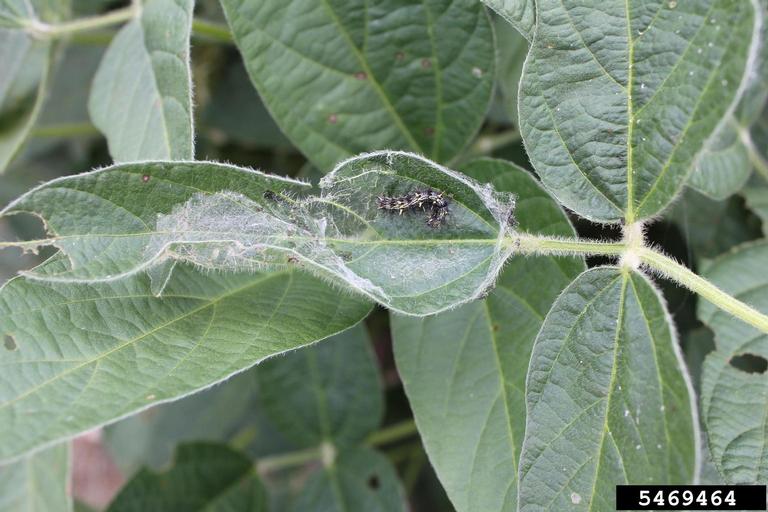
- Caterpillars are often found in webbed leaves where they feed.
Chrysalis (pupa)
Brown chrysalis with a bumpy appearance can be found hanging from plants.
Natural history
- Painted lady butterflies do not overwinter in Minnesota, but migrate from southern states each spring.
- Eggs are laid singly on the upper side of leaves of host plants, including Canada thistle, sunflower, and soybean.
- Caterpillars hatch and form webs by tying leaves together with silk, which creates a protected area for them to feed.
- After two to four weeks, they form a chrysalis, which hangs from the host plant.
- After seven to 10 days, the butterfly emerges.
- There are one to two generations per year in Minnesota.
Impacts
Thistle caterpillar is a sporadic pest of soybean.
Caterpillars feed on leaves causing defoliation in the upper canopy of the soybean plant.
Scouting and management
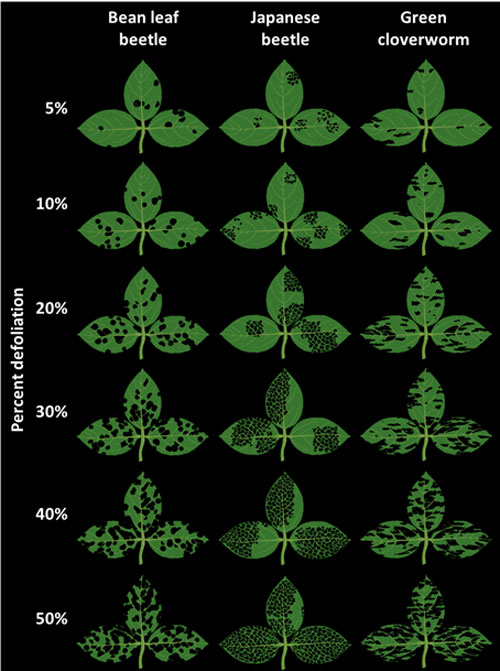
Deciding if a rescue treatment is necessary requires an estimate of the percentage of defoliation.
Scouting
To estimate percent defoliation, examine a minimum of 10 plants:
- From each plant, select a leaf from the top, middle and bottom third of the plant.
- Use the defoliation chart to estimate percent defoliation for each leaf and calculate the average percent defoliation across the three leaves from each plant and across multiple plants.
- This average percent defoliation for the field's canopy can be compared to treatment thresholds.
Thresholds
- For vegetative plants (before flowering), treat if caterpillars are present and defoliation reaches 30 percent.
- For reproductive plants (flowering to pod fill stage), treat if caterpillars are present and defoliation reaches 20 percent.
Labeled rates of insecticides can be used to manage this pest. Follow the directions on the product label.
CAUTION: Mention of a pesticide or use of a pesticide label is for educational purposes only. Always follow the pesticide label directions attached to the pesticide container you are using. Be sure that the area you wish to treat is listed on the label of the pesticide you intend to use. Remember, the label is the law.
Reviewed in 2024