

Report invasive species
Tree of heaven (Ailanthus altissima) is a Restricted noxious weed and is considered an early detection species not present or with a limited distribution in Minnesota.
Tree of heaven should be reported. The Minnesota Department of Natural Resources provides detailed recommendations for reporting invasive species.
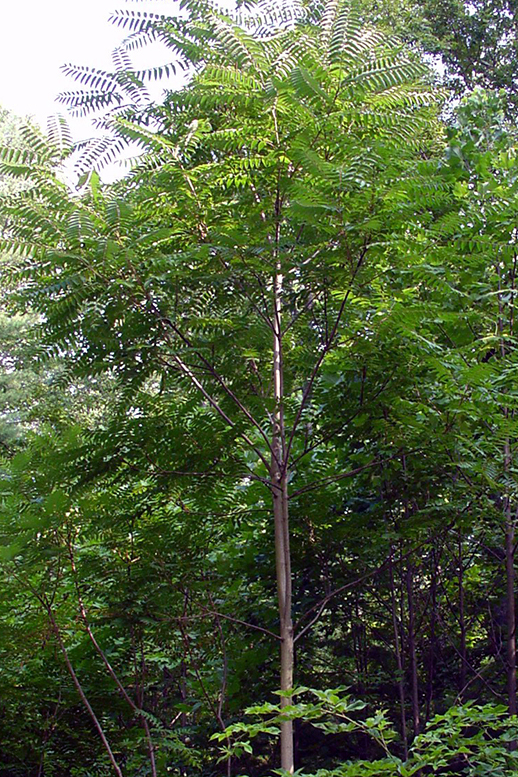
Tree of heaven grows well across a variety of soil types and tolerates varying soil moisture conditions, allowing it to colonize disturbed areas quickly. It grows well in urban areas and is a host for the invasive spotted lanternfly.
It is a deciduous tree that can grow from 60 to 80 feet high. The species has both female and male plants. Its roots are allelopathic, producing chemicals that prevent the germination of nearby plants.
How to identify tree of heaven
Stem
- Smooth stem with pale gray bark.
Branches
- Brittle
Leaves
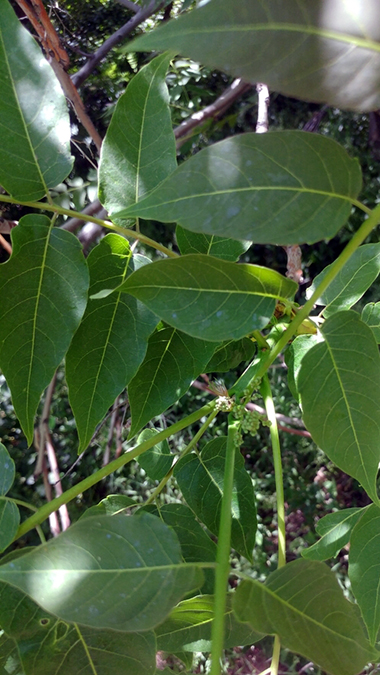
- Compound, alternate leaves with smooth margins; can reach 1 to 4 feet long.
- Each leaf has 11 to 41 leaflets with up to five distinct glands near the leaflet base.
- Leaves have a strong odor.
Flowers
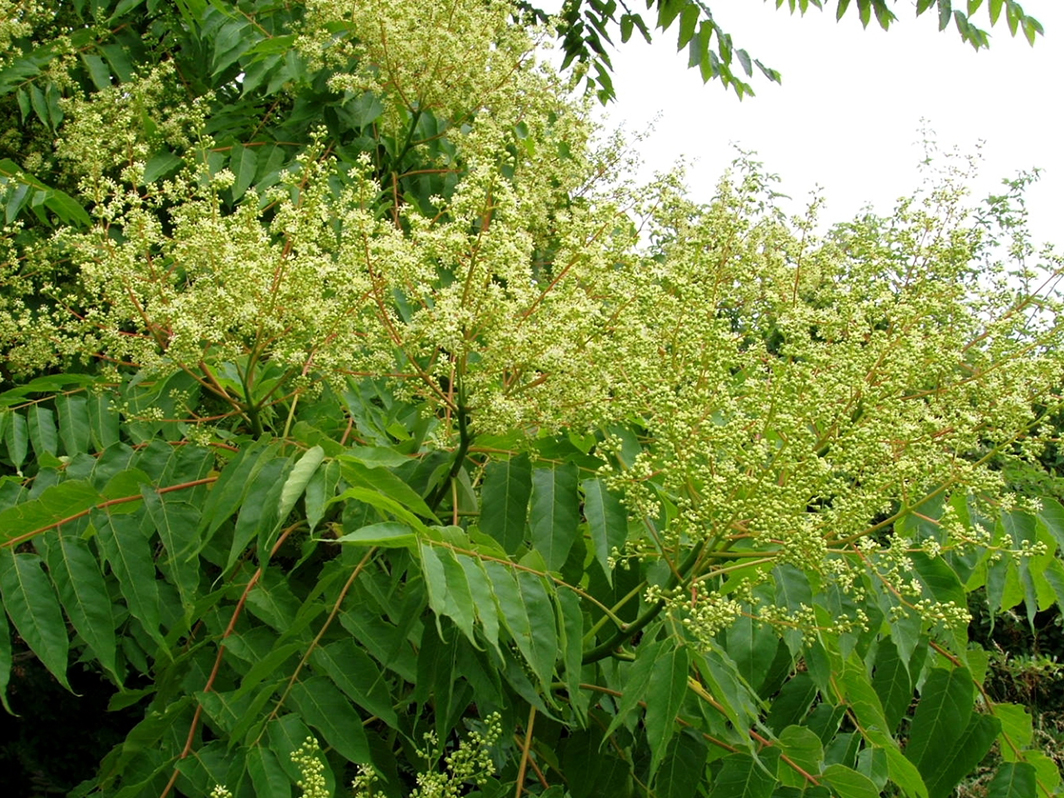
- Small, light yellow to green in color, and form in large showy clusters.
- They have a strong, unpleasant odor.
Fruit and seeds
- Clusters of twisted samaras develop mid-summer.
- A pinkish hue develops, then matures to light tan.
- Samaras are dispersed by wind up to 300 feet.
- Trees in the 12- to 20-year age class produce lots of seed.
- Each female plant can produce 325,000 seeds per year.
Roots
- Shallow and grow rapidly.
- Stem shoots may sprout from roots near the soil surface.
- Root sprouts can emerge 50 to 90 feet away from established trees.
Reviewed in 2026