

Quick facts
Siberian peashrub is an invasive species.
- Siberian peashrub fixes nitrogen and competes with native shrubs on woodland edges and savannas.
- It also growsin disturbed grasslands.
Siberian peashrub should be reported. The Minnesota Department of Natural Resources provides detailed recommendations for reporting invasive species.
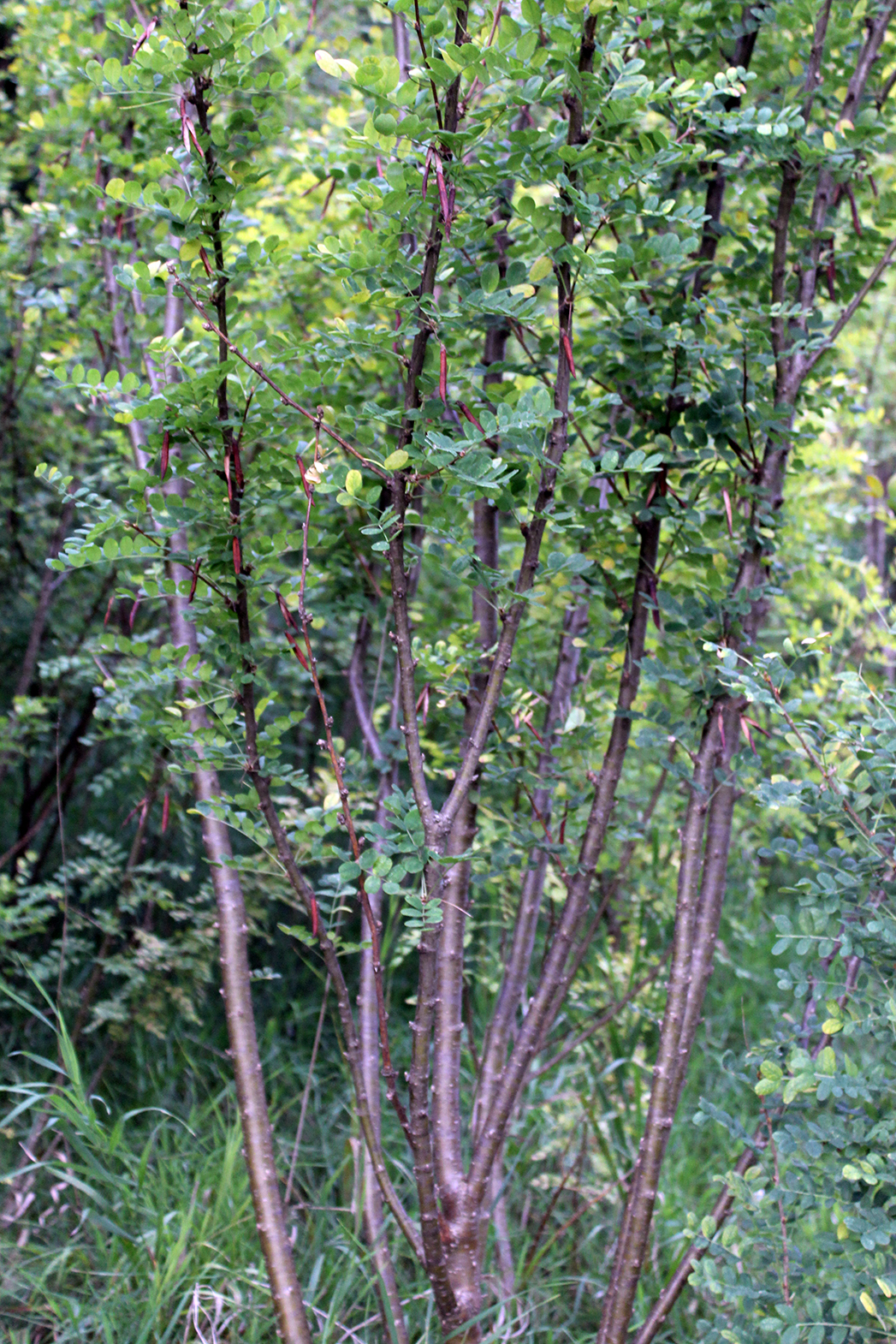
How to identify Siberian peashrub
- Upright shrub or small tree, up to 18 feet high.
Stem
- Green when young, aging to a light brown; angular with small-tipped spines.
Branches
- Gray bark and narrow branching structure; young twigs are yellowish green.
Leaves
- Alternate, compound leaves with 8 to 12 pairs of 2- to 4-inch-long elliptical leaflets.
Flowers
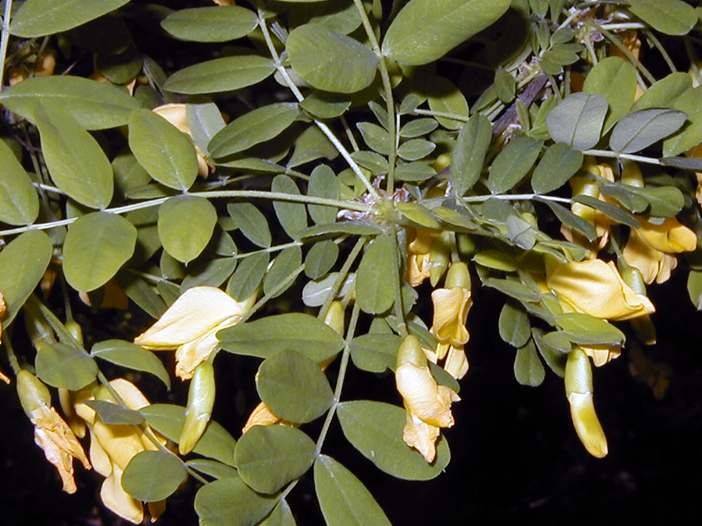
- Fragrant, yellow, single, tubular and at the end of a stalk that grows from the leaf axil.
- Blooms May to June.
Fruit and seeds
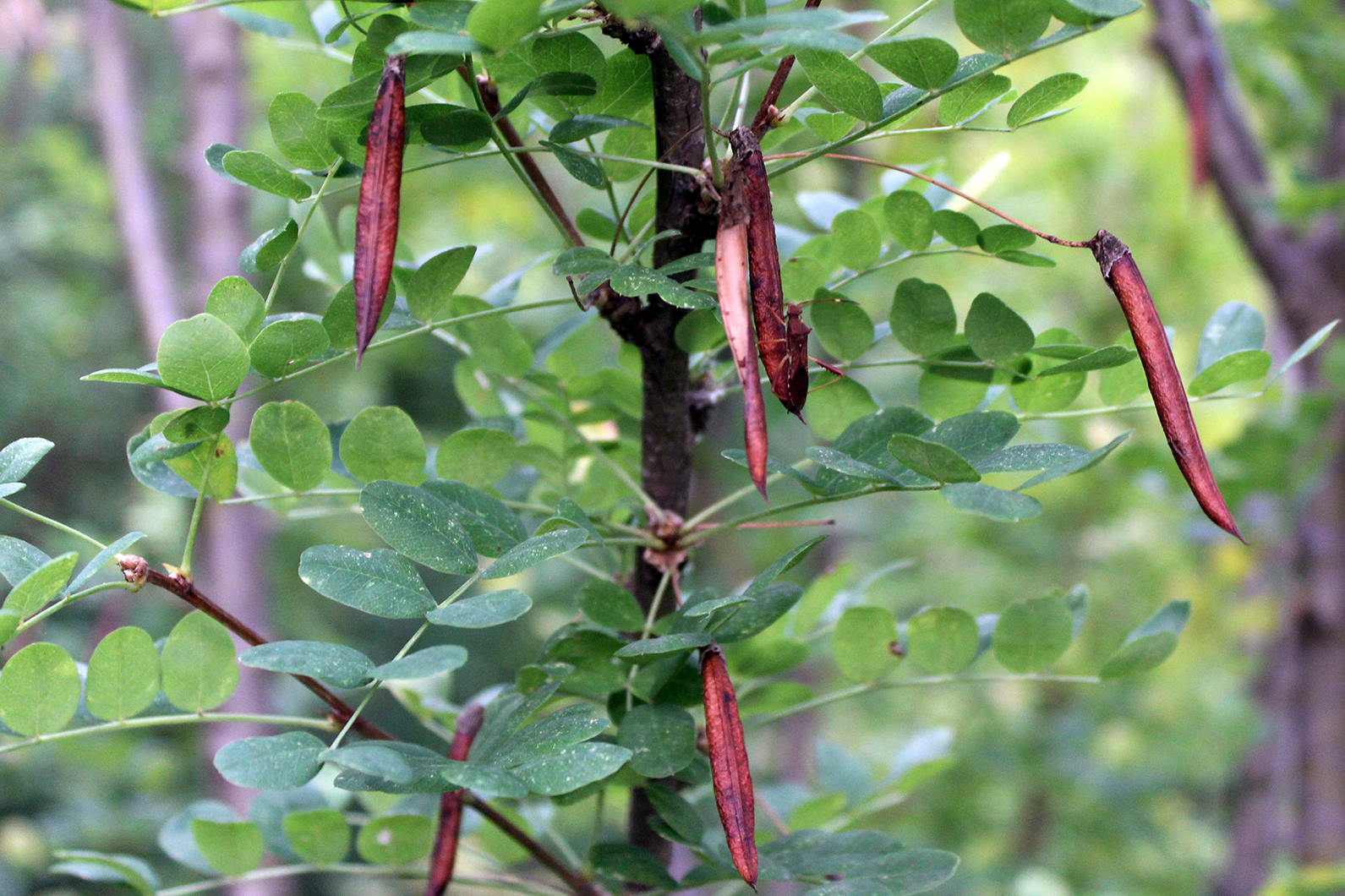
- Smooth, brown, sharply pointed, 1- to 2-inch-long pods contain many seeds and ripen in July.
Roots
- Extensive root system which is useful for erosion control.
Reviewed in 2019