

Quick facts
- Several different pollinators occur in and near soybeans.
- Insecticides are important for protecting soybean, but many are toxic to pollinators.
- Following certain steps for both seed treatments and foliar applications can minimize this risk.
Pollinators benefit our ecosystem
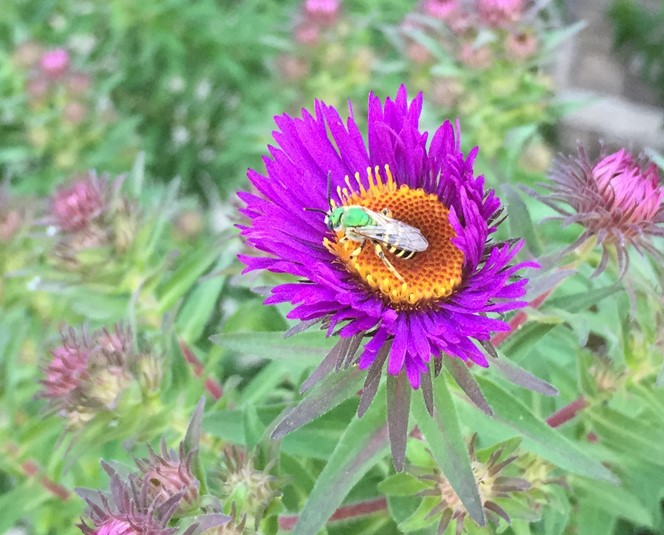
Pollinating insects occur in and near soybean fields. In addition to the well-known domesticated honey bee, other bee species, such as sweat bees and bumble bees, butterflies, and syrphid flies, are pollinators and a valuable part of our ecosystem.
Protecting pollinators both during planting and throughout the growing season is an important part of Integrated Pest Management (IPM). Many insecticides are toxic to pollinators, but steps can be taken to reduce the risk of pollinator exposure.
Seed treatments and pollinators
Insecticide seed treatments protect soybeans from certain pests from seed through early-vegetative growth stages. These treatments may pose a risk to pollinators that obtain nectar directly from the soybean flowers, but the greatest risk to pollinators appears to occur when dust from planters moves into the agricultural landscape.
Minimize off-dusting
This dust, which consists primarily of lubricants such as talc, is used to aid in seed movement through the planter and may contain high concentrations of insecticide residue. The insecticide-containing dust is deposited on surrounding flowering plants and soil, exposing non-target insects, such as pollinators. However, this “off dusting” can be minimized by following a few rules:
- Be aware of the wind speed at planting. Wind speeds exceeding 10 mph can cause blowing dust.
- Avoid excessive use of lubricants (talc, etc.).
- Direct planter exhaust downward toward the soil surface, if possible. The use of downward deflectors may reduce off-site dust movement.
- Clean planters and seed boxes away from sensitive environmental areas, especially those attractive to pollinators. Field edges with flowering plants are an example of such areas.
Foliar insecticides and pollinators
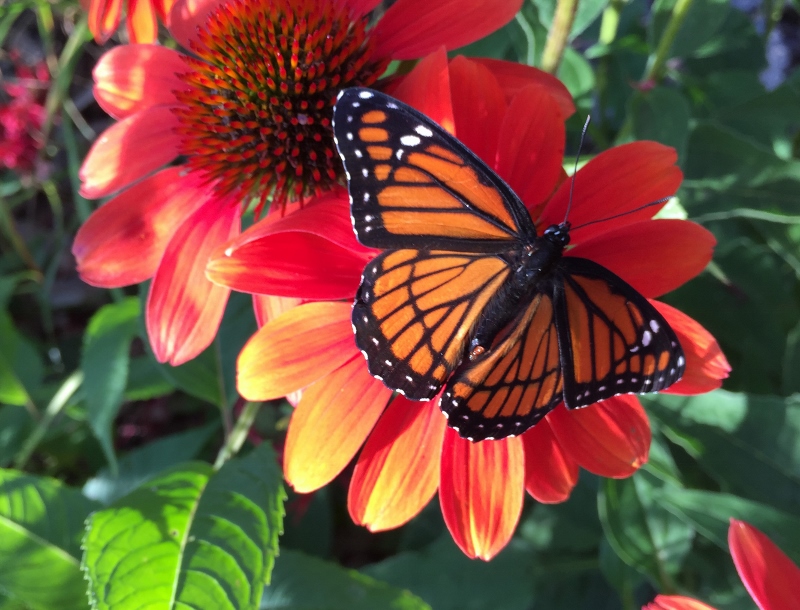
Pollinators can be found foraging in soybean fields during the flowering stages. When treatment decisions are being made for insect pests, such as soybean aphid, during this period, it is important to minimize the risk to pollinators.
Keep in mind these general recommendations for reducing pesticide risks to pollinators:
Know and communicate with beekeepers about pesticide application schedules and products. In Minnesota, DriftWatch lists locations of some hives.
Use economic thresholds and other IPM strategies. Economic thresholds ensure that pesticides are used only when necessary to prevent economic loss.
Use pesticides with low toxicity and low bee-toxicity residues. For example, avoid using dusts or wettable powder insecticide formulations, because they are generally more toxic to bees.
Early-morning or late-evening applications are the least harmful to most pollinating insects.
Never apply pesticides on a windy day. Wind speeds exceeding 10 mph can cause spray drift.
When using pesticides, always read and follow the label directions. Labels for some products and formulations will provide specific directions for minimizing risk to pollinators.
Keep these recommendations in mind to help you protect pollinators while you use pesticides to protect your crop.
CAUTION: Mention of a pesticide or use of a pesticide label is for educational purposes only. Always follow the pesticide label directions attached to the pesticide container you are using. Be sure that the area you wish to treat is listed on the label of the pesticide you intend to use. Remember, the label is the law.
Protect pollinators: Wise insecticide use, August 2, 2018, North Dakota State University
EPA advisory box found on neonicotinoid insecticide labels. https://www.epa.gov/pollinator-protection/new-labeling-neonicotinoid-pesticides
Reviewed in 2026