

Quick facts
Yellow iris is a regulated invasive species. Regulated invasive species are legal to buy, sell, transport and possess, but may not be introduced into a free-living state, such as released into public waters.
- Yellow iris grows along shorelines, in shallow water and in roadside ditches.
- Competes with native shoreland vegetation.
Yellow iris should be reported. See the Minnesota Department of Natural Resources recommendations for reporting invasive species.
How to identify yellow iris
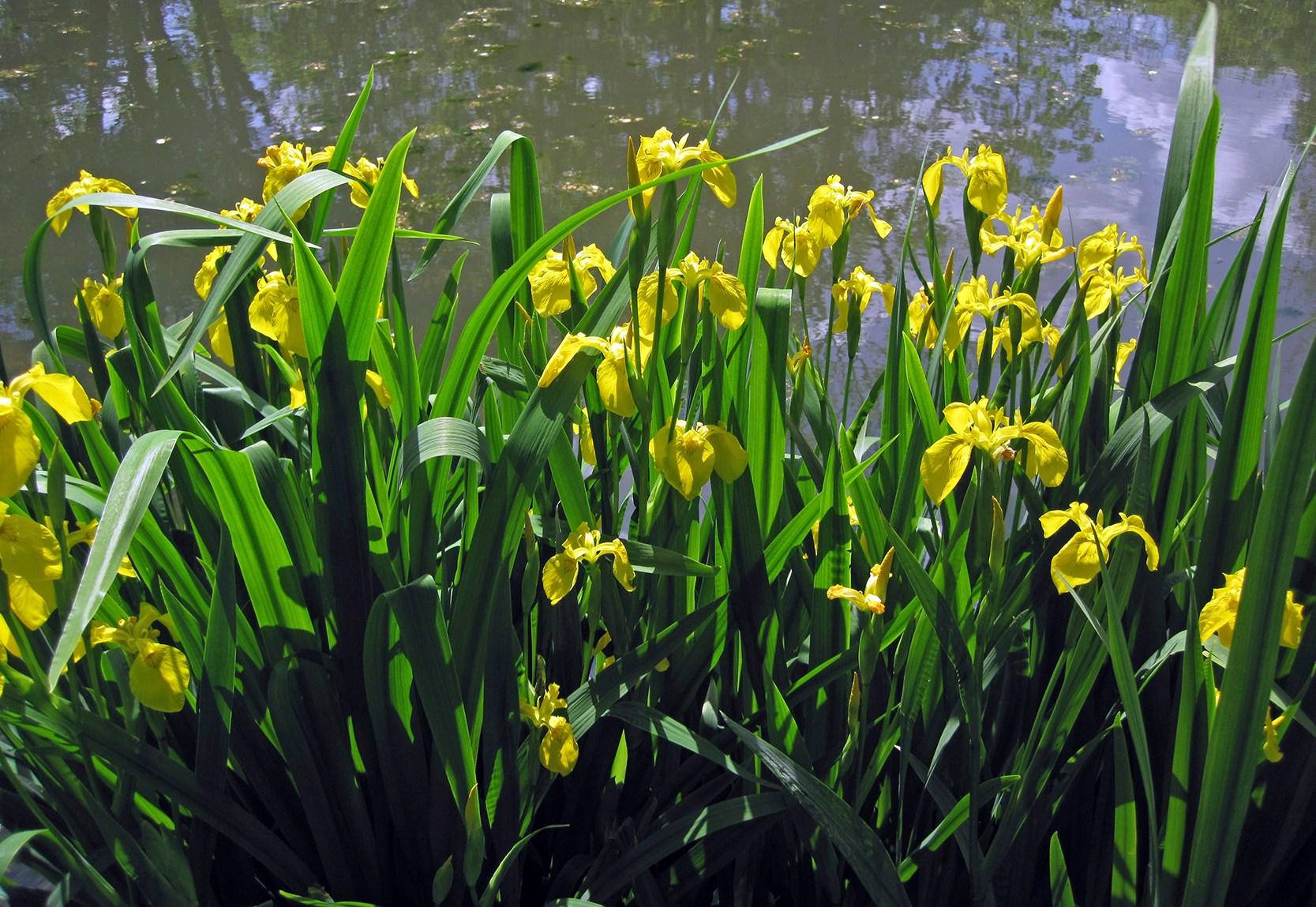
- Yellow iris (Iris pseudacorus) is a perennial aquatic herbaceous plant that grows one to five feet tall along shores in shallow water.
- Can also be found in roadside ditches.
Leaves
- Gradually tapering sword-like leaves up to three-fourths of an inch wide, dark green to blue-green in color.
- The leaves form in basal clusters without petioles.
- The center of the leaf is sharply thickened.

Flowers
- Two or three deep yellow flowers grow on one round stalk, shorter than outer leaves.
- Three outer drooping sepals with brownish mottled markings surround the true flower.
- Blooms May through July.
Seeds
- Oblong capsules each containing numerous smooth, flattened seeds.
Roots
- Has a short root system with stout rhizomes for vegetative reproduction.
Reviewed in 2019