

Quick facts
Giant hogweed is an invasive species.
- Giant hogweed is found in moist, sunny areas such as streams, rivers, fields, forests, yards and roadsides.
- Colonies of giant hogweed can crowd out native vegetation.
- WARNING: The sap of this plant causes chemical burns when activated by the sun.
- Contact with eyes can potentially result in temporary or permanent blindness.
Giant hogweed should be reported. The Minnesota Department of Natural Resources provides detailed recommendations for reporting invasive species.
How to identify giant hogweed
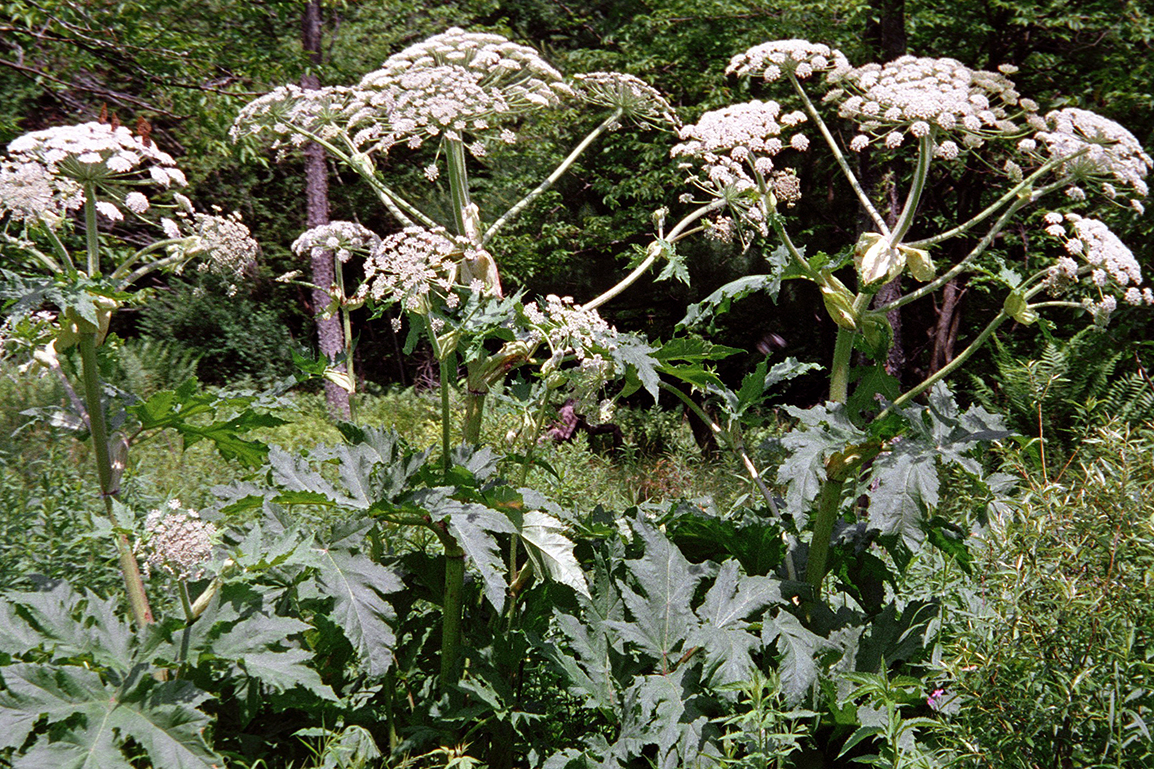
- Giant hogweed (Heracleum mantegazzianum) is a perennial plant that can grow between 15 and 20 feet.
- Large basal rosette in the first year and then it bolts.
Stem
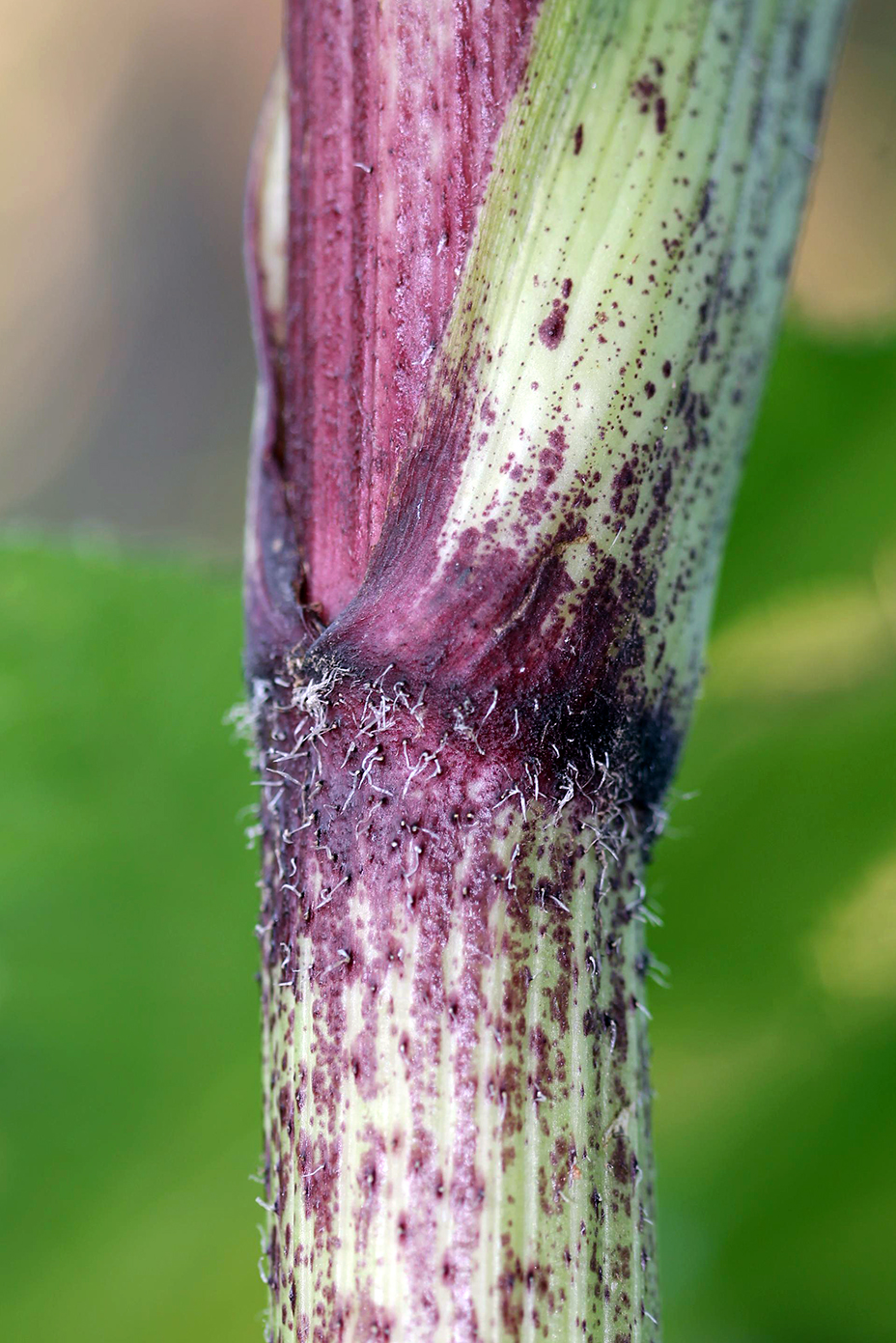
- Stalks are one to four inches in diameter and hollow with purple mottling.
Leaves
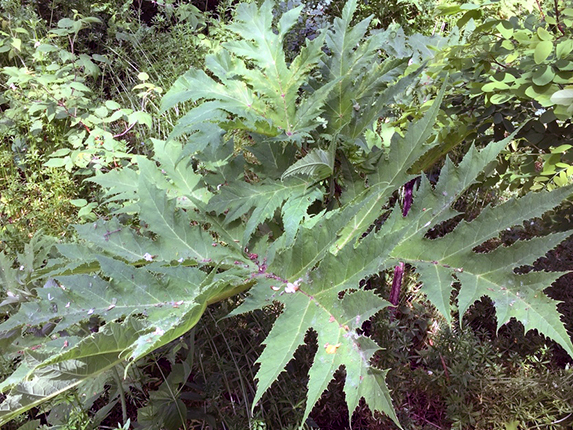
- Lobed, deeply cut compound leaves reaching five feet in width.
- Leaf stalks are spotted, hollow and covered with bristles.
Flowers
- Produces a flowering stalk 10 to 15 inches tall.
- Large, compound umbrella-shaped clusters of tiny white flowers two and one-half feet across.
- Blooms late spring through mid-summer.
- Seeds: three-eighths of an inch long, oval, winged and flattened with brown resin canals.
- They are green, but turn brown in color as they dry.
- Seeds can survive in the soil for up to ten years.
Roots
- Tuberous root stalks.
Reviewed in 2019