

Quick facts
Non-traditional, thinner cuts of beef are a great value when cooked right.
- Most cuts benefit from marinating to tenderize.
- Have your butcher remove tough membranes and extra fat before buying.
- Rest meat and cut against the grain for better flavor and easier eating.

Restaurants and consumers want economical beef cuts that also provide a healthy, balanced, and delicious meal. These underrated, budget-friendly cuts of beef will be sure to please your appetite and your bank account.
For each cut of beef, you will find its location on the animal, other names for the cut, cooking methods, and suggested uses.
Lesser-known beef cuts
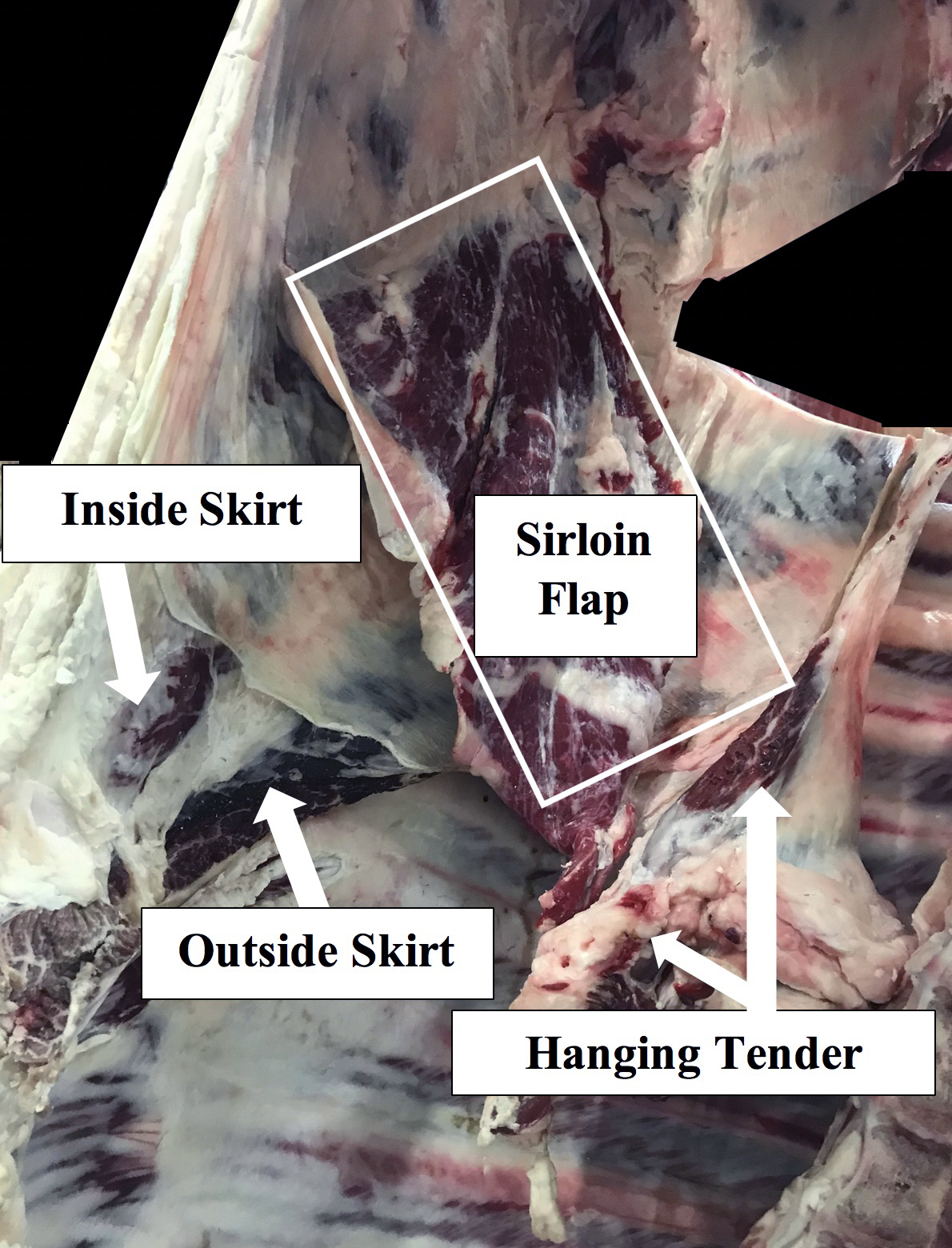
Sirloin flap
Originating from the sirloin, where the most popular and expensive fabricated cuts are located, this boneless and more cost-effective cut is located on the inner surface of the bottom sirloin. It has heavy connective tissue and cartilage that should be removed before preparing.
- This cut can also be found using other names, such as bottom sirloin bavette, bottom sirloin butt or flap, flap steak, or flap meat.
- Cooking methods for the sirloin flap include grilling, frying in a skillet, stir-frying, and broiling.
- This cut is full of texture, which is why it is often used in a stir-fry as fajita meat and marinated before being grilled or broiled. Marinating meat can enhance its flavor and also tenderize the meat.
- Recipes that call for skirt or flank steak can be substituted with the sirloin flap steak, and may include sesame-soy beef stir-fry, veggie and mango stir-fry, or steak tacos.
- In French, bavette means bib, which refers to the thinness of the meat.
Skirt steak
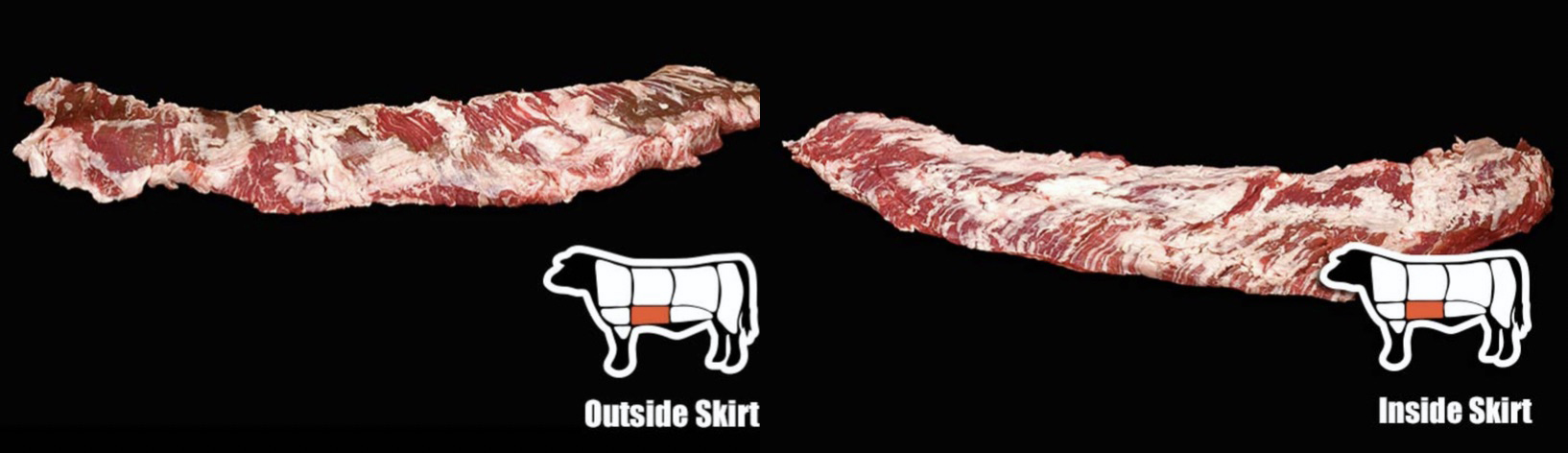
Originating from the plate, the outside and inside skirt are favorites with restaurants and home chefs for their robust flavor profile and affordability.
A steer at the average live steer weight of 1,372 pounds should yield 3.34 pounds of outside skirt and 4.21 pounds of inside skirt (USDA-AMS National Daily Cattle & Beef Summary). Together, the skirt steaks comprise almost 8 pounds of beef.
The outside skirt is in higher demand because of its smaller volume and greater tenderness. It will usually be more expensive than the inside skirt. The inside skirt is a working muscle, whereas the outside skirt is supportive. These muscles support the diaphragm.
- This cut is also known as arrachera, Romanian tenderloin, Philadelphia steak, or fajita meat or fajita steak.
- Cooking methods for the skirt steak are the same as those for the sirloin flap, including grilling, frying in a skillet, stir-frying, and broiling. Because of their similar properties, they are used in similar recipes, like fajitas and Philly cheese steak sandwiches.
- To reduce the toughness of this cut, remove the peritoneum membrane and trim the fat. Marinate to tenderize.
- Always slice meat going against the grain. It is especially important for thin, more coarse cuts such as the skirt steak.
Hanging tender
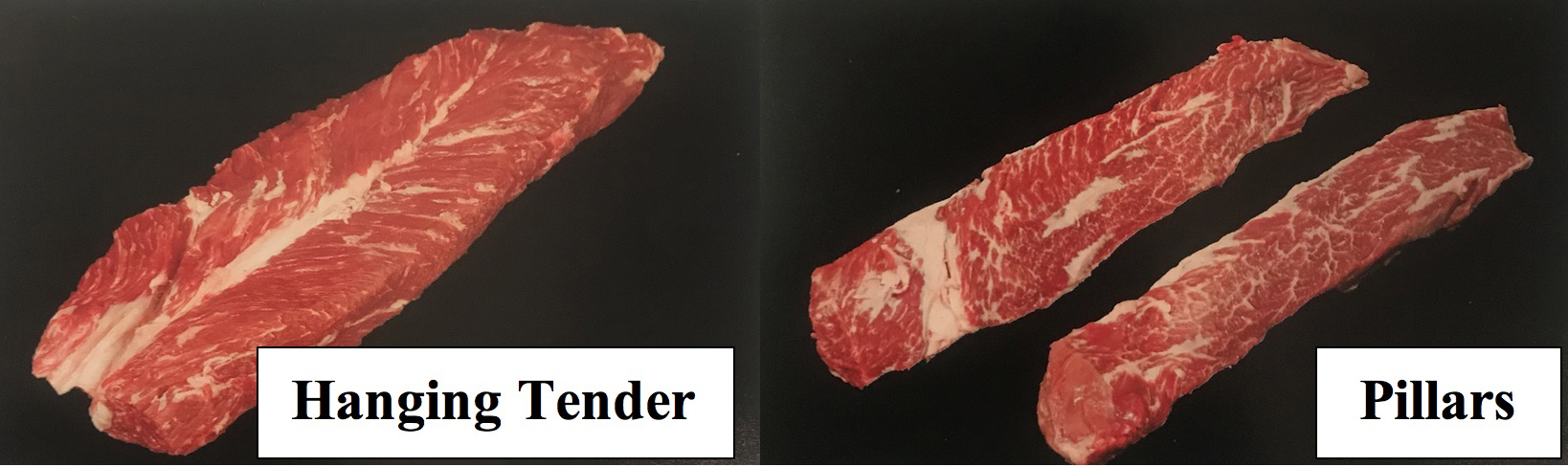
Originating from the plate, this muscle attaches the diaphragm to the last rib of the backbone. Once the heavy connective tissue in the center is removed, the resulting cuts are called “pillars.” There is only one hanging tender per carcass.
Since the cut has a higher fat content, it has a similar flavor to the more expensive ribeye. Therefore, this cut can be lightly seasoned and used as the main entree, sliced for a salad, or carved for an appetizer.
- This cut can be found using other names, such as hanger, hanger steak, butcher’s steak, or bistro steak.
- Cooking methods for the hanging tender include grilling, oven roasting, and cooking in a skillet.
- This cut is known as a bistro steak in American restaurants.
- It is more commonly found in restaurants or specialty butcher shops than in supermarkets.
Top blade steak
Originating from the chuck, these steaks are some of the most tender muscles, cut from the top blade into flat iron steaks.
- This cut can be found using other names, such as boneless top chuck steak, book steak, butler steak, charcoal steak, oyster blade steak, and petite steak.
- Cooking methods for the top blade steak include grilling, oven roasting, skillet to oven, and broiling.
- Use this cut for recipes like cowboy steaks and corn salad, French onion meatball subs, or citrus ginger teriyaki steak.
- Do not bother to remove the internal connective tissue before cutting end-to-end from the whole top blade. This shoulder cut is very tender.
Budget-friendly beef cuts
Top and bottom round steak and roast
Originating from the round, this is a lean steak or roast. The round is a set of large muscles that provide movement for the animal, which decreases the amount of marbling. These cuts of beef are anatomically named based on location within the primal round. “Top” refers to the location directly above the “Bottom” round.
- The roasts can be found using other names, such as round roast, round oven roast, and rump roast. The steaks are also called western griller, London broil, and cap on or cap off.
- Cooking methods for the round steaks include grilling, skillet cooking, and broiling. In addition to these methods, the top round steaks can also be braised and used in stir-fry.
- Try recipes such as beef and noodle salad, schnitzel, German Sauerbraten, Irish-inspired pot roast and vegetables, or barbecue beef skillet with cornbread.
- Cooking methods for round roasts include slow-cooking in the oven, roasting, braising, and sous vide. These cooking procedures are designed to improve the tenderness of the meat.
- The leaner the meat, the less tender it is. When slicing and serving, be sure to cut the meat thinly to make it easier to eat.
Sirloin tip steak
Originating from the round, the sirloin tip steak is a boneless, lean cut that is often used for kabobs, stew meat, and cubed steak. This cut gets its name from being anatomically located next to the tip of the sirloin, even though it is in the round primal.
- This cut can be found using other names, such as breakfast steak, (round) tip steak, and sandwich steak.
- Cooking methods for the sirloin tip steak include grilling, braising, and broiling.
- After cooking, thinly slice off strips to try this cut in a breakfast burrito or taco wrap.
Eye of round steak
The eye of round steak is another cut that originates from the round, home to the lean and inexpensive cuts of beef. It is boneless and has tremendous value.
- This cut can be found under names similar to other cuts from the round primal: breakfast steak, sandwich steak, or wafer steak.
- Cooking methods for the eye of round steak include grilling, skillet cooking, stir-frying, and broiling.
- Many recipes can use eye of round, but it can also be the main entree. Recipes may include country-fried steaks, steak and eggs, jerky, and Philly cheesesteaks.
- A 3-ounce serving of eye of round steak is 130 calories. It is a leaner, healthier option for steak.
Chuck arm roast
Originating from the chuck, this large cut is economical and flavorful. It is most tender when slow-cooked. There is a large bone inside the roast, and some connective tissue, but it is still very tasty. Arm refers to the shoulder area, which is well known for producing cuts rich with savory beef flavor.
- This cut can be found using other names, such as arm pot roast or arm roast.
- Cooking methods for the chuck arm roast include slow-cooking, pressure cooking, braising, and oven roasting.
- Use this cut in recipes like Italian beef and bean stew, Cajun red beans and rice, or slow-cooked beef risotto.
- The bone in the chuck arm roast is the humerus from the upper forelimb or arm.
Marinating
A marinade is a seasoned liquid used to submerge and tenderize cuts of meat. It can also enhance flavors.
There are three main components of marinades: acid, vegetable oil or water, and seasoning. An acid can be juice or vinegar that is mixed with any type of vegetable oil or water. Some recipes may also call for soy or Worcestershire sauce in addition to other seasonings, garlic, and herbs.
Choose a marinade recipe or a pre-packaged marinade that sounds good to you. For a fruity, sweet flavor, use pineapples, plums, lemons, apples, or oranges. For a more savory flavor, try garlic, thyme, balsamic vinegar, mustard, or teriyaki. Use maple syrup or red wine vinegar for a neutral balance.
- To marinade, submerge the meat in a large bowl or plastic bag for 2 to 24 hours in the refrigerator. The longer you soak the meat in the marinade, the more time it has to break down fibers, tenderize, and absorb the flavor.
- A good marinade should enhance your meat, but not overpower it, so make sure to follow the marinade recipe instructions for the best results.
- As a rule of thumb, allow 1/4 to 1/2 cup of marinade for one pound of steak. This can vary depending on the size of your marinating container and the thickness of the meat.
- After marinating, either boil the leftover marinade to kill bacteria before serving it with the meat, or throw it away.
- Never reuse leftover marinade.
Other helpful resources
- Learn more about safe food temperatures for storing or cooking.
- Read more about understanding a meat label.
- For more delicious and savory beef recipe ideas, go to beef.org.
Reviewed in 2026