


Find crop-specific nutrient needs for Minnesota, including guidelines for nitrogen, phosphate, potash and other fertilizers, and strategies for ensuring crops get the nutrients they need.
Manure management
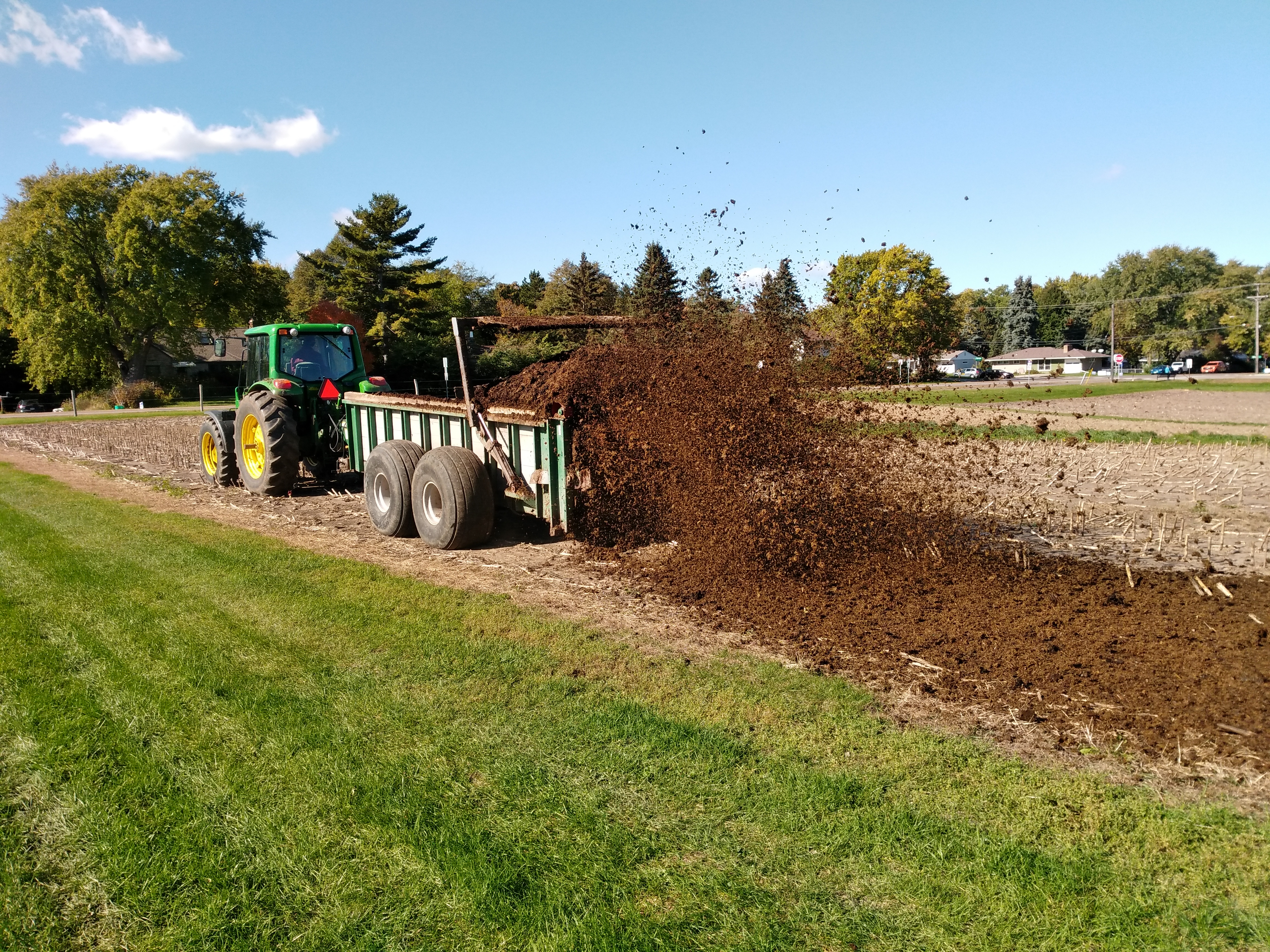
University of Minnesota Extension provides manure management education and university research to crop farmers, producers, agencies, and other industry professionals.
The program focuses on economically feasible and environmentally sound manure handling systems that also meet federal, state, and local air and water quality protection regulations.
Our goal is to keep Minnesota’s agricultural economy strong while having a positive impact on the environment.
We work with
- Livestock and crop farmers
- Industry professionals
- Government agencies
Manure management resources
Best management practices to safely apply, sample, and analyze manure to protect air and water quality.
|
Manure characteristics, timing, application methods, sampling, nutrient analysis and application rates
Economics and analysis resources
- What’s manure worth? How do we calculate the value of manure?
- Use this calculator to find the value of manure on your farm.
: A manure laboratory analysis aggregation tool to use data in a standardized way.
(print publication available for download)
- : Keep this safety checklist for agitation, pumping, transportation, and application. (UMASH)
- Manure spill prevention and management
- Protocols and preparation for manure agitation and pumping
Manage manure while reducing air and water quality issues.
Air and water quality tools
|
The Odor From Feedlots Setback Estimation Tool (OFFSET) is designed to help answer the most basic questions about odor impacts from livestock and poultry facilities:
- How far does odor travel?
- Are animal numbers or animal species accurate predictors of nuisance odors?
- How much odor control is needed to solve an odor problem from an existing facility?
OFFSET estimates average odor impacts from a variety of animal facilities and manure storage. These estimates are useful for rural land-use planners, farmers, or citizens concerned about the odor impacts of existing, expanding, or new animal production sites.
OFFSET is based on odor measurements from Minnesota farms and Minnesota climatic conditions. Consult with the tool authors before using OFFSET for estimating odor impacts in other geographic areas.
The Minnesota Feedlot Annualized Runoff Model (MinnFARM) is an evaluation system for estimating annual pollutant loads and prioritizing feedlot pollution potential.
The Minnesota Department of Agriculture (MDA) has teamed up with the National Weather Service to design a tool that helps farmers and commercial applicators determine the best time to apply manure.
The Runoff Risk Advisory Forecast tool uses past and predicted National Weather Service weather data, such as precipitation, temperature, and snowmelt.
It predicts the likelihood that applied manure will run off fields in daily, next-day, and 72-hour increments. Farmers and commercial applicators use an interactive map to locate their field and find the forecasted risk.
Video
Minnesota's Runoff Risk Advisory Forecast (2021; 01:30)
Extension resources

Livestock operations
Find best practices for raising livestock, farm safety, manure management, and meat processing for Minnesota farmers and ranchers.

Soil and water
Soil health, irrigation and agricultural drainage resources for Minnesota.
Courses and events
Commercial Animal Waste Technician (CAWT) workshops
Recertify as an MDA Commercial Animal Waste Technician (CAWT) by attending one of these workshops.
Manure composting workshops
Online manure composting workshops for crop and livestock producers, people interested in composting, technical service providers and educators.
Learn more about manure management
Contacts | News | Events | YouTube | Podcast | [email protected]
Farm Information Line
| 1-800-232-9077
Contact the Farm Information Line for research-based information from local Extension educators and staff. This statewide service connects you to Extension resources and information to answer your questions about agriculture and natural resources.
Page survey