

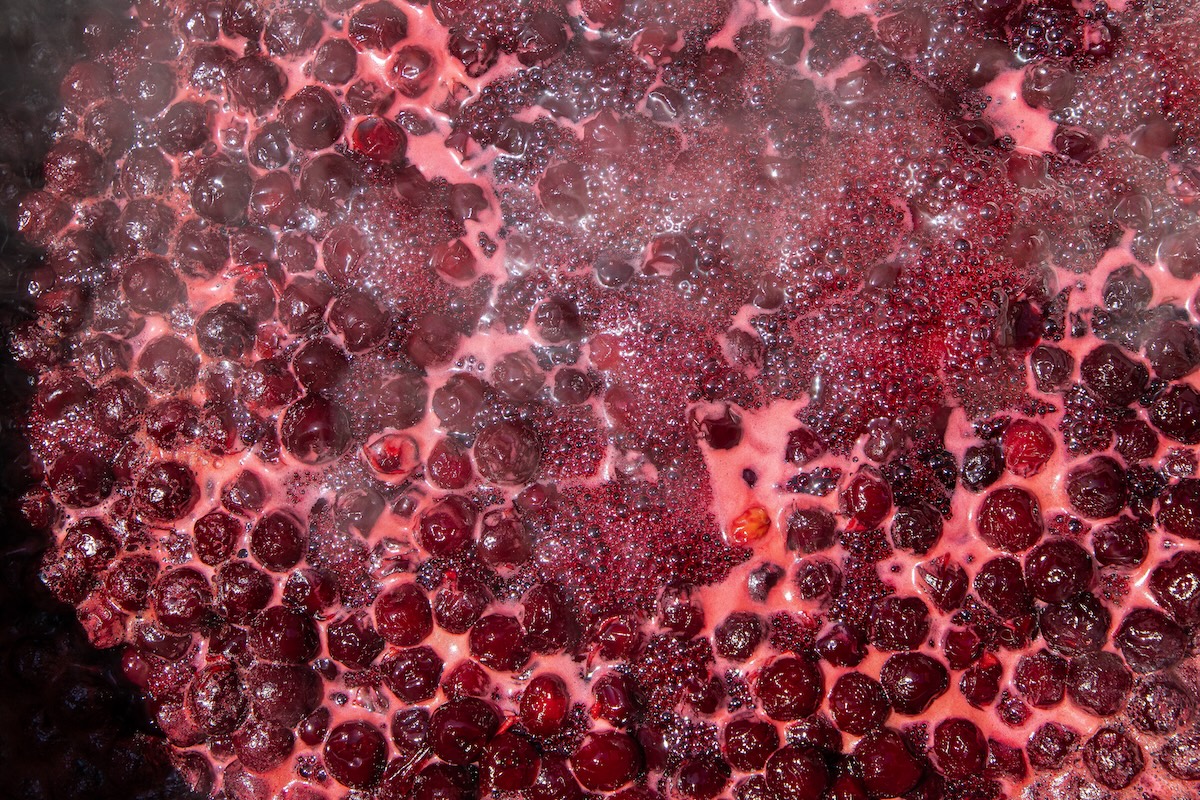
For food safety, certain foods must be heat treated before they can be sold. Pasteurization is a type of heat treatment.
There is no single, definitive time and temperature requirement for pasteurization. The exact temperature and duration of heating depends on many factors, including a food’s acidity (pH) and desired end product.
What is pasteurization?
Pasteurization is often misunderstood. It does not involve adding preservatives or chemicals to food. Instead, pasteurization is simply heating liquids to a specific temperature, usually below boiling, in order to inactivate foodborne illness-causing microorganisms.
The method was developed in the 1860s by Louis Pasteur to make milk safer to drink. Today, pasteurization is used for many different foods, such as fruit juice, liquid eggs, and canned soups. It not only reduces the risk of foodborne illness, it also extends shelf life by slowing spoilage causing microorganisms.
Pasteurization is not the same as sterilization. While pasteurization inactivates most harmful organisms, sterilization requires much higher temperatures (above 250 F under vacuum) and eliminates nearly all microorganisms.
Pasteurization time begins after the entire product reaches the target temperature. Solids, like pickles, and thick sauces, such as salsa, require longer heating times to ensure the inside of the food reaches the minimum temperature required.
General pasteurization guidance
For processing shelf-stable foods with a pH of 4.6 or less:
- 150 F for at least 22 minutes and 24 seconds
- 160 F for at least 5 minutes and 36 seconds
- 170 F for at least 1 minutes and 24 seconds
- 180 F for at least 24 seconds
Pasteurization and quality
Some vitamins will be affected by heat; however, they will not be completely eliminated. To maintain quality:
- Work in small batches: The larger the batch, the longer it will take to reach the pasteurization temperature. By working in smaller batches, you can prevent excess exposure of heat to the food.
- Limit exposure to sunlight: Protect both raw ingredients and finished product from exposure to sunlight. Storing in a dark location and away from windows will help maintain quality and nutrient composition.
Canned foods
Under Minnesota’s cottage food law you may can and sell acidic or acidified foods, which is defined as having a pH of 4.6 or less.
This includes fruits, vegetables, juice, and sauces. These foods must be home-canned or pasteurized according to current research-tested methods. We recommend using recipes from The National Center for Home Food Preservation.
Hot-pack canning
This method includes an initial heating step to partially cook the food and then pasteurization is finished during the water-bath processing while the food is in the jars.
Raw-pack canning
This method relies on the water bath step to achieve pasteurization. Always follow trusted recipes carefully to ensure safety. Do not raw-pack if a recipe does not use that method because the processing time will not be adequate.
Milk
Milk cannot be sold directly as a cottage food item. However, it may be used as an ingredient in certain baked goods if it has been properly pasteurized. To ensure safety, the milk must either be purchased pasteurized or heat-treated on-site using one of the following methods, starting the time once the entire batch reaches the goal temperature.
- 145 F for at least 30 minutes
- 165 F for at least 15 seconds
Bottled foods
Bottled foods, including sauces and juices, must be pasteurized. Note that these processes require a lower pH for food safety.
- Hot-fill hold: Food with a pH of 4.1 or less is pasteurized and bottled while hot.
- Cold-fill hold: Food with a pH of 3.3 or less is pasteurized, cooled, and then bottled.
Other cottage foods
- Freezer jam: The jam must be pasteurized before freezing.
- Ice pops: The juice, including any fruit or berry ingredients, must be pasteurized before freezing.
What about fermented foods?
Fermented foods, including kimchi, sauerkraut and kombucha, are allowed under the Minnesota Cottage Food Law and do not require pasteurization.
When processed correctly, fermented foods produce enough “good bacteria” that compete with the foodborne illness-causing microorganisms and naturally have a pH of 4.6 or lower, which is required to ensure food safety.
Currier, Russell W., and John A. Widness. "A brief history of milk hygiene and its impact on infant mortality from 1875 to 1925 and implications for today: a review." Journal of food protection 81, no. 10 (2018): 1713-1722. https://doi.org/10.4315/0362-028X.JFP-18-186
Breidt, Frederick, Kathryn Kay, Jason Osborne, Barbara Ingham, and Fletcher Arritt. "Thermal processing of acidified foods with pH 4.1 to pH 4.6." (2014).
Deak, Tibor, and Csilla Mohácsi-Farkas. "Thermal treatment." In Food safety management, pp. 405-419. Academic Press, 2023.
Reviewed in 2026