


The University of Minnesota is an affiliate of Bee Campus USA. You can visit a variety of pollinator habitats on the Twin Cities campus.
Support pollinators
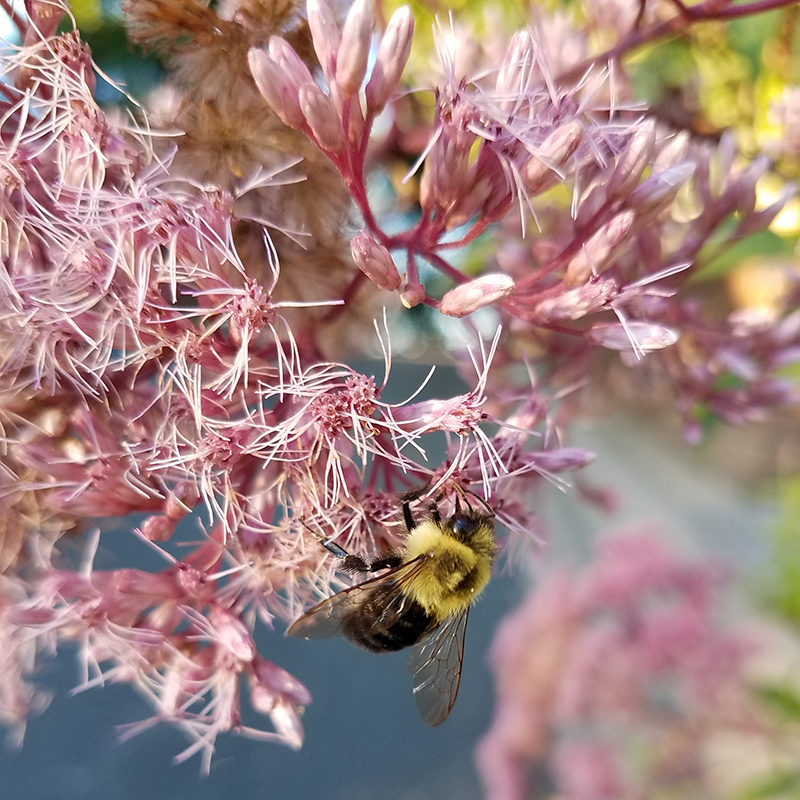
Extension partners with the University of Minnesota Bee Lab on a diverse array of projects to support high-quality research and offer educational programming about bees.
Pollinators help plants that bring us food and other resources. By carrying pollen from one plant to another, pollinators fertilize plants and allow them to make fruit or seeds. Pollinator health is critical to our food system and the diversity of life across the world.
How to create a pollinator-friendly landscape
- Focus on a "healthy" environment, not a perfect landscape.
- Choose plants that provide food and habitat for pollinators.
- Adopt best practices in landscape maintenance to improve plant health and eliminate the need for pesticides.
- Create habitat and nesting sites for pollinators.
- Plant a bee lawn. Replace lawn areas that are difficult to mow with shrubs and flowers.
Pollinator-friendly resources
|
- Annual flowers that attract pollinators
- Creating a butterfly garden
- Nests for pollinators
- Planting and maintaining a bee lawn
- Planting and maintaining a prairie garden
- Trees and shrubs for pollinators
Video
How to adjust your fall cleanup routine to help pollinators through the fall and winter and make your landscape home to native pollinators. (2018; 06:23)
Outside resources
- Bumble Bee Watch
- Minnesota Bumble Bee Nest Quest – Join Nest Quest to gather vital data about bumble bee nests to help refine bumble bee conservation plans.
- Minnesota Bumble Bee Survey
- Minnesota's Pollinators - Minnesota Department of Natural Resources
- The Xerces Society
- The Minnesota Bee Atlas

Pollination on fruit and vegetable farms
Without pollinators moving pollen between plants, the fruits or seeds we harvest from our crops will not develop.

University of Minnesota Bee Lab
The Bee Lab promotes the conservation, health, and diversity of bee pollinators through research, education, and hands-on mentorship.
Page survey