

Quick facts
- Hardy native tree in Minnesota that thrives in urban environments due to high tolerance for heat, drought, salt, wind, and flooding
- Grows 50 to 70 feet tall with a medium to fast growth rate and transitions from a pyramidal to a rounded shape as it matures
- Provides ecological value, producing fruit that feeds birds and wildlife and offering year-round interest with unique bark
- Very adaptable to different soils and conditions, but may develop cosmetic issues like witches’ brooms
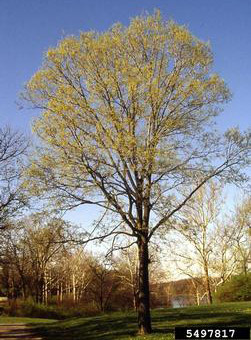
Hackberry (C. occidentalis) is a large native tree found commonly on river terraces and floodplains in southern and central Minnesota. It is related to the American elm and after the arrival of Dutch elm disease in Minnesota, hackberry often replaced American elms both in native forests and in planted landscapes.
Hackberry is used as a shade tree or a boulevard tree. It establishes easily and grows well in urban landscapes because of its wide soil adaptability and its tolerance of heat, drought, salt spray, wind, ice, and short-term flooding.
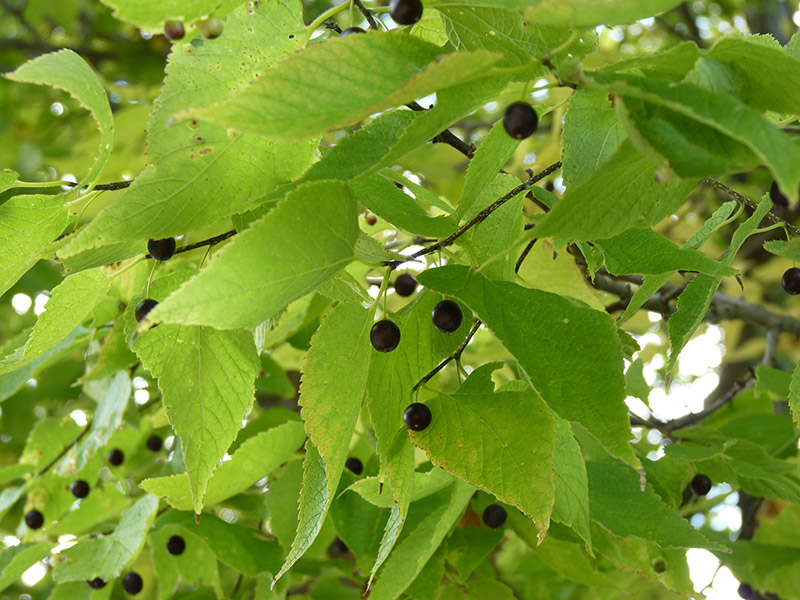
The bark of hackberry provides year-round interest in landscapes. The fruit is a popular food for birds and small mammalian wildlife. Much of the fruit remains on the tree throughout winter until it is eaten by birds.
Description
- Deciduous tree; it drops its leaves in fall
- Height: 50 to 70 feet
- Width: up to 50 feet
- Medium to fast growth
- Pyramidal shape in youth, spreading rounded shape in maturity
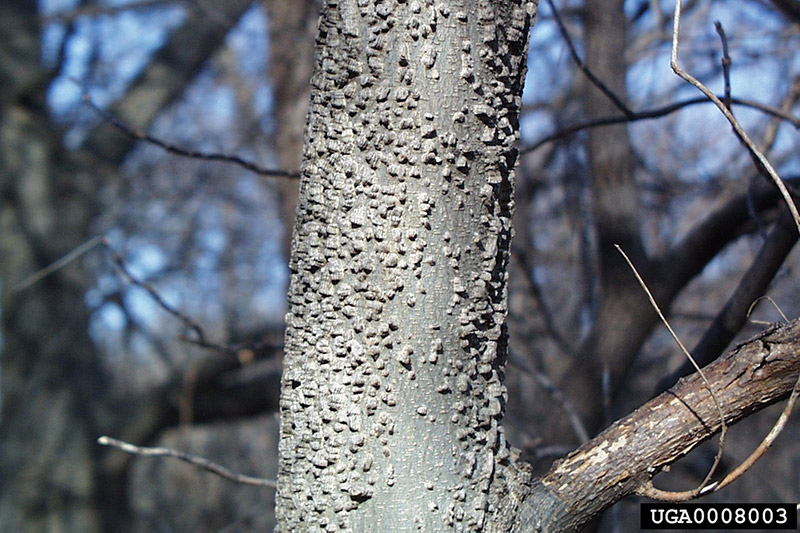
- The bark of young trees appears covered with bumpy warts, but the pattern changes to cork-like ridges as trees mature
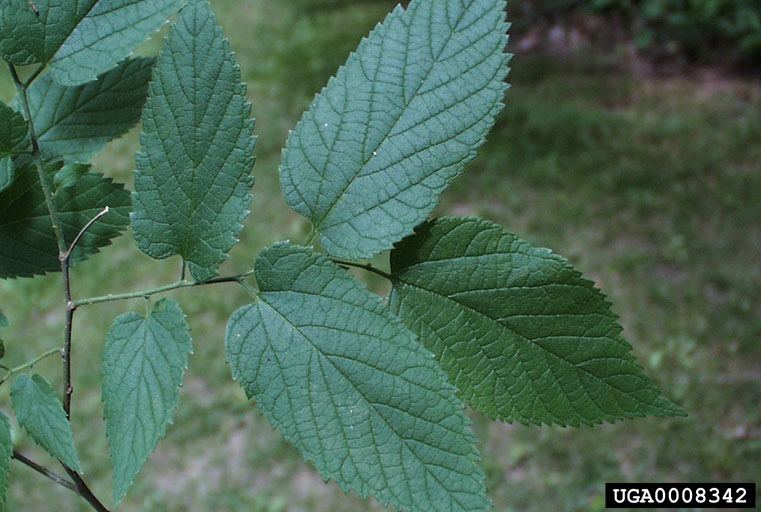
- 2 1/2- to 4-inch dark green leaves
- 1/3 to 1/2 inch berry-like fruit called drupes that change from green to purple or reddish-brown in autumn
- Fall color is yellow
Growing common hackberry
- Hardiness zone: 3 to 9
- Light: Full sun to partial sun
- Best soil properties for common hackberry
- Sandy loams to clay soils; tolerates other soils
- Soil pH 6.6 to 8.0; tolerates lower
- Dry to wet soils and well-drained to poorly-drained soils
- Have your soil tested by the U of M Soil Testing Lab.
- Transplants easily as a small bare-root plant in spring or as a containerized or balled and burlapped plant throughout the growing season.
Common problems
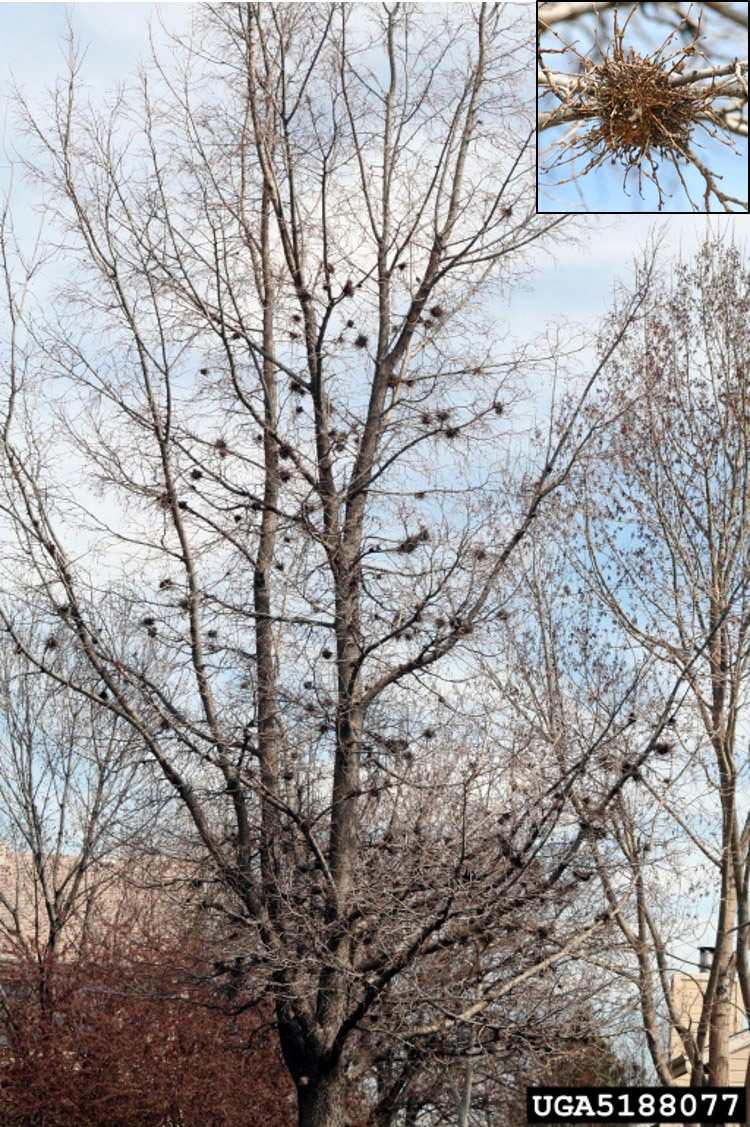
One of the few liabilities of this species is the presence of disfiguring witches brooms that can be seen throughout the crown of some trees during winter.
Pests and stresses: Visit What's wrong with my plant? – Hackberry for a list of the most common hackberry pests and stresses in Minnesota.

Reviewed in 2026