

Quick facts
- These plants are members of the cucurbit family, which includes summer squash, zucchini, melons, gourds and cucumbers.
- Jack-o'-lantern pumpkins have stringy, bland flesh, while pie pumpkins have smaller, sweeter fruit.
- Longer-season varieties may be difficult to ripen properly in parts of Minnesota.
- Sow seed in the garden in late May to early June, or start seeds indoors in late April.
- Pick winter squash and pumpkins before a hard freeze.
Popular vine crops
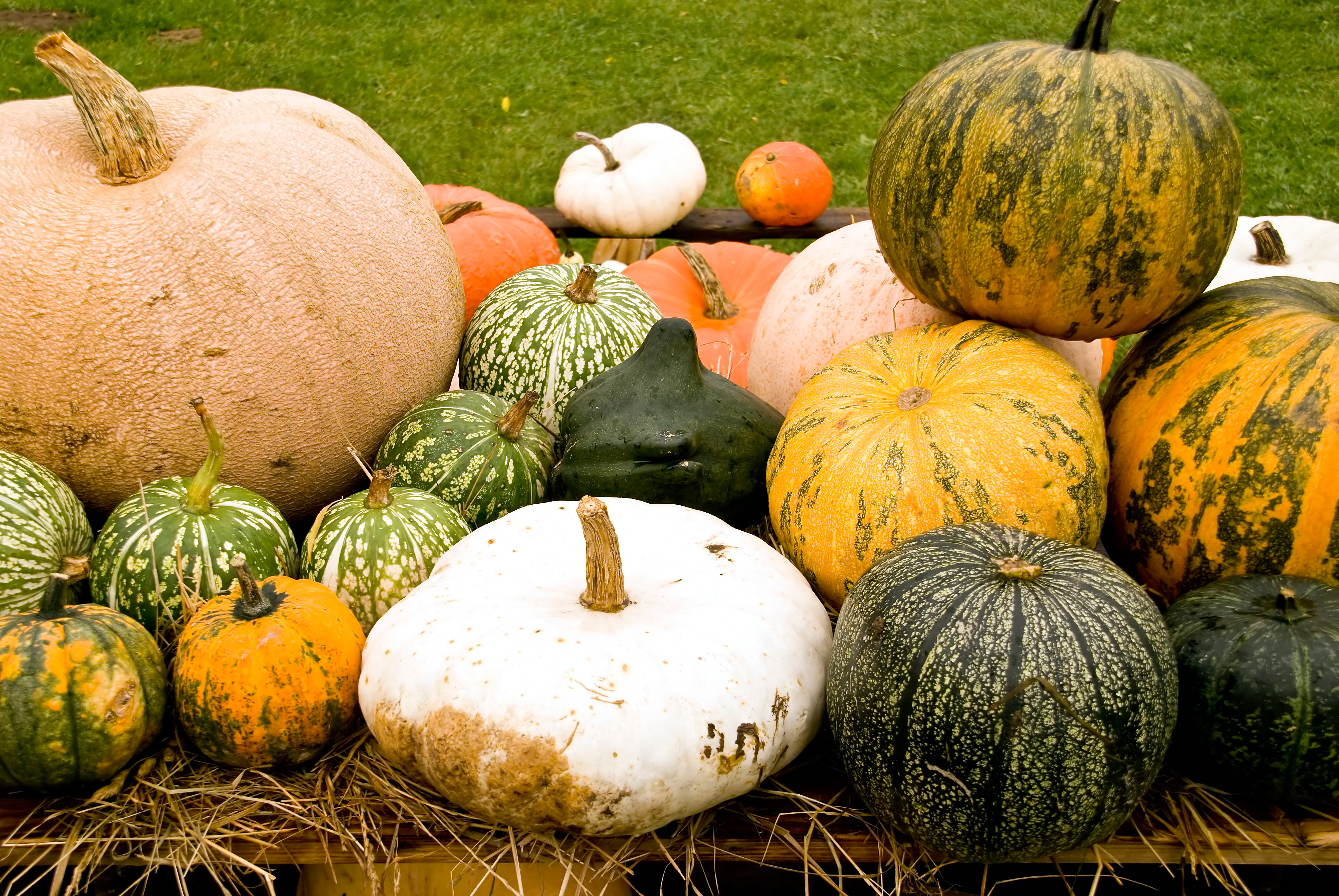
Pumpkins and winter squash are among the most popular vine crops in the garden. The terms pumpkin and squash can be confusing. Squashes can be an ingredient in pumpkin pie, and some large squashes are ornamentals. These plants are all closely related members of the cucurbit family, which also includes summer squash, zucchini, melons, gourds and cucumbers.
Choosing pumpkin and winter squash varieties

Pumpkins come from two different species. Cucurbita pepo is most jack-o’-lantern and some pie pumpkins. C. maxima are extremely large pumpkins grown for competition and decoration. Make sure to check variety descriptions carefully when purchasing seed.
People usually do not eat pumpkins grown for jack-o’-lanterns, as the flesh is bland and stringy. Pie pumpkins often have smaller, sweeter fruit. Some pumpkin varieties produce “naked” or hulless seeds, especially nice for roasting, since there is no hard shell to crack from the seeds. These seeds are more difficult to grow, especially in cooler soil.
Edible winter squash belong to three different species: Cucurbita pepo (acorn, delicata, and spaghetti-squash types), C. moschata (butternut types), and C. maxima (Hubbard, kabocha, and buttercup types). Some varieties produce small squashes the right size for individual servings, while others produce enormous fruits of fifteen pounds or more, good for soups, pies, mashing or freezing.
Pumpkins and winter squash vines “run,” or grow along, the ground and take up a lot of space. Consider using bush-type varieties in smaller gardens. You can train small-fruited squash like delicata or acorn to a trellis to save space. Large-fruited squash are too heavy to trellis, so you should grow them on the ground.
Choose varieties that you can store well.
Disease-resistant varieties
- If you have previously identified disease issues in the garden, choosing a resistant or tolerant variety is a good way of preventing the disease in the future.
- A resistant variety will not become diseased.
- A tolerant variety will become diseased, but the spread of disease will be slower and the infection will be less serious
- Seed catalogs use codes to note which varieties of pumpkins and winter squash are resistant or tolerant to different diseases.
- Some garden centers and big box stores include this information in their signage.
- For a full list of varieties, see the Cornell University Disease Resistant Vegetable Varieties page.
Planting and growing pumpkin and winter squash
The environment, plant diseases, insects and wildlife can cause changes in physical appearance and plant health. To address what you’re seeing, it is important to make a correct diagnosis.
You can find help identifying common pest problems by using Ask a Master Gardener to share pictures and get advice, or by sending a sample to the .
Soil pH and fertility
- Have your soil tested.
- For best yield and quality, the soil pH range for vine crops is between 6.0 and 6.5, which is slightly acidic.
- Apply phosphorus (P) and potassium (K) according to soil test recommendations. Many Minnesota soils have enough phosphorus.
- Unless your soil test report specifically recommends additional phosphorus, use a low- or no-phosphorus fertilizer.
- You can improve your soil by adding well-rotted manure or compost in spring or fall. Do not use fresh manure as it may contain harmful bacteria and may increase weed problems.
- If you use manure or compost, you may not need additional fertilizer applications, depending on how much organic matter you apply.
- Pumpkins and winter squash do well in heavier soils, although more fruit belly rot may occur.
- The soil should be moisture retentive yet well-drained.
- Forming raised beds will ensure good drainage, which these crops require.
- Side-dress with fertilizer when the plants begin to spread out their vines, using ½ cup of 46-0-0, or 1 cup of 27-3-3, or 3-½ cups of 10-3-1 for every 100 feet of row.
- Do not use “Weed and Feed” type fertilizers on vegetables. They contain weed killers that will kill vegetable plants.
Direct seeding
You can seed vine crops directly into the garden, but they need warm soils (65 degrees Fahrenheit at 2 inches soil depth) to germinate properly. In Minnesota, planting is typically in late May to early June.
Plant pumpkin and winter squash seeds three-fourths of an inch deep, 24 to 36 inches apart. Use the closer spacing if the variety is a bush type. Spacing between rows should be 5 to 6 feet.
Transplanting
You can also transplant pumpkins and winter squash to help extend the season in the Northern parts of the state.
- Plant seeds into pots or cells at least two inches wide and deep.
- The seedlings take about four weeks from seeding to transplanting. They should have two to three true leaves at the time of transplanting.
- Harden off seedlings started indoors before planting them in the garden.
- Transplant pumpkins and winter squash into the soil when soil temperatures reach at least 65 degrees Fahrenheit.
- Plant transplants after removing the first growth of weeds. Keep weed growth later in the season to a minimum.
Watering
- Vine crops need at least one inch of water each week, from rainfall or irrigation, during the growing season.
- Always soak the soil thoroughly when watering.
- Water sandy soils more frequently, but with lower amounts applied at any one time.
- Use a drip hose, soaker hose or careful watering of the soil, so that the leaves stay dry. Do not use a sprinkler or spray the plants with a regular hose.
- Trellised plants growing vertically may require watering more often.
Controlling weeds
- Frequent, shallow cultivation with a hoe or hand tool will kill weeds before they become a problem.
- Vine crops have roots close to the surface of the soil, so it is important not to cultivate too deeply or too close to the plants.
- Scratch the soil with a hoe just deeply enough to cut the weeds off below the surface of the soil.
- Continue cultivating as long as you can do so without injuring the vines. When cultivation is no longer possible, pull large weeds by hand.
- If you use mulch such as straw or compost to help control weeds, do not apply it until the soil is at least 75 degrees Fahrenheit. These mulches can slow soil warming.
Common problems
- Poor fruit set could be due to not enough pollination.
- Cold, rainy and cloudy weather may decrease pollination.
- Tasteless fruit could be due to dark, cloudy weather or disease.
Harvest
Pick winter squash and pumpkins before a hard freeze. A light frost that kills the vine will usually not harm the fruit. Cut the fruit from the vine, leaving a few inches of stem attached. Be careful not to cut or bruise the fruit.
After cutting pumpkins and squash from the vines, you should field-cure them in place for a week or two in dry, sunny weather. This method will dry and toughen the skin for longer storage. If the weather has turned cold or rainy, you can cure squash indoors in a warm (80 degrees Fahrenheit), well-ventilated space.
Storage
Squashes and pumpkins used as autumn decorations are vulnerable to cold, wet weather, so they can easily spoil. Monitor the condition of the fruits and discard them when they start to show signs of rot, as they can quickly become a foul-smelling mess. Remember to treat them gently.
Winter squash should be stored in a cool but not cold place, ideally around 55 degrees Fahrenheit, with good air movement. Relative humidity between 50 and 75 percent is best.
If appropriate storage is not available, you can preserve pumpkins and squash by drying slices in a dehydrator, freezing mashed squash or canning cubes in a pressure canner.
Insects
- Striped cucumber beetles damage plants by eating leaves as well as flowers, stems, and fruit.
- Spotted cucumber beetles migrate to Minnesota every year, and once here they feed on all above-ground parts of the plant.
- Squash vine borers burrow into the crown and vines of pumpkin and winter squash plants, causing the entire plant to wilt.
- Squash bugs can often be found in large groups, and their feeding gives leaves a ragged appearance.
- Aphids can colonize tomato plants in large numbers. You may notice leaf curling, discoloration, and sticky leaves. If you have aphids, you may see natural enemies nearby feeding on them.
Diseases
Many of the same cultural practices help prevent a wide variety of pumpkin and winter squash diseases.
- Powdery mildew is a fungal disease that causes powdery white spots to form on leaves and vines.
- If new growth on the plant is off-color, twisted, or distorted, it could be a cucurbit virus.
- Anthracnose can cause large, tan spots on leaves.
- Angular leaf spot causes small, blocky spots on leaves, which are surrounded by a yellow halo.
Disorders
- The first blossoms often drop from the vines. This is not a problem, since the first flowers to appear on the
- vines are male. The female flowers, which open later, have a swelling at the base that forms the fruit, also known as the ovary. After bees pollinate these female flowers, the fruit develops.
- Poor fruit set could be due to not enough pollination. Cold, rainy or cloudy weather can reduce pollination.
- Tasteless fruit could be due to dark, cloudy weather or disease.
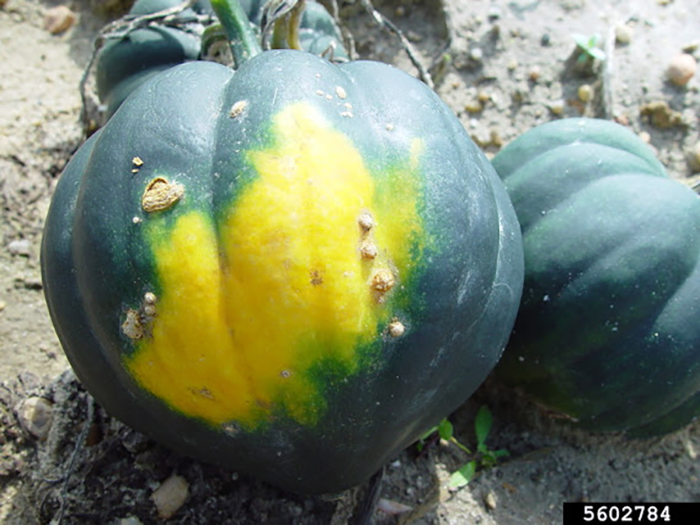
- Large rainfalls can lead to oedema, which causes scabby, raised bumps on fruit.
Reviewed in 2026