

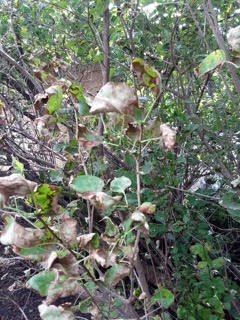
If your lilacs are looking rough this summer, you’re not alone. The likely culprit? Lilac leaf spot, a relatively new fungal disease in Minnesota.
Thought to be caused by Pseudocercospora or Septoria fungi, lilac leaf spot has been quietly spreading across the Midwest. It mainly affects common lilacs (Syringa vulgaris), though Japanese tree lilacs (S. reticulata) can also be infected.
While not usually fatal, the disease can cause heavy leaf loss and stress, even in mature plants that have never had issues before.
Spotting the symptoms
Symptoms typically appear from July to September. Leaves turn yellow, then develop brown, blocky spots that grow and merge. Affected leaves often twist, curl, and drop early.
The fungus thrives in warm, humid weather, especially when temperatures hover between 70 and 80°F.
Infection likely starts in spring or early summer when spores from last year’s fallen leaves land on new growth. Depending on conditions, the disease may spread quickly or take weeks to show.
Early leaf drop can leave lilacs looking bare well before fall.
Plants at risk
Overgrown lilacs and dense windbreaks are especially vulnerable, particularly in humid areas. Even healthy shrubs can be affected, and repeated infections over time may lead to branch dieback or decline.
The good news? Most lilacs bounce back with proper care.
Management
No fungicides are currently labeled for lilac leaf spot, and spray timing is unclear.
Instead, focus on cultural practices: prune to improve airflow and remove leaf litter in fall to help prevent reinfection. These steps can make a big difference.
Weather’s role
Outbreaks tend to follow warm, wet summers. Minnesota saw major cases in 2020, 2021, and 2024.
In contrast, the hot, dry conditions of 2022 and 2023 brought fewer reports; though some infections appeared later and may have been mistaken for early fall leaf drop.
Look-alikes to watch for
Lilac leaf spot can resemble other diseases like bacterial blight or verticillium wilt. Accurate diagnosis matters since treatments differ.
Bacterial blight causes drooping shoots and ooze, while verticillium wilt leads to sudden branch die-off from internal damage.
What’s next?
Researchers are still studying lilac leaf spot and its long-term impact. Meanwhile, keep an eye on your plants, practice good sanitation, and reach out to your county’s Extension office if you suspect an infection.
Read more about diseases of lilacs.