

Minnesota’s climate is variable, and fruit growers often find themselves managing the effects of excess rainfall one season and extended dry periods the next.
All fruit crops benefit from regular watering. Even if the plants look healthy and productive at a glance, hidden impacts of water stress can cause problems that we cannot see right away.
For instance, extended dry weather in June and July can reduce apple crop load the following year. Likewise, a water-stressed grapevine will grow more slowly and may even struggle to survive the following winter due to its reduced health heading into the fall.
More obvious impacts of water stress across all fruit crops include lower yield, smaller fruit, and slower plant growth. Even low-maintenance fruit crops like currants will benefit from watering during dry spells.
Watering is especially important for newly-planted fruit trees, vines and shrubs.
How much to water
As a very general rule of thumb, most fruit crops require around 1 inch of water per week to grow and produce optimally. However, you should alter your watering schedule and amount depending on your garden’s soil type.
- Sandy soils hold less water, and should be watered at a higher rate and more often.
- Heavier soils with more clay content hold more water, so one good watering a week should be enough.
Reducing water stress
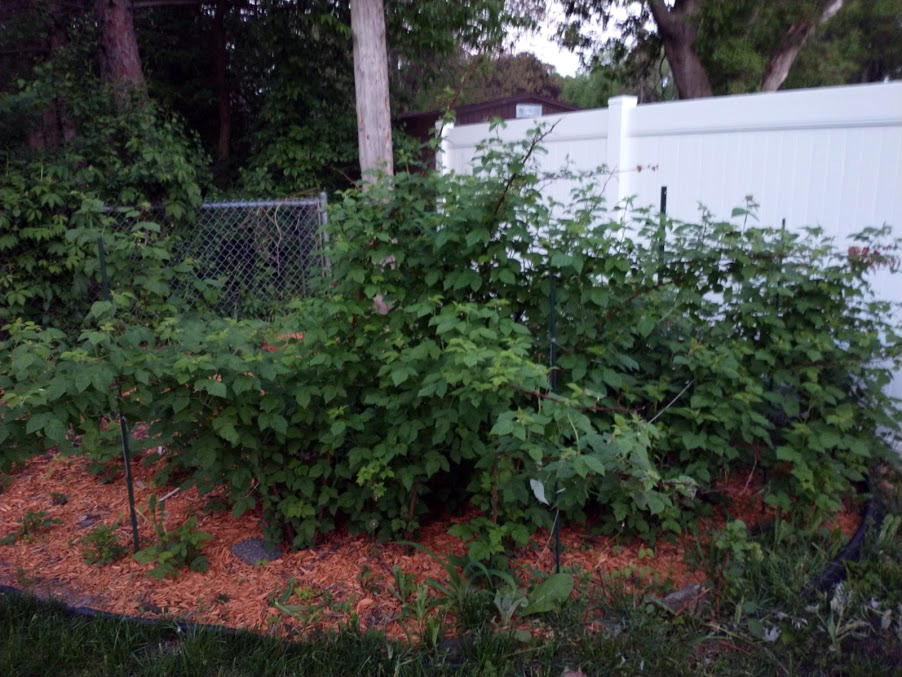
Fruit plants growing on bare soil experience more water stress during droughts than those surrounded by a layer of mulch. Water tends to evaporate out of bare soil faster than when mulch is present. Therefore, a good way to reduce water stress is to mulch with wood chips, chipped leaves, or use landscape fabric.
You should still dig into the mulch occasionally to check the soil moisture, and water when needed. Be careful not to forget these areas while watering, or assume that they always have enough moisture. They, too, will dry out eventually.
Also, keep up with weeding so that your fruit plants have nothing to compete with for available water. This is especially important for new or young plants and shallow-rooted species like blueberries and strawberries.
Reviewed in 2025