

Quick facts
- Buy disease-free seed tubers from a certified grower or seed distributor.
- Plant seed pieces as soon as the soil warms.
- Once the green shoots emerge, plan to hill soil up along plants as they grow.
- Potatoes require more fertilizer than other vegetables.
- You can dig new potatoes about seven to eight weeks after planting.
- Harvest mature tubers after plants have dried.
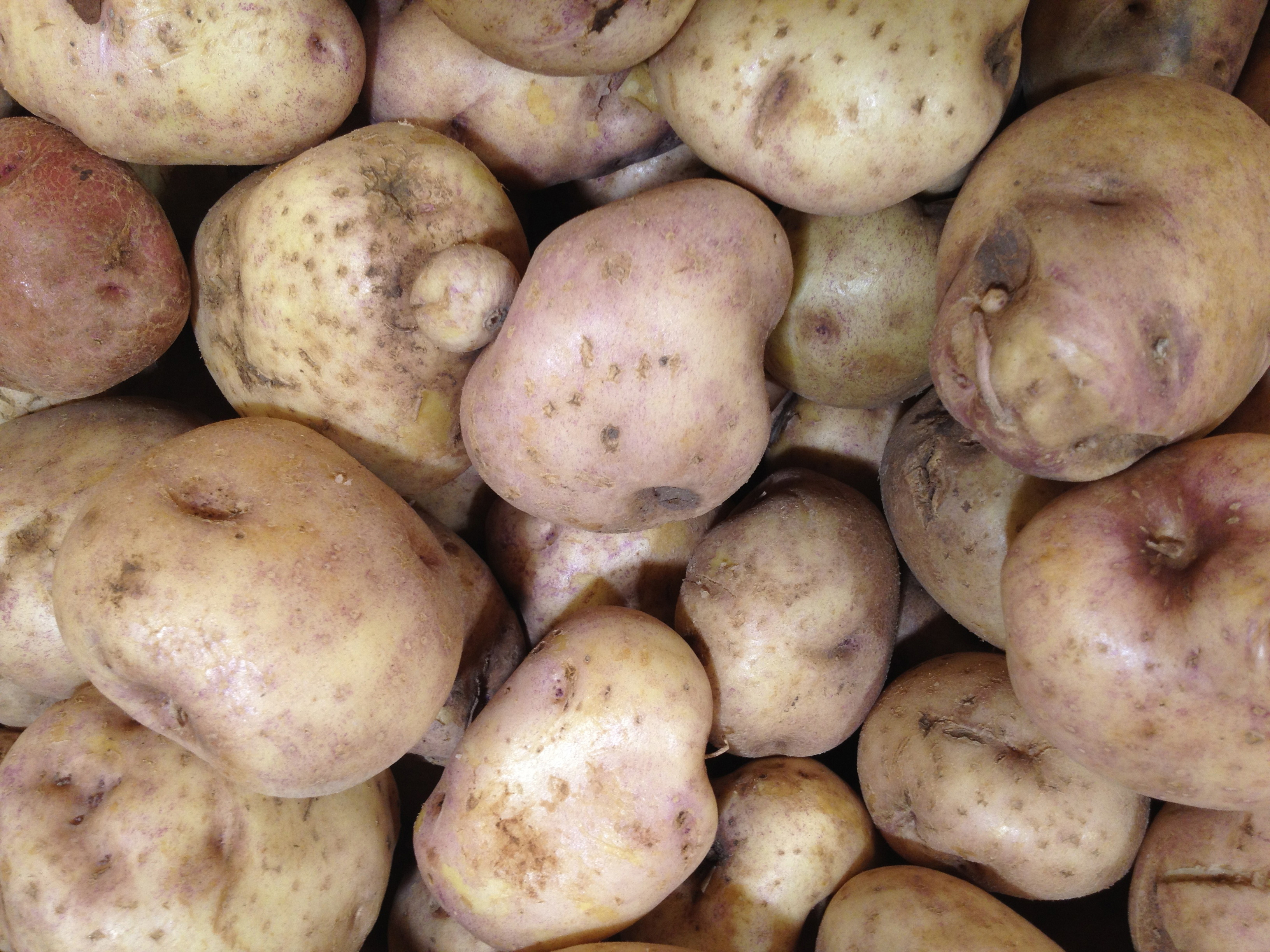
Potatoes grow from seed tubers, not true seed. They originated in the Andes and come in a variety of types, colors and shapes.
Generally, there are russet types that are starchy with brown skins and that are good for baking; red potatoes with white, yellow, or red flesh and a starchy or waxy texture; white potatoes with white or yellow flesh; purple potatoes; and fingerling types.
Potatoes need sunny locations to grow well.
Choosing potato varieties

Use mealy or dry-fleshed potatoes, like russets, for baking, frying and mashing. As mashed potatoes, they will not be gluey, and they will absorb gravy, butter or sour cream. They may fall apart in a soup, or when boiled for a potato salad.
Waxy or moist-fleshed, round potatoes hold together when cooked. Potato chunks in soups, curries, frittatas, and salads are usually waxy varieties. You can pan-fry leftover boiled potatoes without them falling apart. When you mash waxy potatoes, they can become sticky.
Many potato varieties fall somewhere in between truly waxy and completely mealy. All-purpose potatoes such as ‘Yukon Gold’ usually have a balance of waxy and mealy starches.
Disease-resistant varieties
- If you have previously identified disease issues in the garden, choosing a resistant or tolerant variety is a good way to prevent future diseases.
- A resistant variety will not become diseased.
- A tolerant variety will become diseased, but the spread of disease will be slower and the infection will be less serious
- Seed catalogs use codes to note which varieties are resistant or tolerant to different diseases.
- Some garden centers and big box stores include this information in their signage.
Start with disease-free tubers
Start potato plants from tubers or pieces of tubers, not from true seed. Buy disease-free seed tubers from a certified grower or seed distributor. Most garden centers carry seed potatoes in the spring.
Commercial seed tubers will grow into stronger, more vigorous, longer-lived plants. The plants may produce fewer tubers, but the total yield from each plant will be higher.
Do not plant potatoes purchased at the grocery store, as the store may treat them with chemicals to keep tubers dormant, in which case they will be slow to grow. Diseases may also infect the potatoes, which can remain in the soil for a long time.
Potatoes saved from your own garden may not be a good choice either. They can carry disease spores from the previous year. Although your garden may seem disease-free, reintroducing more fungi or bacteria could cause crop failure for your potatoes, tomatoes, peppers and eggplant in the future.
Both grocery store potatoes and your own saved tubers have been grown as food, not with seed use in mind, which makes them less suitable as seed.
Planting and growing
- As you prepare, plant and tend your garden, treat your potato patch differently because potatoes require more fertilizer than other vegetables.
- Potatoes grow best in well-drained, sandy soil. A poorly drained soil is more likely to produce diseased tubers.
- Have your soil tested.
- The ideal soil pH level for potatoes is somewhat acidic, between 6 and 6.5, but they will tolerate soil with pH as low as 5.
- Addition of manure or compost can add micronutrients and organic matter to soil.
- Side-dress (place fertilizer alongside of the row) about four weeks after planting.
- As you hill up soil around the plants, incorporate 0.15 pounds actual nitrogen per 50 feet of row.
- Repeat the hilling and fertilization two weeks later.
- Note that this fertilizer recommendation is different from Extension recommendations for most other crops.
- Do not use any fertilizer containing a weed killer ("Weed and Feed"), as it may kill your vegetable plants.
Cut tubers
- Some seed tubers are small, whole potatoes, one to 1¼ inches in diameter. These are ideal, since you do not need to divide them.
- Cut larger tubers into 1¼-inch chunks.
- Every piece must have at least one “eye,” an indentation that will produce the new shoot. Two or three eyes per piece is better.
- Use a clean knife on a clean cutting board when you cut the seed tubers into pieces.
- Place the cut pieces on a tray at room temperature (between 60°F and 70°F) for a few days until the cut surface has dried out and formed a tough protective layer.
- If sprouts start to form, be careful not to rub them off while planting.
Plant pieces
- Plant tuber pieces as soon as the soil warms; early April in the Twin Cities area.
- Gardeners in southern Minnesota may plant earlier, while locations further north may not have warmer soil until May.
- Plant tuber pieces cut side down, 10 to 12 inches apart and about three to five inches deep, in rows 30 to 36 inches apart.
- Space pieces closer for smaller tubers and farther apart for fewer but larger tubers.
- Cover with four inches of soil or compost.
Once the green shoots emerge, hill soil up around plants as they grow. Hilling keeps shallow tubers from exposure to light and turning green.
Tubers will form on thin stems, also called stolons, which emerge from the main stems. The plant will grow more stolons if more of the main stem is underground.
Start hilling plants when stems are about a foot tall, and once or twice more during the growing season. At the end of the season, you will have hilled six to eight inches of soil in total along the plants.
Some gardeners plant seed tubers in shallow trenches to make hilling easier. Instead of mounding soil up, they push the plant down into the trench.
During early growth stages, a lack of moisture can cause knobby or hollow potatoes and prevent the plant from producing new tubers.
Light soil is the best for growing large, smooth potatoes, but not if it gets too dry for good tuber growth.
- Soak the soil thoroughly when watering, once or twice a week.
- One inch of rainfall per week is good.
- An inch of water will wet sandy soil to a depth of ten inches, a heavy clay soil to six inches. If your soil is sandy, water more often than once a week.
- Use a trowel to see how far down the soil is wet. If it is only an inch or two, keep the water running.
- Frequent, shallow cultivation with a hoe or other tool will kill weeds before they become a problem.
- Do not cultivate too deeply. Hoe just deeply enough to cut the weeds off below the surface of the soil.
- Be careful not to damage the potato plants when cultivating, and continue hilling soil up around the plants.
Harvest
- “New” potatoes are tubers dug before their skins have thickened and become tough. The tenderness of the skins makes them a special treat.
- You can dig new potatoes about seven to eight weeks after planting.
- New potatoes will have formed above the seed piece you planted, so dig down about a foot, and turn the whole plant upside down to pick the tubers.
- Some gardeners dig beside the plants and take a few potatoes, but leave the plants in place to produce more.
- Harvest mature tubers after the plants have dried or when tubers have reached full size.
- Choose a dry, warm day to dig the tubers. Dig the hills using a spading fork, being careful not to pierce tubers with fork tines.
- If you do cut into potatoes as you harvest them, sort out these damaged tubers.
- Do not store the injured tubers, as they will spoil. Use these damaged potatoes first.
Storage
- If you want to grow potatoes for storage, choose a variety known for storability.
- Potato skins should be difficult to rub off with your thumb. If not, place harvested potatoes in a warm (60°F to 65°F), well-ventilated area to allow the skin to set and any wounds to heal.
- Keep them under cover or in the dark, and allow ten days or more for them to cure completely.
- Check over the potatoes, removing any that are soft or shriveled. Eat those soon.
- Gently brush any dried soil off the tubers, but do not wash them.
- As a rule, potatoes are best stored in dark, cold, moist conditions (32-40°F and 95% relative humidity, such as in the refrigerator).
- Potatoes destined for frying should be stored at 40-50°F to avoid cold-induced sweetening that can result in discoloration during frying.
- Green skin occurs when potato tubers experience exposure to light. Remove any green areas before cooking potatoes. Do not consume potatoes with extensive green areas.
- Remove any sprouts from potatoes before preparing them. The longer potatoes are in home storage, the more likely they will begin to sprout.
- Potato sprouts can be toxic; you should not eat them.
- You must use a pressure canner to can potatoes.
Managing pests, diseases, and disorders
Many things can affect potato leaves, flowers and fruit. The environment, plant diseases, insects and wildlife can cause changes in physical appearance and plant health. To address what you’re seeing, it is important to make a correct diagnosis.
You can find help identifying common pest problems by using Ask a Master Gardener to share pictures and get advice, or by sending a sample to the UMN Plant Disease Diagnostic Clinic.
- Cutworms chew off potato stems at the soil line.
- Colorado potato beetle larvae and adults feed on leaves, sometimes completely defoliating plants.
- Aphids can colonize tomato plants in large numbers. You may notice leaf curling, discoloration, and sticky leaves.
- If you have aphids, you may see natural enemies nearby feeding on them.
Many of the same cultural practices help prevent a wide variety of potato diseases.
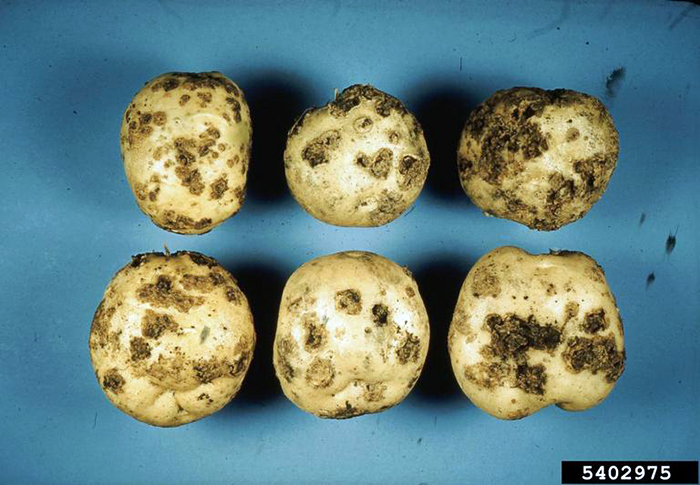
- Potato scab is a bacterial disease that causes dark, rough, corky spots on the skin of the potato tubers but does not rot them. They may be ugly but are completely edible.
- Early blight is a common fungal disease in Minnesota and can cause spots on potato leaves.
- Late blight is a disease we don’t see in Minnesota every year, and it can affect potato leaves and tubers.
- Verticillium wilt can cause yellowing and wilt in potatoes.
Practice crop rotation
- Choose a location in your garden where you have not grown tomatoes, potatoes, peppers, eggplants, or tomatillos for the past three or four years.
- Even if you have not noticed disease symptoms before, it is best not to plant potatoes where other plants in the same family have grown recently. Disease spores in the soil can easily infect new plantings.

Hollow heart is a disorder that causes an irregularly shaped hole in the center of the potato tuber.
It is caused by periods of lots of water and too little water, or by poor nutrition.
Water regularly and apply fertilizer according to a soil test to prevent this disorder.
Hollow heart does not affect the taste or safety of the potato.
Reviewed in 2026