

Quick facts
- Internal parasites are a leading cause of death for sheep and goats.
- Dewormer resistance makes parasite eradication unrealistic.
- Combining smart pasture practices, strategic genetic selection, and targeted treatments can help.
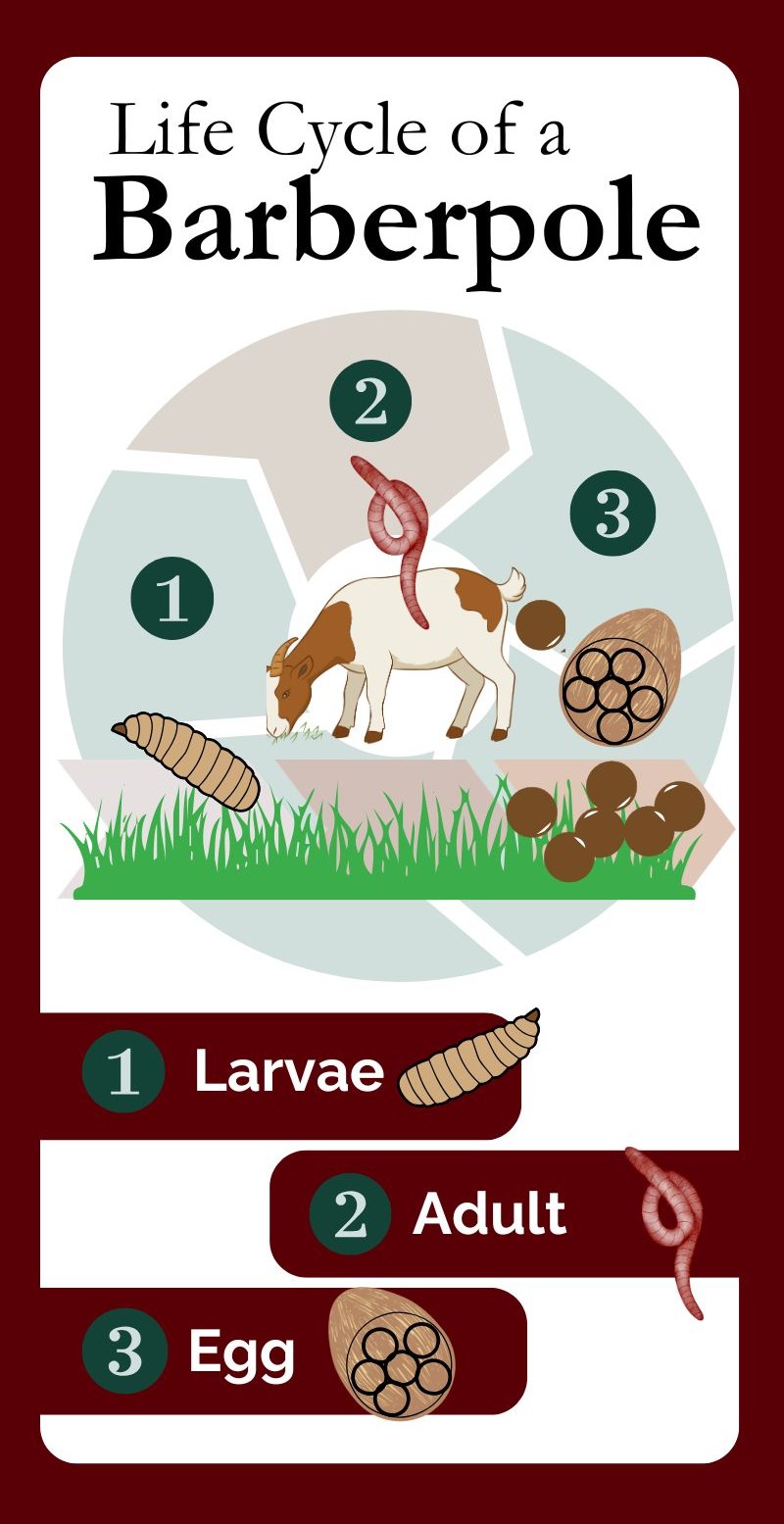
Internal parasites are a leading cause of death for sheep and goats across the United States. Minnesota’s wet climate is especially conducive to sheep and goat parasites.
Because resistance has been documented across every available class of chemical dewormer, total parasite eradication is no longer a realistic goal. Instead, producers must shift their focus toward sustainable herd management by combining smart pasture practices, strategic genetic selection, and targeted treatments.
Understanding the barberpole worm
The barberpole worm (Haemonchus contortus) is a threadlike, white parasite that attaches to a small ruminant's stomach to consume blood and nutrients, causing severe anemia. It spreads when sheep and goats graze near manure in warm, wet conditions.
- Temperature preferences: The worm thrives in temperatures between 50°F and 96°F, with its fastest growth occurring between 86°F and 96°F. The worm becomes dormant when temperatures drop below 50°F, but can still survive on pastures.
- Larval survival: Parasite eggs, which are shed on bare dirt, die quickly before becoming infective larvae. On grass, eggs become infective larvae in 5 days and can survive for weeks or months.
- Larvae persist on grass for up to 2 months in warm weather and 6 months or more in cooler weather.
- Rain accelerates hatching, whereas dry weather kills the larvae.
Controlling parasites from pasture to mouth
The barberpole eggs will rapidly die on a dry or dirt lot before they can develop into infective larvae, meaning that goats or sheep kept on dirt will have reduced parasites overall. However, even dirt lots with small patches of grass will contribute to parasite spread.
Grazing management is a producer's first line of defense to keep animals away from parasites in manure.
By understanding livestock behaviors and larval life cycles, producers can control certain factors to minimize exposure.
Leverage grazing behaviors

- Goats are natural browsers that prefer reaching upward to eat leaves, shrubs, and brush where barberpole larvae cannot survive.
- Sheep naturally graze grass, usually at dawn or dusk. They will also overgraze favorite patches and indiscriminately pass manure anywhere while grazing.
Maintain grass height
- Barberpole larvae live primarily at the base of the grass.
- Move animals off a pasture before the forage is shorter than 6 inches to help them avoid ingesting larvae.
- This will also prolong the pasture's productivity.
Implement rapid rotation
- During warm grazing seasons, rotate animals to a new pasture every 5 days or less.
- Earlier than 5 days, eggs passed in manure are mostly harmless.
- After 5 days, the eggs will hatch into infective larvae.
Provide adequate pasture rest
- During Minnesota summers, rest grazed pastures for at least 2 months before letting small ruminants return.
- After spring or fall grazing, rest those pastures for the remainder of the season.
- Avoid spring-grazing any areas that were grazed during a previous cool fall.
Alternative pasture strategies
When basic rotational options are limited, these sustainable alternatives can help break the parasite life cycle.
Multi-species grazing
Barberpole worms target ruminants but have the greatest effect on sheep and goats. Grazing adult cattle or horses after sheep or goats cleans up the pasture without spreading the parasite.
Haying pastures
Cutting, drying, and baling hay effectively kills parasite larvae, making hay production a safe use for a resting pasture.
Grazing tannin-rich forages
Forages high in tannins, such as Birdsfoot trefoil or Sericea lespedeza, naturally slow down egg hatching and reduce overall egg shedding in manure.
Bioworma
This feed supplement contains a natural fungus that consumes infective larvae in fresh manure. For best results, feed it continuously throughout the grazing season starting at turnout on rested pastures. It prevents new larvae from hatching but does not treat existing internal parasites.
There is no scientific evidence to support the efficacy of Diatomaceous earth against small ruminant parasites; thus, its sole use as a parasite control strategy is discouraged.
Breeding for resistance: The 80/20 (or 25) Rule
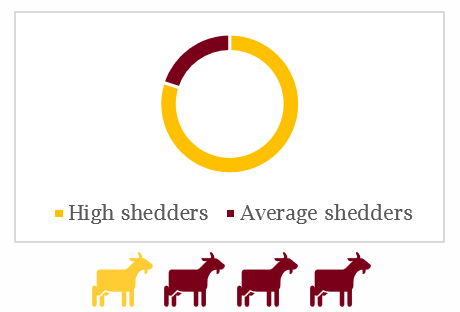
A successful parasite program relies heavily on livestock genetics. Within a typical herd or flock, roughly 25% of the animals shed 80% of the total parasite eggs into the environment.
Cull high shedders
Repeatedly deworming highly susceptible animals worsens drug resistance. Instead, removing these consistent shedders permanently lowers the overall pasture burden for the rest of the herd.
Select resistant breeding stock
Parasite immunity is heritable and can be selected for over time. Recording deworming treatments and signs of parasitism noted in individuals or their offspring can help make selection decisions easier.
Certain breeds, like hair sheep, have naturally higher resistance, while goats generally have less recognized inherent resistance.
Smart deworming and individual diagnostics
Because chemical dewormers continue to lose effectiveness, they should only be used to fine-tune a program already anchored in pasture rotation and genetic selection. To preserve these tools, avoid routine winter deworming in northern climates and focus on targeted individual treatments.
Producers should keep individual animal records and look for multiple signs of parasitism rather than relying on a single indicator:
- Signs of parasitism: Watch for poor performance, poor (thin) body condition, bottle jaw, anemia, or unexplained death. Sometimes there are no visible signs.
- FAMACHA scoring: This system provides a quick visual assessment of anemia via the mucous membranes on the underside of the eyelid. Score bucks/rams, ewes/does, and lambs simultaneously as a group to identify individuals that consistently struggle.
- Fecal egg counts (FEC): An FEC serves as a numeric snapshot of eggs shed per gram of manure.
- To ensure accurate results, collect samples in a plastic bag, remove the air, immediately refrigerate (do not freeze), and test within 48 hours.
- Fecal egg count reduction tests: FECs deliver the most value when used to test animals immediately before and after treatment to determine if a specific dewormer is actually working on your farm.
- These two FECs run before and after deworming comprise the Fecal Egg Count Reduction Test.
- Target the peri-parturient period: Ewes and does experience a temporary drop in immunity and a spike in egg shedding during the 4 weeks before and 4 weeks after giving birth. Monitor them closely for signs of parasitism and keep in mind they will contaminate pasture for vulnerable lambs and kids during this period.
Maintaining refugia
The ultimate goal of modern parasite management is to maintain "refugia," a population of worms that remains genetically susceptible to chemical dewormers.
When an entire flock is dewormed indiscriminately, susceptible worms die, leaving only resistant worms to breed and populate the pasture. By keeping healthy, low-shedding animals untreated, you cultivate a balanced worm population where susceptible genetics outnumber resistant ones, ensuring your chemical tools continue to work when an animal truly faces a life-threatening infection.
Strategies for success
Be realistic about the goals of parasite management. If you raise sheep or goats, you raise parasites too. Combine herd selection practices, grazing management, and strategic deworming with diagnostic tests to target parasite control in multiple ways.
For the most complete information, visit the American Consortium for Small Ruminant Parasite Control.
Reviewed in 2026