

Identification of soybean gall midge (Resseliella maxima)
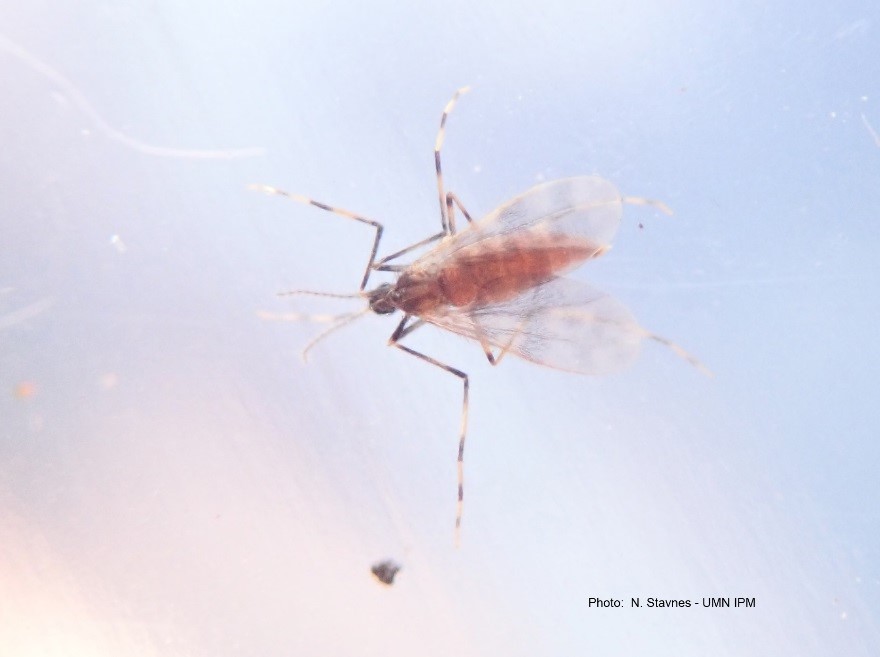
Adults
- Tiny (2-3 mm long), delicate flies with slender bodies
- Mottled wings
- Long legs banded with an alternating light and dark color pattern
- Orange abdomen
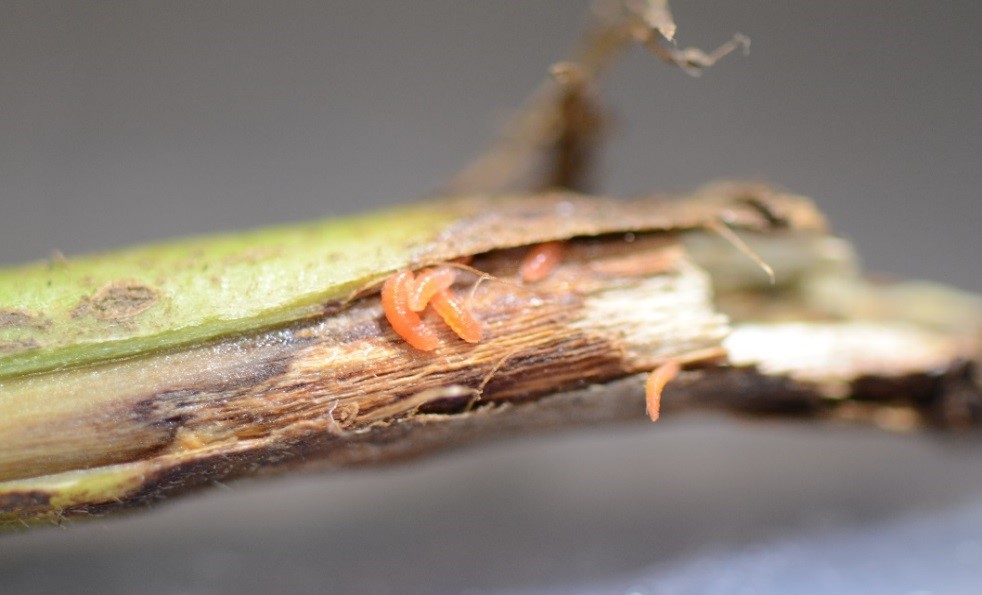
Larvae
- Small legless, maggot-like larvae
- Clear to white-colored when young, turning bright orange as they mature
Biology
- Larvae may overwinter in cocoons in the soil of infested fields.
- Pupae develop in the spring.
- Adults begin to emerge in June. Emergence is prolonged and can extend into July.
- Egg laying is suspected to occur near the base of plants where larval infestations are typically found.
- Cracks in the stem epidermis and other wounds may provide sites for egg deposition or larval entry.
- There are at least two adult generations each year in Minnesota.
Natural enemies of the soybean gall midge may occur but have not been documented.
Crop impacts
- Plant symptoms and larval infestations are visible after the V2 soybean growth stage.
- Larvae can be found under the soybean stem epidermis, typically at the base of the plants.
- Larval feeding causes blackened areas at the base of the stem, with heavily infested areas of stems deformed and necrotic. Stems can lodge or break easily at these areas.
- Injury can result in stunting, wilting, and death of soybean plants. Significant yield reductions have been recorded, especially on field edges.

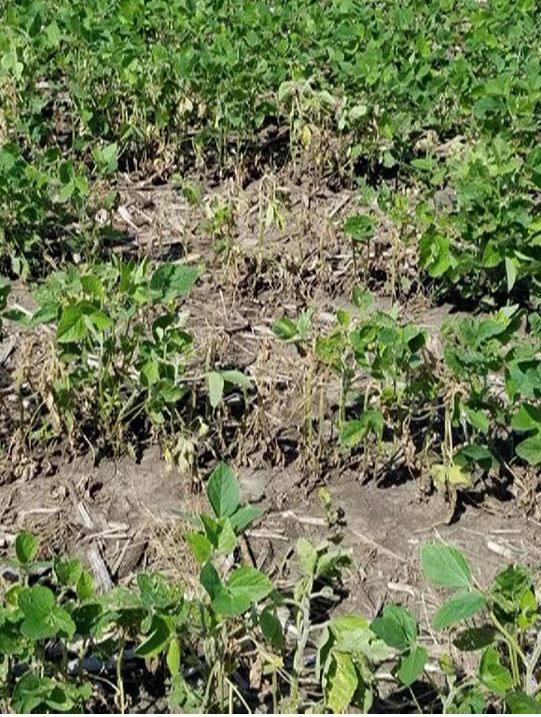
Scouting
- Begin scouting soybean plants after the V2 growth stage.
- Infestations are most likely on field edges near fields that had soybean the previous year.
- Look for dark discoloration at the base of the stem.
- Heavily infested plants eventually wilt and die. Stems of infested plants become brittle and can break near the soil.
- Peel back the epidermis of the stem and look for larvae.
Watch Soybean Gall Midge Scouting (2020; video: 01:08)
Management
Currently, there are no recommendations for management of this pest in Minnesota.
Seed-applied insecticides do not appear to be effective. Application of foliar insecticides could be an option in the future, but insecticide efficacy and application timing need to be studied. Extended emergence and multiple generations could make insecticide control of adults difficult.
If host plant resistance can be identified, varieties resistant to soybean gall midge could be a valuable management tool.
Please contact us
If you suspect you have a soybean gall midge infestation, please contact Robert Koch at [email protected].
Reviewed in 2026