

Quick facts
Glossy buckthorn is a Restricted noxious weed. It is illegal to import, sell or transport buckthorn in Minnesota.
- Glossy buckthorn leafs out early and retains leaves late, creating dense shade.
- Dense stands crowd out native vegetation.
- It can often completely displace forest understory habitat.
Glossy buckthorn should be reported. The Minnesota Department of Natural Resources provides detailed recommendations for reporting invasive species.

How to identify glossy buckthorn
- Glossy buckthorn (Frangula alnus) is a tall understory shrub or small tree up to 25 feet high.
- Spreading, loosely branched crown.
- Often multiple stems at the base.
Stem
- Brown bark with elongated silvery cork-like projections.
- Native plums and cherries have similar bark.
Branches
- Often sub-opposite (almost opposite), sometimes alternate.
Leaves
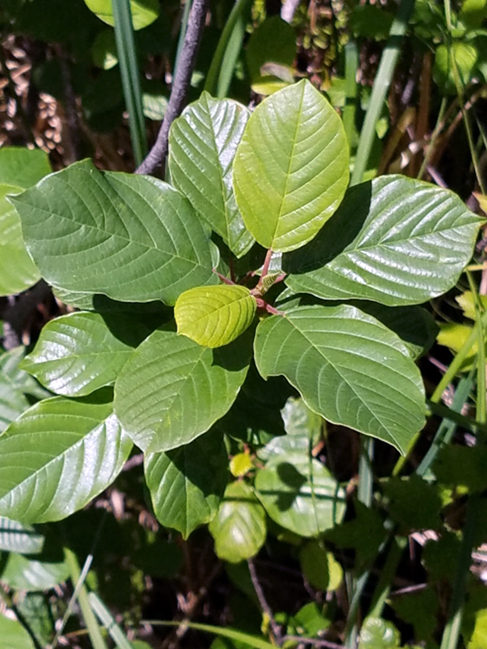
- Mostly sub-opposite, sometimes alternate.
- Thin and oval or elliptic.
- Smooth, dark glossy, margins are not toothed.
- Stays green late into fall.
Flowers
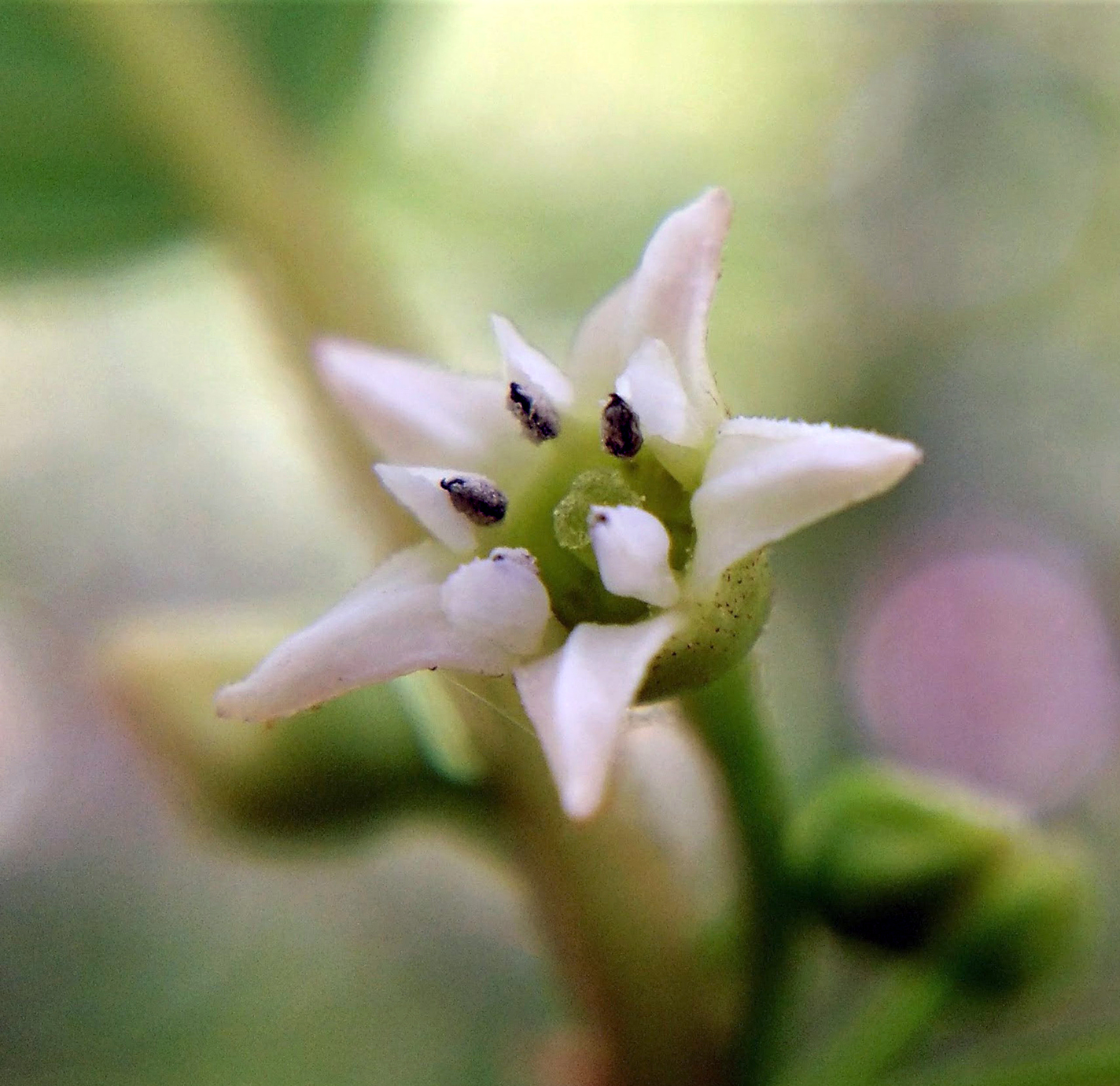
- Inconspicuous, small, 5-petaled, yellowish flowers appear in May or June, clustered in leaf axils.
- Flowers contain both male and female parts, so all shrubs can fruit.
Fruit and seeds
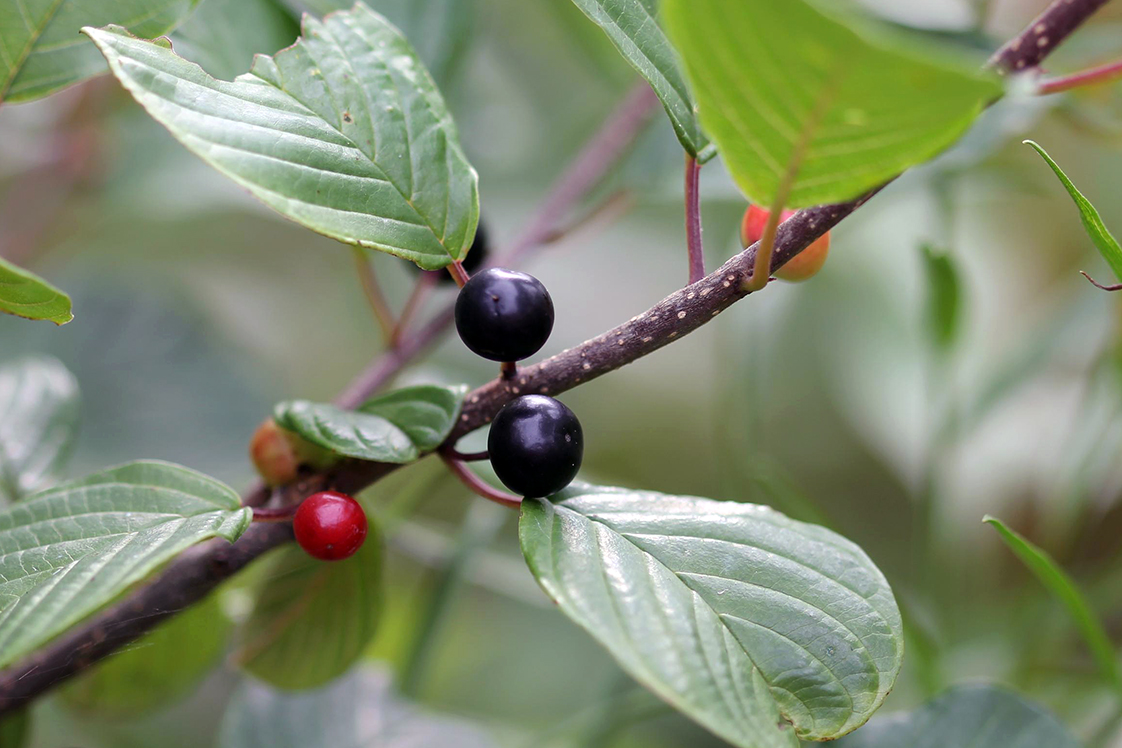
- Clustered in leaf axils along the stem and ripen progressively from a distinctive red to a dark purple in August and September.
- Berries have a laxative effect on birds, which aids in seed dispersal.
- Seeds are viable for 2 to 3 years in the soil.
Roots
- Extensive fibrous root system.
Video resources
- Tangled Ecosystem: Soybean and buckthorn (2018)
- Buckthorn ID - Steps for Reducing the Soybean Aphid Host (2017)
- Buckthorn Management First steps: Reducing the Soybean Aphid Host (2017)
- How to manage buckthorn (2018)
These Extension videos were produced with support from the Minnesota Soybean Research and Promotion Council.
Reviewed in 2023