

Quick facts
Yellow bedstraw is an invasive species.
- Yellow bedstraw prefers sunny locations along roadsides, in fields and pastures.
- Outcompetes native species.
- There is not currently sufficient information available to determine the ecological threat of this species.
- Additional research and distribution data is needed to evaluate potential threats.
Yellow bedstraw should be reported. See the Minnesota Department of Natural Resources recommendations for reporting invasive species.
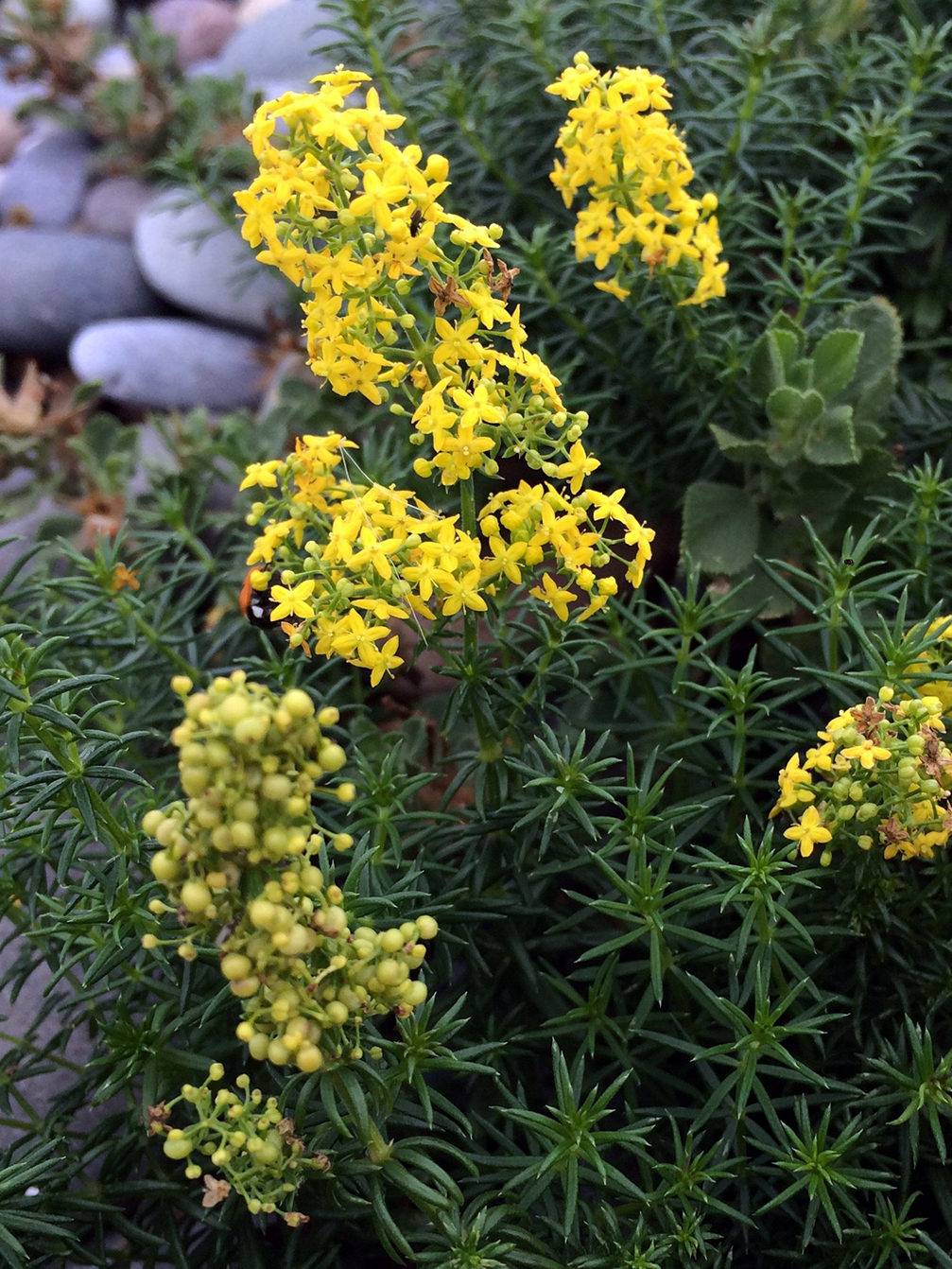
How to identify yellow bedstraw
- Perennial herbaceous plant 20 to 50 inches tall.
- The only yellow-flowered bedstraw in Minnesota.
- The lower plant can be very leafy while the upper part may have many branches.
Stem
- 4-sided with rounded angles, usually covered in very short hairs.
Leaves
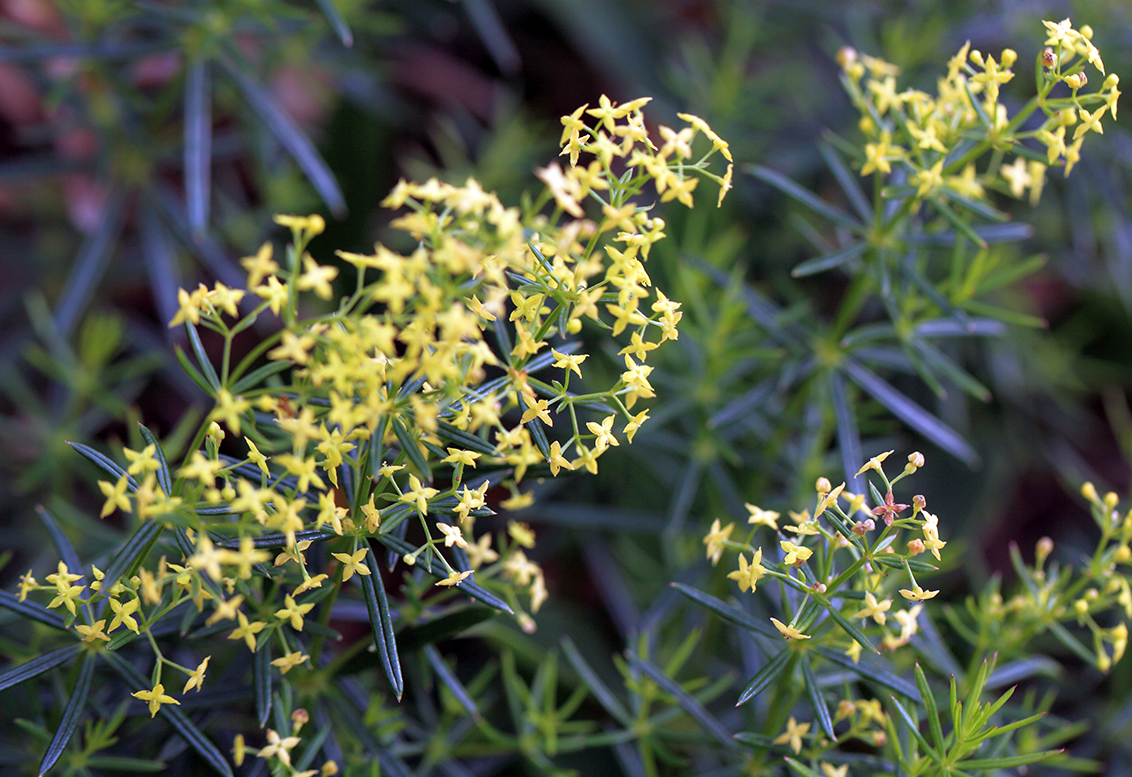
- Whorled in groups of 8 to 12, very narrow, 1/2 to 1-1/2 inch long.
- Covered in short hairs, with a sharply pointed tip.
- Leaf edges are sometimes slightly rolled.
Flowers
- Many branching clusters of small (about 1/8 inch wide) yellow flowers attach at the leaf axil in the upper part of the plant.
- Flowers usually have four yellow stamens and four petals.
- Petals are longer than they are wide, and may be pointed or blunt-tipped.
Fruit
- Small, 0.2 inch wide.
Seeds
- One small brown seed in each fruit.
Roots
- Spreads by rhizomes.
Reviewed in 2019