

Quick facts
- Giant knotweed is an invasive species and should be reported.
- The Minnesota Department of Natural Resources provides detailed recommendations for reporting invasive species.
Giant knotweed grows in disturbed areas and can tolerate varying sun availability.
It is the largest of the knotweeds, and it shades out and displaces native vegetation
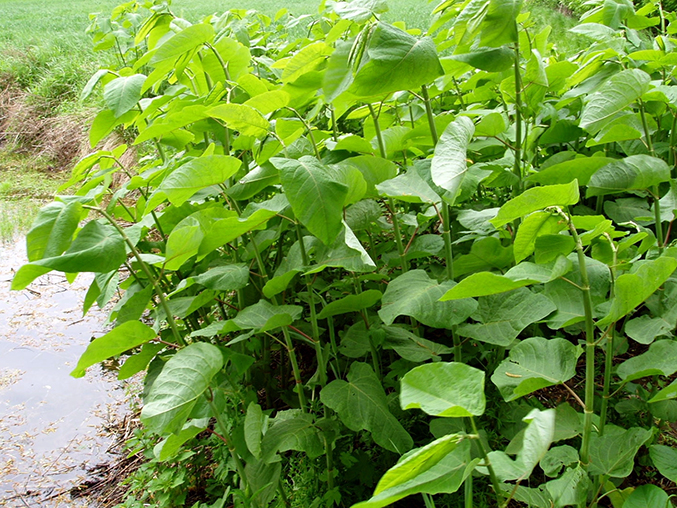
How to identify giant knotweed
- Giant knotweed (Polygonum sachalinense) is a perennial shrub that can grow 9 to 20 feet high, typically with no branches.
- Resembles bamboo.
Stem
- Large, light green, and hollow with reddish joints.
Leaves
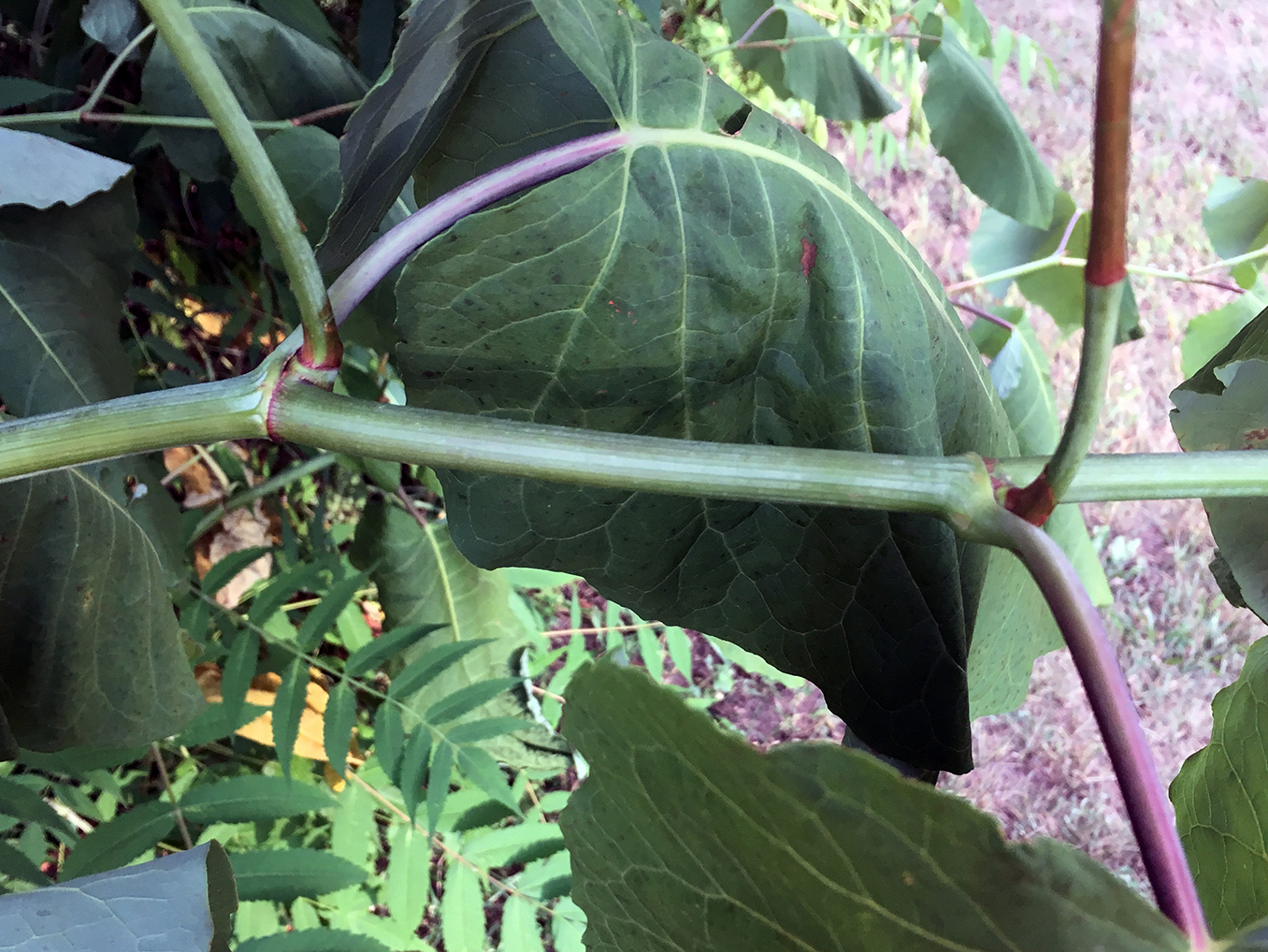
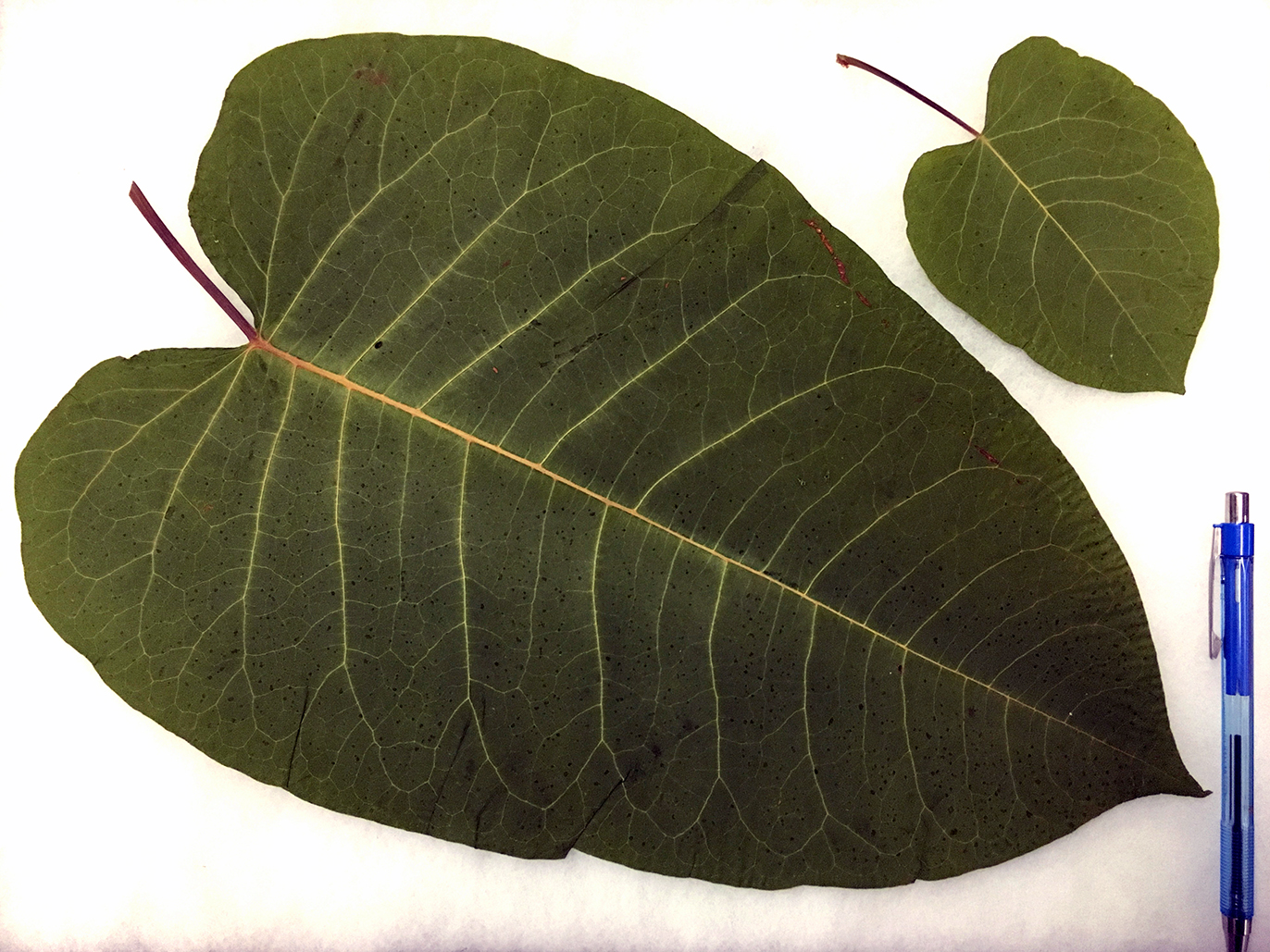
- Simple, alternate, toothless and heart-shaped.
- They are large, reaching 12 inches across and 6 to 14 inches wide.
- Tips of leaves are blunt.
Flowers
- Small, off-white or greenish flowers are compact, usually shorter than the leaves.
- They form in clusters and bloom up from the leaf axil from July to October.
- Giant knotweed has perfect flowers, including both female and male fertile flowers.
Seeds
- Female flowers produce a winged papery fruit.
- Each fruit contains a small, shiny, brown-black three-sided viable seed.
Roots
- The root system extends deep into the soil and has thick mats of rhizomes.
- Reproduction primarily occurs through these rhizomes.
Reviewed in 2026