

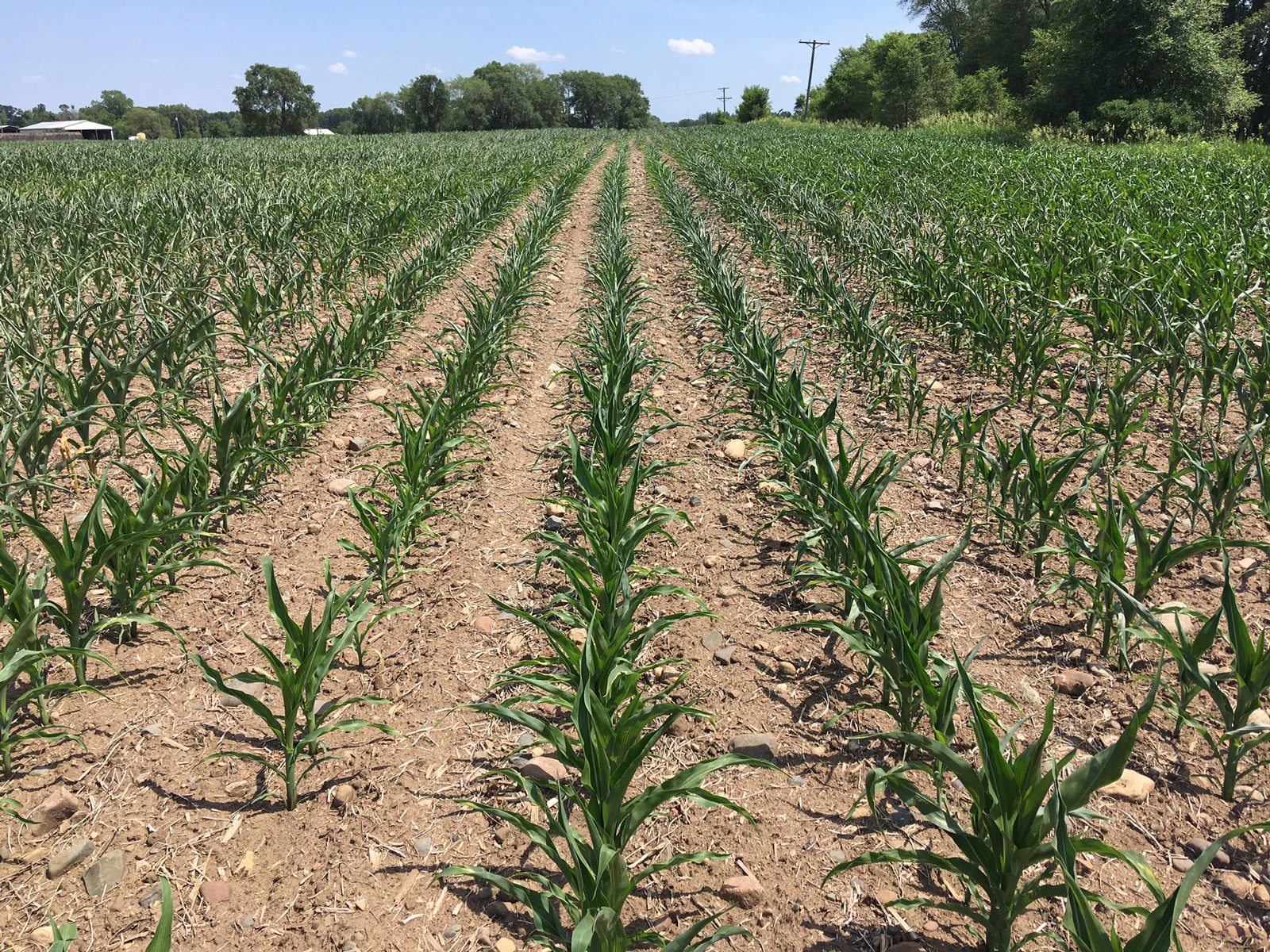
Minnesota farmers have already been responding to drought and warmer temperatures. So far, these conditions are manageable. However, the risk of more extreme growing conditions is increasing.
Although weather variability is inherent to farming, research about trends in our future weather patterns indicates that planning for change, such as more drought, warmer temperatures, and increased precipitation, makes good business sense.
Long-term planning for seasonal changes
While data about the long-term trends of future growing seasons are available, it can be challenging to use future data to decide what to plant, how to manage water, which pests to manage, and when to make the switch.
One approach for long-term planning is to use analogs. A climate analog finds a county that currently experiences the same average temperature and rainfall patterns that your county is projected to have by the middle of the century (2040-2060). These analogs may also share some crops that are grown in each location.
Importantly, the climate analogs approach means that we don’t have to wait and guess about how to adapt to future weather and climate challenges. For example, we can learn about what crop varieties, what infrastructure, and what pest prevention are smart investments for us in Minnesota, based on what our analogs know from first-hand experience
What are Minnesota’s climate analogs?
Minnesota counties matched with counties in Wisconsin, Michigan, Illinois, Nebraska, Ohio, Pennsylvania, New Jersey, and New York as climate analogs. Read three examples below to learn how our researchers and Extension colleagues are using analogs to help farmers plan for and build resilient farms.
Using analogs to understand crop opportunities
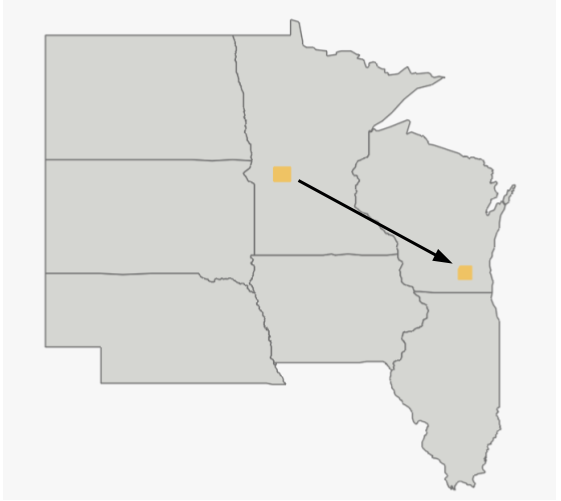
By mid-century, Minnesota is expected to receive up to 15% more spring rainfall on average, increasing the risk of nitrate leaching from farm fields into groundwater due to a lack of ground cover. One way to reduce this risk is through a double-cropping system, which captures nitrogen and provides additional revenue.
While Minnesota's current growing season is generally too short for this approach, climate analogs suggest that future conditions will make it much more feasible. For example, warmer parts of the United States can seed winter wheat in October, harvest it for grain in June or July, and immediately plant soybeans, which can be harvested at maturity in October.
Climate data from Jefferson County, Wisconsin, a climate analog to Pope County, Minnesota, was used to determine if the expected future climate in Pope County would support a winter wheat-soybean double-cropping system by mid-century. Modeling showed that soybeans in Pope County would reach maturity before the first fall freeze only 30% of the time today, but about 98% of the time under projected conditions by mid-century.
This research means that although it would not be practical to switch to this system yet, new machinery, practices, and markets might be part of the farm plan in the next decade. Farmers can begin preparing by exploring cover crops and crop diversification now to gain experience with these practices.
Using analogs to guide water management
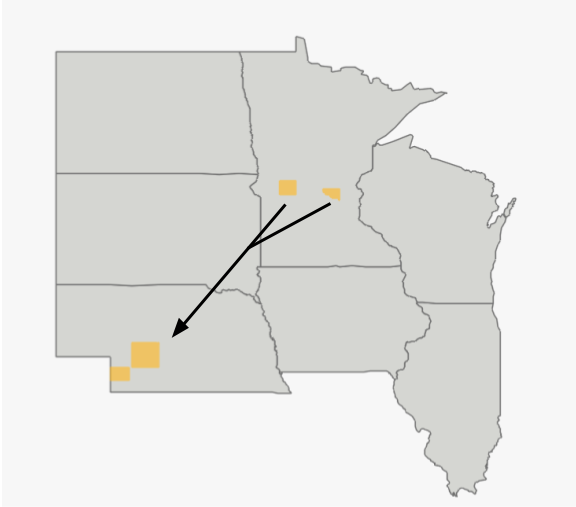
By mid-century, Minnesota is expected to have warmer growing seasons, more variable rainfall, longer dry periods, and more intense storms on average. These changes will be especially challenging in the Central Sands region, where sandy soils hold little water and shallow groundwater is vulnerable to contamination. Because this region produces over half of Minnesota's irrigated corn and soybeans, adopting climate-smart farming practices will be increasingly important to protect water resources and maintain crop production.
Pope and Sherburne counties in Minnesota were compared with Chase and Lincoln counties in Nebraska as climate analogs to identify effective irrigation strategies. This analysis showed that Nebraska farmers use precision irrigation technologies such as center-pivot systems, soil moisture sensors, irrigation scheduling, variable-rate irrigation, and deficit irrigation to improve water efficiency.
While some of these practices are already used in Minnesota, adoption is still limited. University of Minnesota Extension experts recognize irrigation as an increasingly important risk management tool. Furthermore, as this practice becomes increasingly necessary, investments in these technologies become increasingly cost-effective, as they help avoid under- or over-watering through erratic precipitation patterns.
Learn more about optimizing irrigation.
Using analogs to better prepare for pests
Pests, including insects, diseases, and weeds, will all be impacted by climate factors as well. In the fruit and vegetable world, the diversity of crops means there is a diversity of pests, some of which, like corn earworm, have research and models on how their biology could change in different climate scenarios. But it is unlikely that every pest that farmers deal with will get this level of research.
This is where analogs can be helpful. The climate factors that impact pests, such as winter temperatures, growing season length, and growing season temperatures, also determine analogs. This means that instead of imagining a future with unimaginable pest pressure, farmers and advisors can look at a location they may have visited before or have contact with.
Many Minnesota counties with fruit and vegetable farms have climate analogs in southeastern Wisconsin and northwestern Illinois. Farmers in these areas deal with many of the same pests we do in Minnesota, just at slightly different times of the year.
While analogs can’t capture factors like humidity and extreme weather, they highlight that Minnesota farmers are already familiar with the pests they may have to manage and have tools to do so effectively.
The knowledge-building step of Integrated Pest Management will remain critical. The pests may stay the same, but their emergence times and population patterns may change. Regular scouting is the current backbone of effective pest management, and will continue to be in the future as part of on-farm plans to mitigate risk.
Learn more about making future-focused decisions on your farm
- Crop advisors: Apply to participate in a week-long professional development trip to learn more about climate analogs and how specialty crop growers across the country are managing climate risk.
- Farmers: Participate in a Risk to Resilience workshop or webinar and learn skills to integrate long-term planning into your operation.
- Access the Climate Analogs Tool from Washington State University to explore more analog regions. (Data for Minnesota is unavailable in the desktop tool. For access, email [email protected].)
- Climate Adaptation Partnership Technical Reports:
Related resources
- Climate Change Impacts on Minnesota Agriculture (PDF) USDA
- The Origin of the Climate Analogs Academy, Agriculture Climate Network, Washington State University
- U.S. Drought Monitor, U.S. Drought Monitor, National Drought Mitigation Center, University of Nebraska-Lincoln
Reviewed in 2026