


Private landowners steward their piece of Minnesota’s forested acres for future generations, with the help of Extension’s Woodland Stewards program.
At the end of the day, Janet Erdman finds that nothing clears her head like a walk along woodland trails that wind through her 453 rolling acres in Preston.
There’s a creek where her grandkids have happily gotten wet and muddy while exploring, an ever-changing show of wildflowers in areas she’s helped clear, and fungi to forage in the wild or harvest from logs where she grows shitake mushrooms.
“I feel a really deep connection,” she says of the land she inherited from her parents, who had been dairy farmers. “It gives me great joy, and it nourishes my soul.”
Erdman is one of more than 205,000 people who own woodlands larger than 10 acres in Minnesota. Together, these private properties add up to about 5.4 million acres, roughly a third of the state’s forested areas, says Anna Stockstad, University of Minnesota Extension educator in forest ecosystem health.
“That’s a lot of individual people and families caring for the land,” adds Stockstad. “It can be a big job for one person or family.”
From borers to blowdowns, support is essential
Extension and partner organizations work together to improve woodland health. They support landowners who might not know where to begin as caretakers, as well as experienced landowners facing an unexpected problem, such as spruce budworm, or invasive insects or plants.
“There are so many challenges,” says Erdman. Over the years, she has worked with foresters to sell trees for logging, cleared out invasive species, cleaned up blowdown from a derecho’s straight-line winds, cleared trees killed by emerald ash borer, restored prairie acreage, and planted hundreds of oaks and other trees that needed protection from browsing deer.
“I do all I can, and sometimes it’s overwhelming,” she says. “That’s where you need support.”

Get to know your land
Lisa Smiley purchased 115 acres outside of Cannon Falls with her husband 40 years ago. It wasn’t until they retired from growing wine grapes that she began to focus on their forested acres.
“I always loved walking through our woods, but I did not know much about them or where to even begin learning how to care for them,” she says. “I knew that I wanted to do things right from the beginning, so I registered for Extension’s Minnesota Woodland Steward program.”
Participants first get to know their woodland by identifying trees, plants, and animals that live there. They then map the property, dig into its history and plan for its future. Self-paced online learning and meetups are reinforced with in-person field tours.
“Once we are familiar with our forest, we can recognize when change occurs, whether that’s drought, insect infestation or other issues,” says Stockstad
Make a plan, set goals

Another key to success can be the connections made during classes and workshops, events such as Extension’s Minnesota Family Woodlands Conference held in spring 2026. That conference and the Minnesota Women’s Woodland Network helped Erdman and Smiley get support from peers and find solutions for challenges, such as finding lighter-weight chainsaws.
Landowners can also work with the Department of Natural Resources to create a Woodland Stewardship Plan. These help landowners prioritize attainable improvements that fit their abilities, budgets and goals, such as creating trails, improving wildlife habitats or harvesting timber.
“I see the land as something I need to protect and preserve for future generations,” says Erdman. She found the Woodland Stewardship Plan invaluable to understanding her woodlands more deeply and to learning more about taxes, planning, financial incentives and cost-sharing programs.
“All of our landscapes are connected,” says Stockstad. “When we help people be better stewards of their own land, it benefits everyone.”
“University of Minnesota Extension does such a great job of educating and connecting woodland owners,” says Smiley. “You can really tell they believe in the work they are doing to help Minnesota woodlands.”
Scout and remove invasives this fall
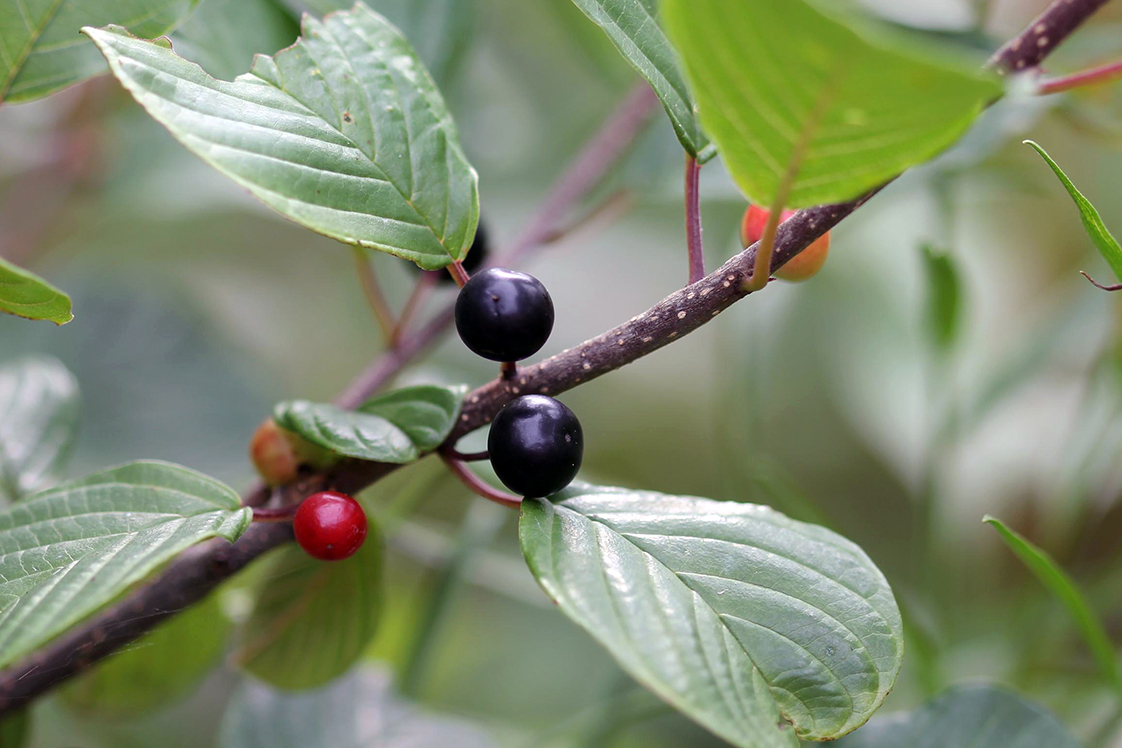
As native species begin dropping leaves in autumn, it can be easier to spot invasive plants, such as buckthorn and non-native bush honeysuckles, because their foliage stays green longer.
Fall also is an ideal time to treat woody invasive species with herbicides, as they’re carried down to their roots for the winter, says Hana Kim, Extension forestry educator. Native species, which go dormant earlier, will be less affected.

Buckthorn and non-native honeysuckle will be among the first woody plants to leaf out in the spring, making it a good time to watch for new or missed bushes.
To keep invasives from repopulating, replant where they’ve been pulled with native species such as Canada, Virginia or Silky Wildrye grasses or wildflowers such as brown-eyed Susan, white snakeroot, beebalm, red columbine and tall meadow rue.
For more information, visit Controlling unwanted trees and shrubs.
Permission is granted to news media to republish our news articles with credit to University of Minnesota Extension. Images also may be republished. Check for specific photographer credits or limited use restrictions in the photo title.