

Quick facts
- Currants and gooseberries will grow in full sun to partial shade. You will get more fruit if the plant is in full sun.
- Space plants at least 3 feet apart.
- Most currants and gooseberries are self-fruitful. This means only one variety is needed for fruit set.
- Prune annually to remove weak or dead canes and to open up the canopy.
- Expect to get fruit 1 to 3 years after planting.
What is the difference between currants and gooseberries?
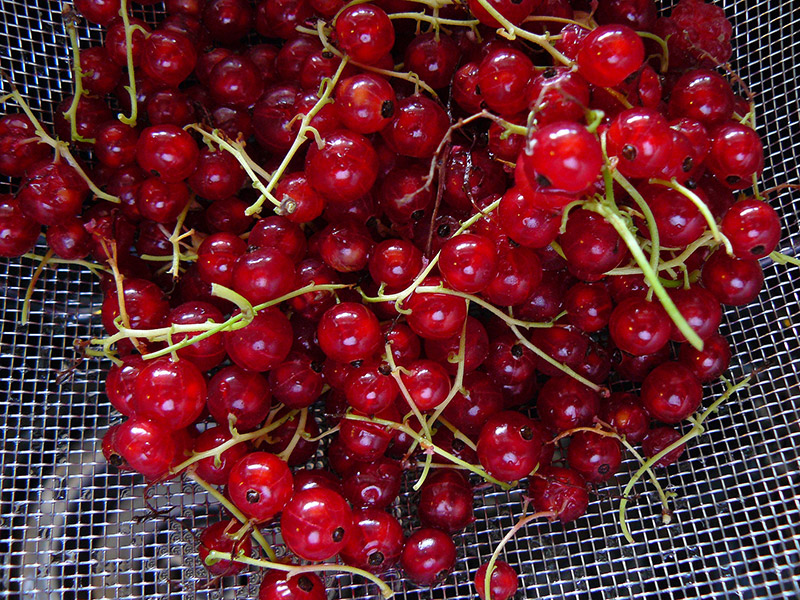
Although closely related, you can easily distinguish currants and gooseberries by examining the canes and fruit.
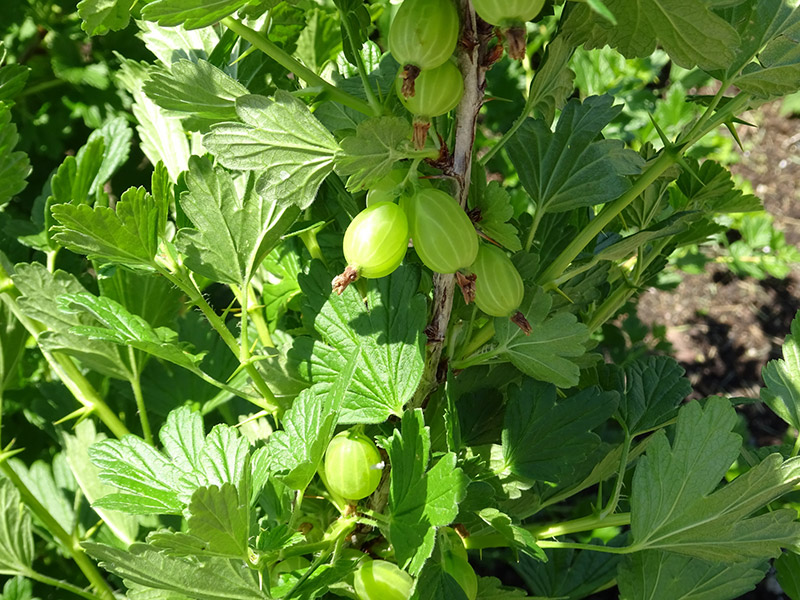
- Gooseberry canes normally produce a spine at each leaf node and bear grape-sized berries singly or in groups of two or three.
- Currant canes do not have spines and bear 8 to 30 pea-sized berries in clusters.
- A mature currant or gooseberry shrub can produce up to four quarts of fruit annually.
- Most commercially available varieties have adequate winter hardiness for the Upper Midwest.
Selecting plants
Red, pink, and white currant
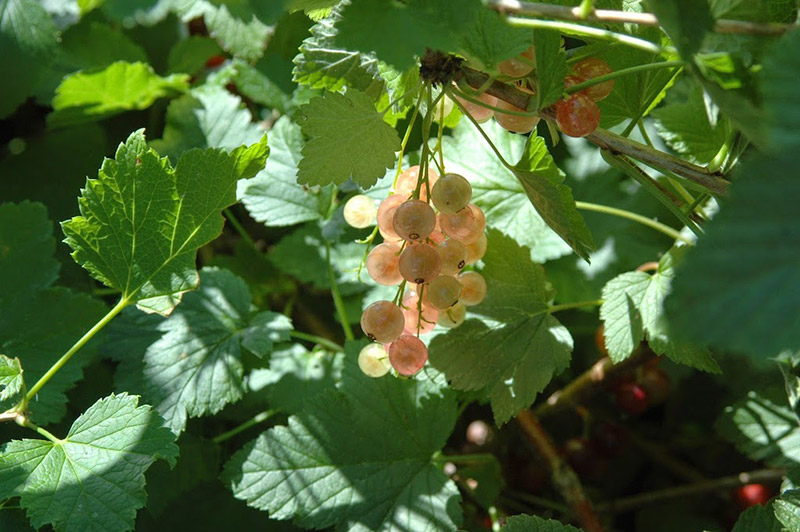
- Red, pink and white currants are the same species, Ribes sativum.
- Red, pink and white currants are self-fertile, meaning one plant will set fruit without any other currant varieties nearby.
- Pink and white currants are albino selections of red currants.
- Some consider pink and white currants to be better for fresh eating because they are generally less acidic.
Black currant
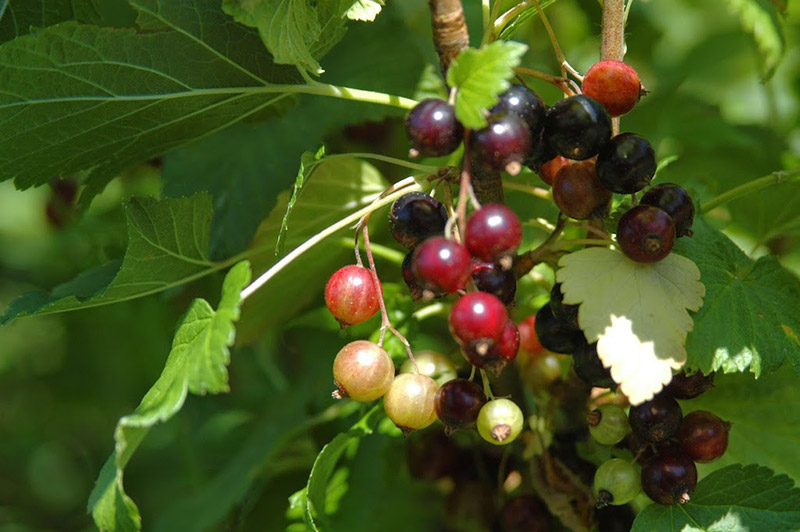
- The European black currant is Ribes nigrum.
- They are widely grown in Northern Europe for their high vitamin C content.
- Black currants have a bold and distinctive flavor, often described as earthy, tangy, and rich, with a unique depth that sets them apart from other berries.
- They are ripe when the fruit has a deep, purple-black color.
- Some varieties are self-fertile. Those that are not self-fertile require a second variety to ensure fruit set.
- Black currant leaves can be harvested, dried, and used for tea.
Gooseberry
Gooseberries of American origin are Ribes hirtellum or hybrids derived from this species, while the European species is Ribes uva-crispa.
- Gooseberries are self-fertile; you can grow plenty of fruit with just one plant.
- Gooseberries have translucent skin. Depending on the variety, it might be light green, pink, or red when ripe.
- Gooseberries are ready to pick when they change color, become less firm, and easily come off the plant. As they ripen, gooseberries will become less tart, sweeter, and develop more flavor.
- The wilted flower that precedes the berry often hangs on throughout the season. Pluck that off before eating.

Jostaberry
- The jostaberry (pronounced yust-a-berry) is a cross of black currant and gooseberry.
- It is sweeter than gooseberry, thornless, disease-resistant, and easy to grow.
- Hardiness (zone 5 to zone 3): Excellent to very good
- Powdery mildew resistant.
- Resistant to white pine blister rust.
- Large, vigorous, thornless canes bear clusters of sweet berries with a hint of characteristic black currant flavor.
- Hardy and heavy-yielding.
We recommend varieties based on disease resistance, fruit quality, overall plant performance and availability.
Many other varieties are available than those in the tables below. Our recommendations have performed best in trials and are well suited to the home garden and landscape. The following tables are divided into red, pink, white and black currant, and gooseberry. There is only one jostaberry variety.
Location
- If possible, prepare your planting location the autumn before you intend to plant.
- Currants and gooseberries will grow well in full sun to partial shade.
- As with any fruiting plant, partial shade might mean less vigor and smaller/fewer fruit.
- Rid the planting site of all perennial weeds, as they are much more difficult to control after planting.
Planting and growing currants and gooseberries
The environment, plant diseases, insects and wildlife can cause changes in physical appearance and plant health. To address what you’re seeing, it is important to make a correct diagnosis.
You can find help identifying common pest problems by using Ask a Master Gardener to share pictures and get advice, or by sending a sample to the .
- While they will tolerate marginal soil, currants and gooseberries perform best in rich, well-drained soil.
- Test your soil for pH and nutrient needs.
- Add organic material such as peat or compost according to soil test recommendations.
- Composted material rich in nitrogen, such as well-composted manure, makes an excellent fertilizer for currants and gooseberries.
- Because composted materials release nutrients more slowly than synthetic fertilizers, apply a few shovels-full per plant in late fall.
- Do not directly put chemical fertilizer in the planting hole when planting currants. This can harm the plant roots.
Bare-root and potted plants
- Currants are self-fertile, but research suggests that planting more than one variety results in better yields.
- Plants ordered from online or mail-order sources are usually sent bare-root (not actively growing), while plants from a local nursery will likely be potted and actively growing.
- Establish your new shrubs after the risk of temperatures lower than 20°F has passed and the soil is workable. Plant earlier in the season to avoid heat stress for the newly planted currants.
- When handling bare-root plants, keep the plants cool and moist until they go into the ground.
- Do not allow the roots to dry or become waterlogged.
- Just before planting, soak the roots of bare-root plants in a bucket of water for three to four hours.
- Plant currants and gooseberries at least an inch deeper than they were in the nursery to bury the root collar and encourage the development of additional roots.
- Lower, drooping canes can be covered with soil to encourage rooting, which can help maximize a plant’s lifespan.
- Dig the planting hole wider than the root system to spread out the roots while planting. This will ensure good establishment.
- Space plants as close as three feet apart.
- Black currants are more vigorous. Space them four to five feet apart.
Initial pruning
- After planting bare-rooted plants, prune all canes (1, 2, and 3-year-old branches) that are healthy and viable to about six buds to encourage vigorous growth.
- Remove any weak, dead, or broken canes.
Mulch
- At planting time, provide two to four inches of organic mulch such as wood chips, pine needles or compost.
- Mulching cools the soil, conserves water and suppresses weeds. These benefits are preferable in a partially shaded site, and essential in a sunny spot.
- Beginning the year after planting, renew mulch annually.
- You may need to apply extra nitrogen fertilizer if you use a low-nitrogen mulch such as wood chips or sawdust.
- Signs of nitrogen deficiency include yellowing leaves (older leaves yellow first) and poor growth.
Care through the seasons
- April, May: Plant new currant and gooseberry bushes.
- May, June: During bloom, look for insect and disease symptoms.
- June through September: Watch for powdery mildew; treat or prune as needed.
- July, August: Harvest.
- October, November: Remove fallen leaves and other plant debris before snowfall. Apply composted manure before snowfall.
- March: Prune weak, dead wood; thin to open canopy before growth starts.
Controlling weeds
- After planting, remove weeds regularly within the canopy of the plant.
- Grasses that spread by runners are especially competitive and can be more challenging to manage.
- Maintain a three to four-inch layer of mulch to prevent weed growth.
Insects and other creatures
- Insect pests are a minor concern for home growers of currants and gooseberries. Infestations are uncommon and rarely cause major damage.
- Possible insect pests include aphids, cane borers, spider mites, fruit worms and fruit flies. Other insects in the garden usually control these pests.
- Avoid damage by maintaining a healthy, vigorous plant.
- Select a site with good soil and ample light.
- Providing adequate water.
- Prune regularly.
- Remove affected or dead plant parts and plant debris.
Preventing and managing diseases
Currants are easy to manage in the Upper Midwest and do not require extensive measures to control diseases. Careful site selection and good cultural practices such as mulching, pruning, and sanitation will minimize pest problems.
Powdery mildew

- Powdery mildew can be a problem in some years and some locations.
- The disease impacts the ability of plant leaves to photosynthesize and can eventually infect and harm the fruit.
- Prevention is the best measure for controlling powdery mildew.
- Plant mildew-resistant varieties (see variety tables above).
- Select planting sites with good airflow and plenty of sunlight to reduce spore germination.
- Prune regularly to maintain an open canopy that supports good airflow.
- Remove dead plant debris from the area to lower the amount of fungal spores that can infect your plants.
- Remove affected leaves and shoots showing evidence of powdery mildew to prevent its spread during the growing season.
- Cover infected leaves, shoots, dead plant parts, etc. in a hot compost pile, or put them in the trash.

White pine blister rust
- Currants, gooseberries and other plants in the Ribes genus play a part in white pine blister rust (Cronartium ribicola).
- Blister rust is little more than a nuisance to the grower of currants, but can be devastating to white pine trees.
- Newer currant and gooseberry varieties have been bred with rust resistance, so the planting of these fruits is no longer a concern in the Upper Midwest region.
- Planting remains restricted in some areas of the U.S.
- When purchasing plants, choose varieties with known resistance to white pine blister rust.
Pruning
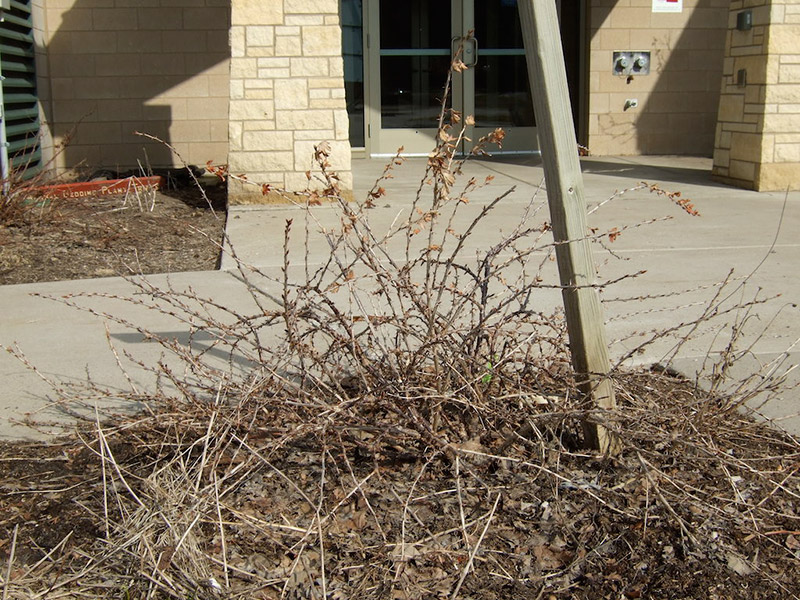
- Proper pruning will improve sun penetration into the plant and maintain good air circulation to minimize disease.
- Prune established currant and gooseberry shrubs annually, sometime between late winter and early spring, after the risk of extreme winter temperatures has passed, and before new growth appears.
- During the first three years of growth, allow four or five canes to develop each year. Remove only weak or damaged wood.
- Beginning in the fourth year, prune out the oldest wood annually. Remove any weak new growth.
- A mature shrub should have 9 to 12 canes once pruning is completed.
- Fruit is produced on one-, two- and three-year-old wood, known as canes. Try to keep three to four canes of each age.
- Always remove unwanted canes as close to the ground as possible.
- Gooseberries: Look for canes arching over with tips near, or lying on the ground. Prune these canes to prevent them from rooting at the tips when touching the ground.
Harvest and storage
- Monitor currant and gooseberry fruits for a change in color, flavor, fruit firmness, and ease of separation from the plant to tell when they are ripe.
- When using the fruit for jam, harvest it before it is fully ripe so natural fruit pectin levels will be higher.
- Cool fruit quickly and put it in covered containers or closed bags.
- This will maintain humidity levels and prevent drying when storing fruit in the refrigerator.
- Promptly cooled berries will keep in the refrigerator for up to several weeks.
- Fruit is delicious while fresh, right off the plant.
- Currants and gooseberries make excellent preserves and juice.
- You can use berries of all colors to make wine.
- For a nice treat in summer, freeze clusters of berries and add them to glasses of iced tea, lemonade or your favorite cocktail.
Currant and gooseberry varieties for Minnesota
University of Minnesota releases are in bold and include the date of introduction.
Red currant varieties recommended for Minnesota
| Variety | Hardiness (zone 5 to zone 3) | Powdery mildew | Description |
|---|---|---|---|
| Red Lake (1933) | Excellent to very good | Susceptible | Widely available. Vigorous plants. Large, bright red berries. Good quality fruit. |
| Rovada | Excellent to very good | Resistant | Large, aromatic berries, borne in long clusters. Very reliable, as it is late to flower, avoiding frosts. |
| Honeyqueen | Excellent to very good | Resistant | Long harvest period of tender, juicy fruit with good flavor. |
Pink and white currant varieties recommended for Minnesota
| Variety | Hardiness (zone 5 to zone 3) | Powdery mildew | Description |
|---|---|---|---|
| Blanka | Excellent to very good | Resistant | Large berries have a mild, sweet flavor. Flowers late, avoiding frosts. Foliage is ornamental red and green. |
| Pink Champagne | Excellent to very good | Resistant | Pink berries have very good flavor for fresh eating, but yields can be low. Good disease resistance. |
| Primus | Excellent to very good | Susceptible | Translucent white fruit with a sweet, intense flavor. Red-tinged foliage. |
| White Imperial | Excellent to very good | Resistant | Pinkish white berries are medium sized, sweet, juicy and rich-flavored. |
Black currant varieties recommended for Minnesota
| Variety | Hardiness (zone 5 to zone 3) | Powdery mildew | Description |
|---|---|---|---|
| Ben Sarek | Excellent to very good | Susceptible | Heavy yields of large berries on compact plants. Highly resistant to white pine blister rust. Tolerates some frost during bloom. Ideal for the home garden. |
| Crandall | Excellent to very good | Susceptible | Different and milder flavor than other black currants. Vigorous, very resistant or perhaps immune to blister rust. Ornamental with clove-scented flowers in spring and brilliant fall foliage. Canes may be weak, breaking or drooping to the ground under full crops; may need trellising. |
| Crusader | Excellent to very good | Susceptible | Immune to blister rust. Large fruits of fair quality on a vigorous shrub. Not self-fertile; must be planted with another black currant variety to produce fruit. |
| Titania | Excellent to very good | Resistant | High yields of large high-quality berries are borne earlier - within three years of planting - than other varieties. Very vigorous, tall plants (to 6 feet) are immune to blister rust. Self-fertile: no other varieties need be planted to get good crops. |
Gooseberry varieties recommended for Minnesota
| Variety | Hardiness (zone 5 to zone 3) | Powdery mildew | Description |
|---|---|---|---|
| Captivator | Excellent to very good | Resistant | Large, sweet, reddish fruit on tall, hardy plants bearing few spines. |
| Colossal | Excellent to very good | Tolerant | Fruit are very large and deep red when fully mature. Vigorous, hardy, and tolerant of white pine blister rust. |
| Hinnomaki Red | Excellent to very good | Resistant | Sweet, flavorful berries have tart skin. Productive, moderately vigorous plants. May fruit the year of planting. |
| Invicta | Excellent to very good | Resistant | Very high yields of large green berries on vigorous, very spiny plants. Fruit has a mild flavor. Moderate resistance to blister rust. |
| Poorman | Excellent to very good | Resistant | An excellent choice for the home gardener. Large fruit has good flavor and ripens over a long harvest season. Vigorous plants have only a few small thorns. |
| Tixia™ | Excellent to very good | Resistant | Nearly thornless with large, bright red, teardrop-shaped fruit. |
| Welcome (1957) | Excellent to very good | Moderately resistant | Reddish fruit is somewhat tart. Hardy plants are vigorous once established, upright and nearly spine-free. |
Reviewed in 2026