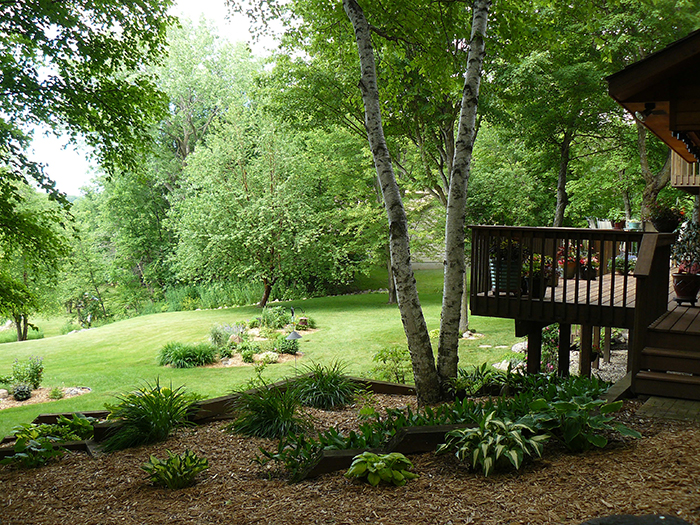
Good plant selection reduces plant stress. Choosing plants with growing needs that match site conditions results in better plant resilience and recovery from damage caused by climate, weather, pests and diseases.
- It reduces pesticide use. Plants growing in optimal conditions are more resilient to disease and pests, reducing the need for pesticides.
- It’s economical. Selecting the right plant reduces the need to remove or replace plants that are poor performers. Healthy, attractive plants in a landscape can improve property value.
- It improves longevity. Finding the right plant for the right place and purpose leads to a long-lived, healthy landscape.
Understand your site conditions
How your landscape functions for you will affect the plants you select.
- Download and complete the Landscape Design Questionnaire to determine how you want to use your landscape, how it will be maintained, your budget, visual aspects, etc.
- Analyze and observe the areas in your landscape you plan to design.
- Download and complete the Site Evaluation Form to help you consider features like structure, topography, existing plants, and soil. Note things that do and don’t work well, such as accessibility, utilities and service areas, storage, entertainment, etc.
- Consider submitting soil samples for analysis, creating a light map, and noting microclimates in your landscape.
Watch the 5 Considerations of Sustainable Landscape Design videos to help you understand your landscape’s necessary functions and how to improve maintenance so that it has a positive impact on the environment, is cost-effective, and is visually pleasing.
This information will help you develop a list of “plant criteria” or attributes based on the site conditions in your landscape and the specific plant features you prefer.
Videos
The “Right plant, right place” 3-part video series shows you how to: