

Many weather-related threats like heavy rainfall and extreme heat are projected to become more frequent and hazardous as the climate warms.
Extension and the University of Minnesota Climate Adaptation Partnership are actively engaging communities across Minnesota and the Midwest to prepare and respond to current and future weather and climate-related hazards.
Taking time now to prepare can pay dividends down the line.
StormWise Minnesota
StormWise Minnesota offers hands-on weather and climate preparedness workshops for communities across the state. Participants learn about local current and emerging weather and climate risks, build their skills in emergency response, learn how to build an emergency preparedness kit, and develop tailored emergency plans for their homes, businesses, and communities.
Are you interested in bringing StormWise to your community? Contact us
Step 1: Make a plan
Having a step-by-step emergency plan ensures you and your household know exactly how to connect, where to go, and what to do when every second counts.
What would your family do in a disaster?
Making a disaster plan is a great opportunity to talk to the whole family about different types of disasters and what to do. It's important to talk to your children, no matter their age. Even small children need to know the plan. Make sure they have enough information, know what to expect and reassure them without scaring them. Remember, avoiding the topic will not prevent the disaster from happening.
For the whole family
The American Red Cross offers a 3-step disaster preparedness plan.
If you have small children
The Sesame Workshop explains how to talk to kids about emergencies and build a kid-friendly emergency kit.
If you are caring for older adults
These tips are specifically for working with seniors in an emergency situation
Practicing your plan
The key part of making your disaster plan work when you really need it is to practice it as a family.
Plan a test run of the evacuation strategy. Practice it until everyone can do it perfectly and revisit your plan often. Practice will allow your family to maximize their safety in the event of a disaster.
An up-to-date household and property inventory is a valuable resource for documenting losses.
The initial time investment in preparing the inventory may seem significant. But once completed — and with regular updates — the inventory will be useful for a long time.
Before a disaster, the inventory will help you determine if you have enough or the right type of insurance to cover the contents of your home and property. After a disaster, it will help prove the value of damaged or destroyed possessions. This is helpful for insurance, assistance, or tax deduction purposes.
1. Take photos or videos
Start by documenting any area in your home or garage that has valuable items.
Photos
Photograph open closets, cabinets, cupboards and drawers.
Take close-ups of unique or expensive items to document their existence and condition.
Be sure to include dates on the photos.
Videos
- Verbally describe the contents as you go through each room.
2. Write down your inventory
Next use an inventory form to document valuable items. Keep a digital copy in a cloud-based file system or email it to yourself.
3. Store everything away from your house
Photographs and video files should be kept with the inventory in a location away from your house and garage, such as a bank safe deposit box.
4. Keep your inventory updated
Remember to keep all copies up-to-date and compare them on a semi-annual basis.
More resources
What damage is covered by your insurance?
Did you know there's typically a 30-day waiting period before a new insurance policy goes into effect, and few insurance policies cover the cost of all damages, no matter what the cause?
Homeowners
Start by reviewing what your current insurance policies cover. If you have questions or concerns, discuss them with your insurance agent. You may decide you need additional coverage.
Property insurance will usually include some coverage for “fire or lightning damage” and/or “wind and hail damage,” which is typical damage from tornadoes. You may need to purchase additional coverage to be adequately covered.
Notably, standard homeowners policies do not cover flood damage. To protect your home from rising water, flash floods, or muddy runoff, you will need to purchase a separate flood insurance policy, typically offered through the National Flood Insurance Program (NFIP) or a private insurer.
Renters
Renters insurance covers your personal property and is usually not very expensive to purchase. If you do not have renters insurance, ask your vehicle's insurance agent about the cost of adding on renters insurance.
How are damage claims paid?
To be better prepared, ask your insurance agent:
Will the claims on your policies be paid based on replacement cost or current market value?
Will the reimbursement cover the total replacement cost or just a given percentage of the replacement cost?
By checking out how your property is insured, you will be better prepared for disaster when it happens.
An emergency fund is very useful for meeting immediate needs after a disaster.
Why should you start an emergency fund?
Savings are an important part of managing money and protecting a family. Two types of savings make up your emergency fund.
Set-aside savings
Money set aside for non-monthly, periodic expenses. Build set-aside savings into your monthly spending plan and keep that money in a designated savings account to draw upon when needed. It might be money to replace a broken appliance, repair a tire, or travel to a sick relative.
Emergency income savings
Money put aside to pay for essentials in case you lose your job or have a reduced income. Emergency savings are typically equal to 3 to 6 months of income, which gives you time to get back on track. This includes money for:
- Rent or mortgage
- Utilities
- Car payment
- Car insurance
This money could prevent eviction or foreclosure, or car repossession.
People often do not save because it seems impossible to put enough money aside. It is still important to save on a regular basis so you have enough money for emergencies. Even a couple of dollars a month can help you get started.
Getting started with an emergency fund
If you do not have a current budget or spending plan, it may be hard to decide how much you can afford to put into an emergency fund.
If you already have a tight budget, there are two major ways for finding money to save:
- Cutting expenses.
- Increasing income.
Keeping emergency funds in a dedicated account at a bank or credit union ensures your money is safe, growing, and ready when you need it. When planning for a disaster, consider these quick tips:
Keep it separate
A dedicated account prevents you from accidentally dipping into emergency funds for everyday expenses.
Prioritize liquidity
Choose an account that allows for instant withdrawals or debit card access so you aren't waiting days for funds to transfer during a crisis.
Have a backup
Consider keeping a small amount of cash in a secure, waterproof home safe, as ATMs and credit card systems may be down during a widespread power outage.
Know your evacuation destination and the likely route you’d take to get there.
Before evacuation
Many areas have designated evacuation zones and predetermined evacuation routes. Learn your local plans by visiting your state and county emergency management websites.
Develop a home emergency plan with at least two ways out of your house, and identify primary and secondary evacuation routes from your community.
If requested to evacuate
Turn off non-essential utilities.
Leave lights on for visibility.
Leave doors unlocked for emergency personnel.
Take your emergency kit.
You may need to adjust plans depending on the nature of the threat or disaster.
Do not walk, swim or drive through flood waters. Remember, just six inches of moving water can knock you down, and one foot of moving water can sweep your vehicle away. Stay off bridges over fast-moving water.
In parts of the state that have a higher risk of wildfires, follow the Minnesota Department of Natural Resources Firewise guidelines, including leaving properties accessible for firefighters.
When emergencies strike, public safety officials use timely and reliable systems to alert you.
Wireless alerts
Wireless Emergency Alerts (WEAs) are short emergency alerts authorities can send to any WEA-enabled mobile device in a locally targeted area. WEAs are not affected by network congestion and will not disrupt texts, calls, or in-progress data sessions.
You are not charged for receiving WEAs, and there is no need to subscribe, but you should check to make sure they are not disabled on your phone.
Some mobile service providers call these messages “Government Alerts,” or “Emergency Alert Messages.”
Local alerts
Many local governments have their own emergency alert systems. Check with your city, town or county for more information.
National alerts
You can also receive weather information through NOAA Weather Radio All Hazards (NWR), a nationwide network of radio stations that broadcast continuous weather information from the nearest National Weather Service office based on your physical location.
Step 2: Prepare an emergency kit
Emergency kits, sometimes called go bags or stay bins, include essential items for sheltering in place or making a quick evacuation.
It is important to keep your emergency kit in an easy-to-access location, ensure it is up to date, and have an established individual or family emergency plan that outlines evacuation routes and lists important contacts.
Stay bins are intended for situations where the safest response to an emergency is to shelter in place.
General
- 1 gallon water per person, per day (7-day supply)
- Non-perishable foods that do not require cooking or refrigeration (3-day supply per person)
- Extra cash
- Copies of personal documents:
- Identification
- Birth certificates
- Insurance policies
- Medical information
- Home deed
Health
- First aid kit
- Bandages
- Scissors
- Latex gloves
- Towelettes
- Thermometer
- CPR barrier
- Instruction booklet
- Hand sanitizer
- Prescription medications and commonly taken medications, such as Tylenol or ibuprofen (7-day supply)
- Sanitation wipes
- Hygiene supplies
- Feminine products
- Soap
- Toothbrush
Equipment and tools
- Cell phones with chargers and backup cell phone battery
- Maps (local and state)
- Flashlight (battery, crank, or solar powered)
- National weather service radio (battery, crank, or solar powered)
- Spare batteries
- Whistle to signal for help
- Multi-purpose tool
- Dust mask
- Matches
- Fire extinguisher
Clothing and warmth
- Rain gear
- Work gloves
- Extra clothing
- Towels
- Emergency blanket
- Sleeping bag
Go bags are intended for situations where the safest response to an emergency is to evacuate where you are.
General
- 1 gallon water per person, per day
- Non-perishable foods that do not require cooking or refrigeration (3-day supply per person)
- Extra cash
- Copies of personal documents in a grab-and-go emergency file, including:
- Identification
- Birth certificates
- Insurance policies
- Medical information
- Home deed
Health
- First aid kit
- Bandages
- Scissors
- Latex gloves
- Towelettes
- Thermometer
- CPR barrier
- Instruction booklet
- Hand sanitizer
- Prescription medications and commonly taken medications, such as Tylenol or ibuprofen (7-day supply)
- Sanitation wipes
- Hygiene supplies
- Feminine products
- Soap
- Toothbrush
Equipment and tools
- Cell phones with chargers and backup cell phone battery
- Maps (local and state)
- Flashlight (battery, crank, or solar powered)
- National weather service radio (battery, crank, or solar powered)
- Spare batteries
- Whistle to signal for help
- Multi-purpose tool
- Dust mask
- Matches
- Small shovel
Clothing and warmth
- Rain gear
- Work gloves
- Extra clothing
- Towels
- Emergency blanket
- Sleeping bag
Step 3: Understand the changing hazards in your community
Learn about current and future weather and climate risks for Minnesota.
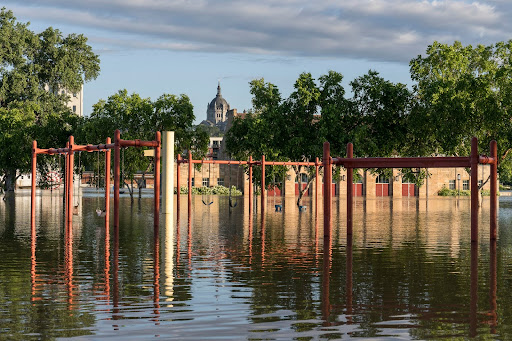
Minnesota has experienced, on average, an increase of 3.4 inches of precipitation per year from 1895 and 2025.
The largest single rain event has grown by 13%, and the state is now experiencing more frequent and intense heavy rainfall events than ever recorded.
Heavy rainfall can overwhelm existing stormwater systems, sump pumps, roadways and other infrastructure. Rapid fluctuations in temperature can also trigger large volumes of snowmelt, a risk factor for flooding in Minnesota.
To assess the current vulnerability of your specific property, consider referencing FEMA’s flood maps online at the Flood Map Service Center. Note, however, that these maps are currently based on historic climate trends, and do not reflect expected increases in precipitation and streamflow in the future.

In general, climate change is driving hotter weather and more evaporative demand creating a “thirstier” atmosphere that can dry up vegetation, intensify wildfire growth, and extend the wildfire season.
In addition, according to our research, the “weather whiplash” of heavy precipitation followed by periods of drought will become more frequent in Minnesota. Combined with warmer temperatures and increased pest and disease pressure, this trend may stress ecosystems, forests and vegetation—contributing to favorable fire conditions.
More densely forested landscapes, particularly in northern areas of the state, are generally more prone to wildfire.

There is some evidence that climate change will make severe thunderstorms more frequent and intense in Minnesota, with the severe thunderstorm season expanding into more of the calendar year.
Large, damaging hail is projected to become more frequent.
Thunderstorm wind gusts are projected to become more intense.
There is growing evidence that long-lived windstorms, like derechos, may become more damaging in the future.
Trends in future tornadoes, however, remain uncertain.
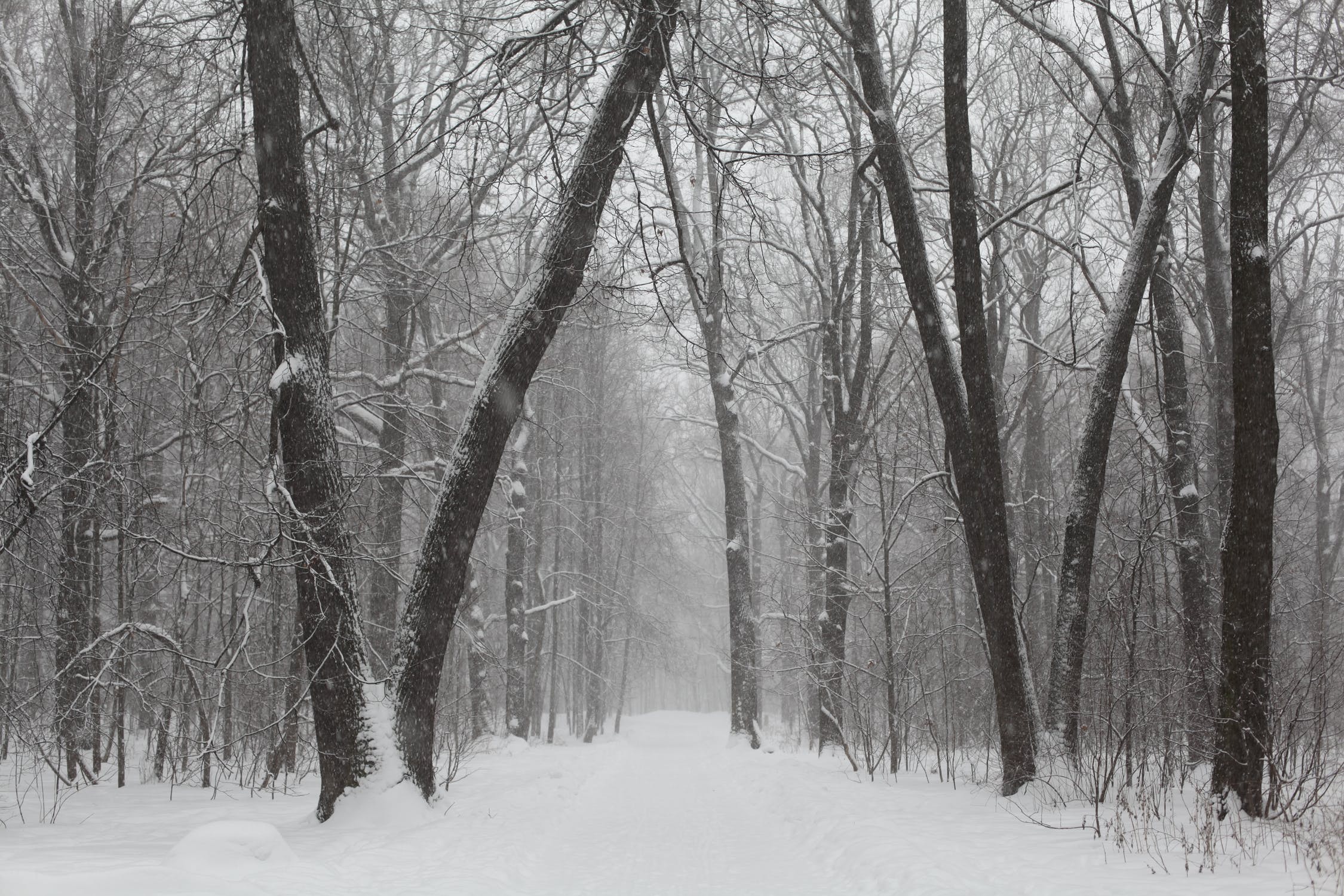
Minnesota's winters are warming faster than any other season.
Already, since 1895, Minnesota’s statewide average low temperature has increased by nearly 7°F. That’s a major shift, and the trend is expected to continue.
By 2060, we project most of the state will see up to two fewer weeks per year with reliable snow cover (more than an inch on the ground), depending on global emissions.
Minnesota will still experience dangerous cold events, though less frequently than in the past.
Heavy snow events will likely become more common, and shifting frequent freeze-thaw patterns may create new challenges for homes, landscapes and infrastructure.

Between 1895 and 2025, the average annual temperature in Minnesota has increased by 3.4°F.
Warming has accelerated in recent years. In the future, extremes above 90°F and 100°F are projected to become more frequent.
Temperatures vary significantly across the state. According to our research, southern counties will see up to 60 days with highs above 90°F — and up to 12 days with highs above 100°F — by the 2060s.
Northeastern areas, which historically have rarely experienced extreme heat, will regularly experience a few days each year in the 90s, and even above 100°F, in that same time frame.
These projections don’t account for humidity, which can increase the risk of heat illnesses and public health impacts. Areas along Lake Superior are expected to have more moderate temperature increases.

Preparing a 2-week emergency food supply
Pay attention to nutrition needs. Plan food supplies so you all can eat at least one well-balanced meal each day.

Tips for older adults
Older adults can be particularly vulnerable during a disaster, especially if they have one or more chronic illnesses, functional limitations or dementia.

Homeowners' checklists
Learn more about actionable steps you can take to prevent damage to your home from flooding, hail and other weather hazards.

Learn more
More resources from the Climate Adaptation Partnership to help you prepare for severe weather, emergencies and climate risk.
Mapping your community needs and resources
Emergency preparedness starts with community.
Most emergencies don’t happen in isolation, they happen to and in a community. It’s not just what you have to be prepared for, it’s also who you know, the relationships you’ve built, and knowing what’s around you.
Community mapping could include:
- Who is impacted by an emergency
- How they’re impacted
- What do they need
- What supports exist and where are there gaps
Examples of community strengths and resources
People-based resources
- Neighbors with equipment, generators, and chain saws
- Volunteer fire departments
Physical resources
- Drinking water
- Backup heat options
- Community buildings
Communication systems
- Phone trees
- Social media groups
- Alert systems
Prepare an emergency kit
- Build a Kit, (2026)
- Minnesota Department of Health (2026)
Mapping your community needs and resources
Alonzo Plough, Fielding, J.E., Chandra, A., Williams, M., Eisenman, D., Wells, K.B., Law, G. Y., Fogleman, S., Magaña, A. (2013) Building Community Disaster Resilience: Perspectives From a Large Urban County Department of Public Health. American Journal of Public Health 103, 1190_1197, https://doi.org/10.2105/AJPH.2013.301268
Burton, D. L., & Burnham, C. (2026, March). To the rescue: Benefits of neighboring for emergency management and disaster response (Publication No. DM502). University of Missouri Extension. https://extension.missouri.edu/publications/dm502
Understand the changing hazards in your community
University of Minnesota Climate Adaptation Partnership, 2026. Climate Change in Minnesota. Version 2. www.climate.umn.edu/climate-change-in-minnesota
Liess, S., Roop, H. A., Twine, T. E., Clark, S., Coffman, D., Dolma, D., Farris, A., Fernandez, A., Gorman, J., and Meyer. N. (2026). County-scale Climate Projections over Minnesota and the Effects of Lakes. Water Resources Research, 62, e2025WR040415, https://doi.org/10.1029/2025WR040415
Variability and Transitions in Precipitation Extremes in the Midwest United States