


In Minnesota, we can usually rely on rain to provide adequate moisture for lawns. But what can you do when drought brings temperatures above 90°F and no precipitation?
Kentucky bluegrass lawns enter a drought-induced dormancy
Kentucky bluegrass can start turning brown after about 7 days without water. This browning appearance is a sign that the grass is entering dormancy to survive the drought. Some leaf tissue will die, but the base and roots of the grass are still alive and will green up when water returns.
Kentucky bluegrass recovers relatively fast compared to other turfgrasses. If you have an irrigation system, consider allowing some browning in your lawn to conserve water during our current drought.
Lawns with a lot of tall fescue and fine fescue stay greener for longer

Tall fescue and fine fescue can remain green for at least 28 days without water in Minnesota. Tall fescue is known for its heat and drought tolerance.
Among the fine fescues, hard fescues have excellent drought tolerance. Chewings fescue and slender creeping red fescue have good to excellent drought tolerance. And strong creeping red fescues have good drought tolerance.
Find out more about fescues for your lawn.
Limit traffic and do not apply fertilizer on drought-stressed lawns
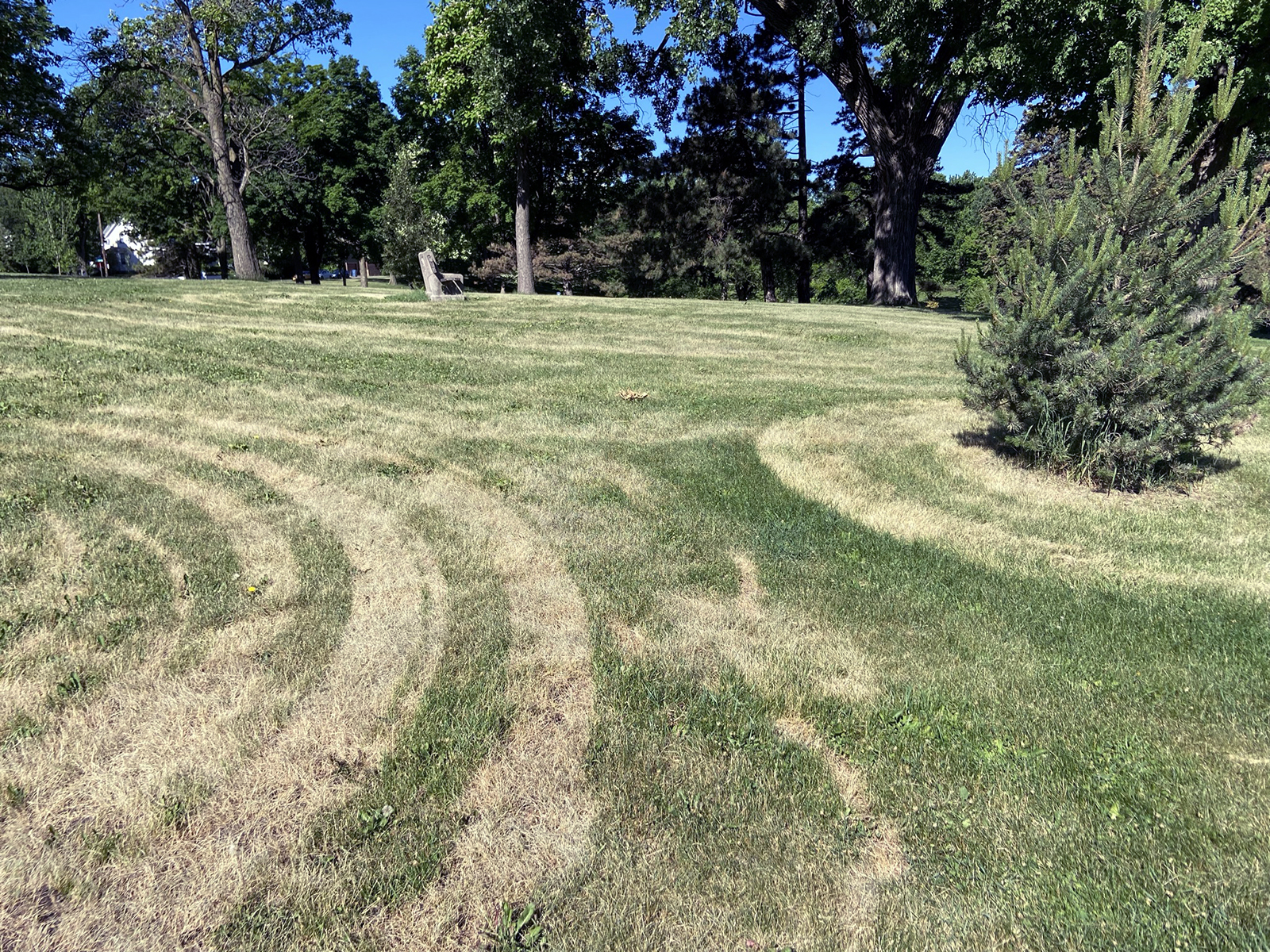
At this time, minimize traffic on drought-stressed lawns. Growth is very slow so postpone mowing until moisture returns in the next 7-10 days. Traffic from lawnmowers and equipment can cause permanent damage when conditions are hot and dry.
Also, postpone fertilizer applications until moisture returns and grass is actively growing. Fertilizer applied during drought will not be taken up by dormant grass, and the nutrients could cause environmental harm.
Make your lawn drought-resilient
There are ways to keep lawns greener with less water.
- Mow at high heights of cut: at least 3 to 4 inches.
- When seeding a new lawn or overseeding an established lawn, incorporate tall and fine fescue grasses for improved green color during drought periods.
- If you have an irrigation system, make sure that it is working properly and apply water when and where needed.
Reviewed in 2025