

Quick facts
Purple loosestrife is a prohibited invasive species. Purple loosetrife is on the Control noxious weed list meaning you must prevent the spread of this plant.
-
Purple loosestrife can invade many wetland types including wet meadows, stream banks, pond or lake edges and ditches.
-
Populations can expand quickly and form dense stands that crowd out native vegetation.
- Purple loosestrife should be reported.
See the Minnesota Department of Natural Resources recommendations for reporting invasive species.
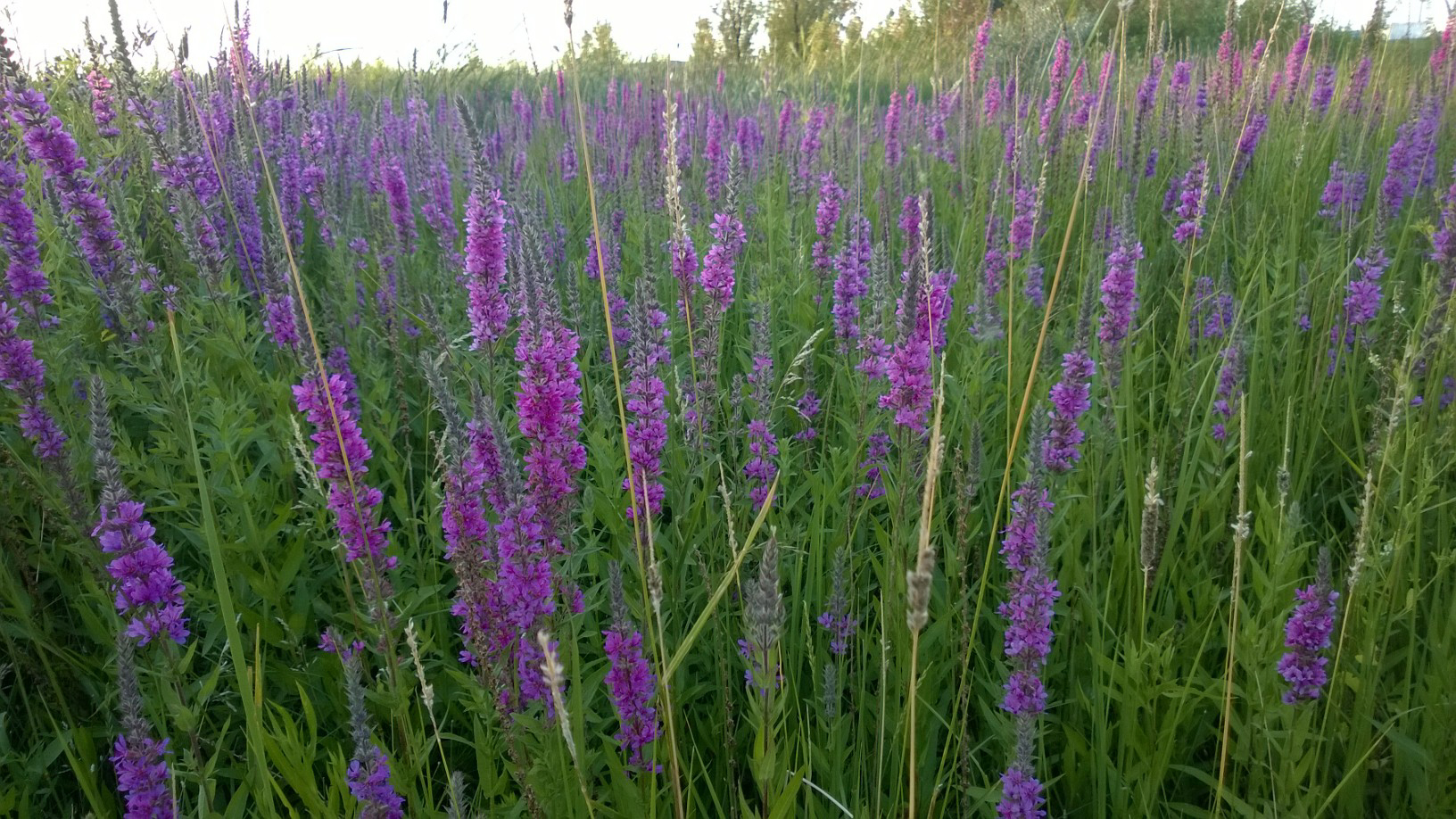
How to identify purple loosestrife
- Purple loosestrife (Lythrum salicaria) is a perennial herbaceous plant with a bushy appearance.
- Can grow three to seven feet tall and will have multiple stems growing from a single rootstock.
Stem
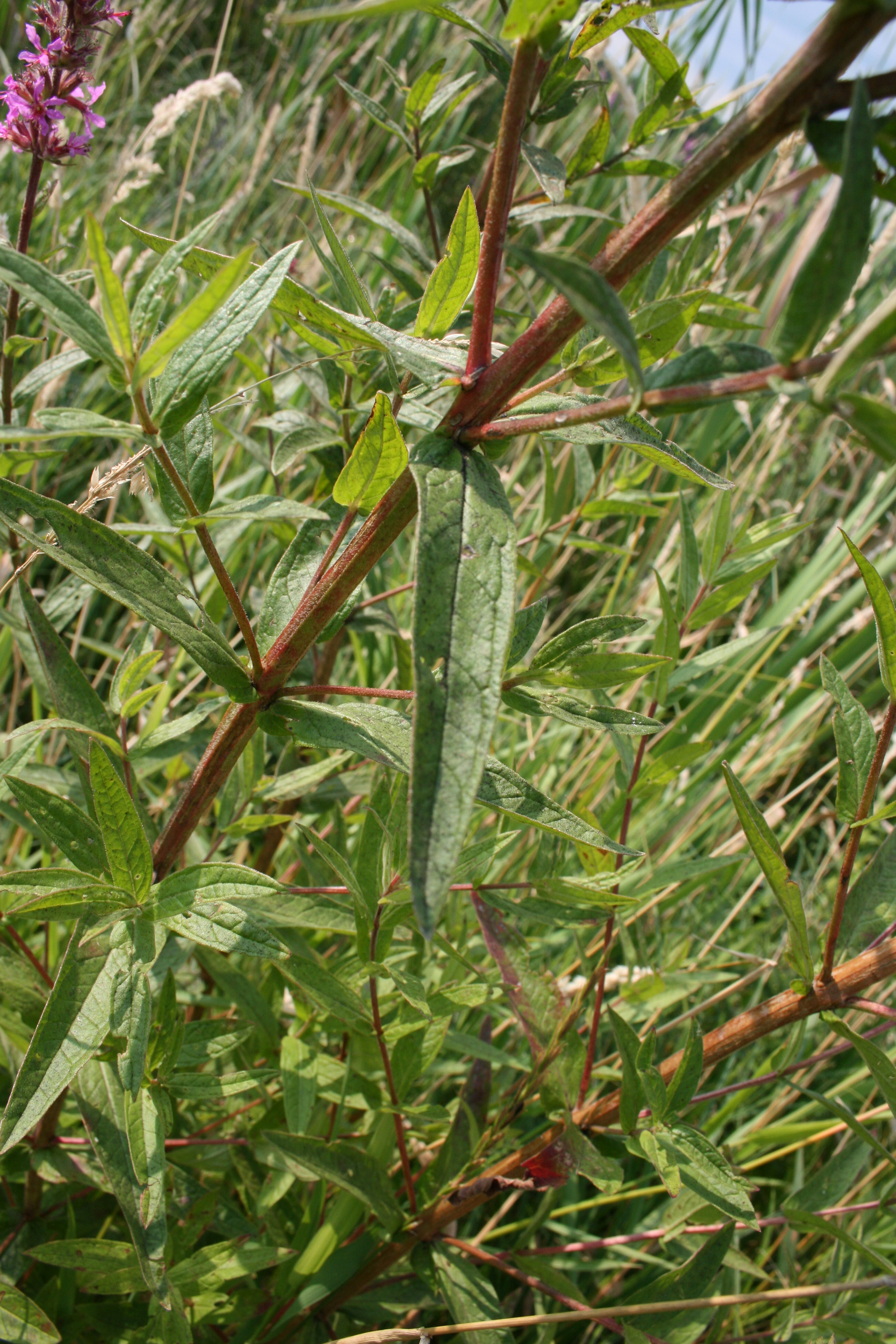
- Stiff, typically square-shaped.
- Can have up to six sides, often branching.
Leaves
- Opposite or whorled.
- Lance-shaped with smooth edges
- Stalkless.
- Can be downy.
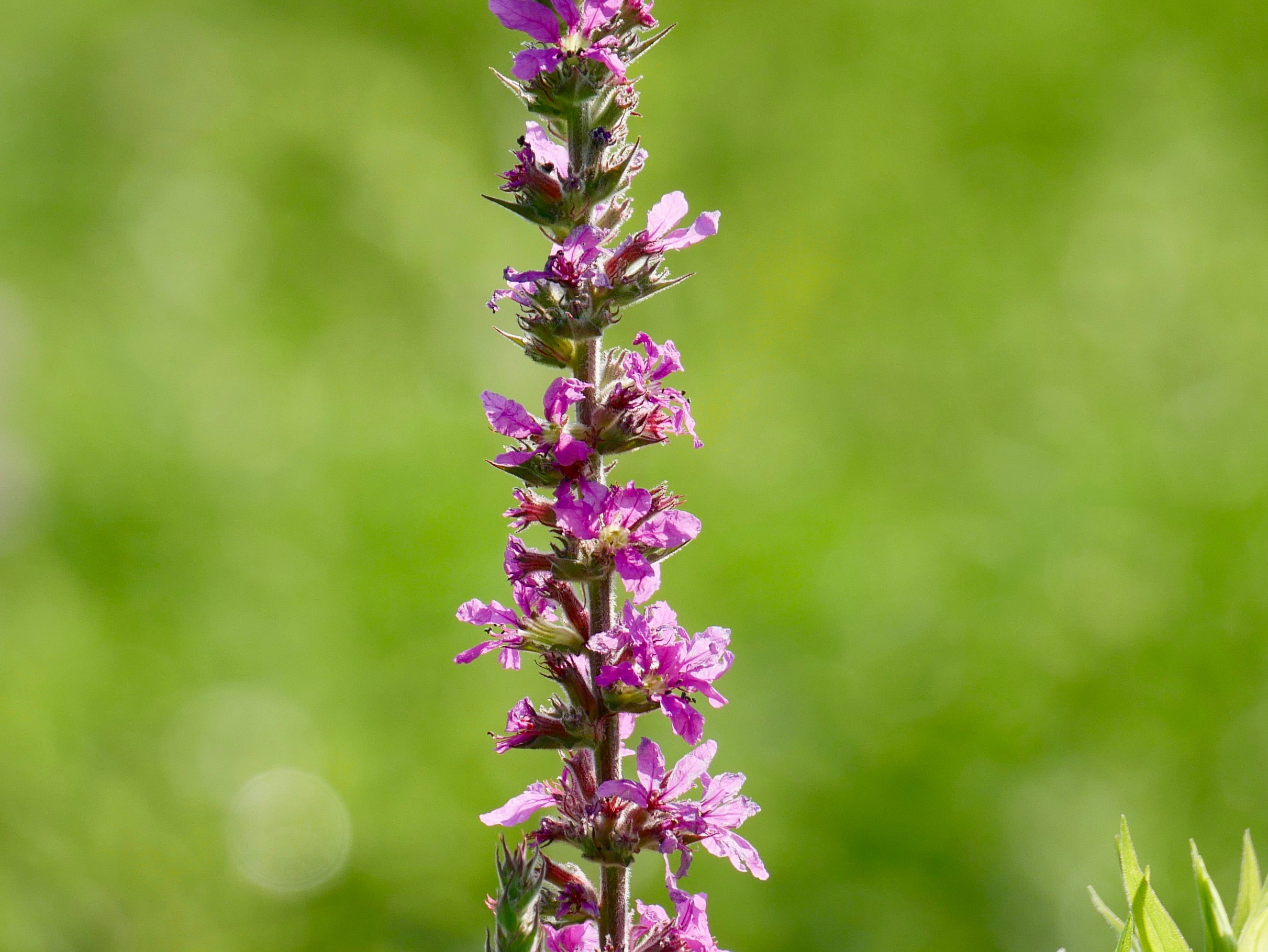
Flowers
- Purple-pink flowers bloom in tall spikes for most of the summer months.
- Multiple rings of flowers bloom at once from the bottom of the spike to the top.
- Flowers typically have six petals.
Seeds
- Tiny, with up to 300,000 seeds produced per stem each year.
- Seeds are viable for up to 20 years.
Roots
- Large, woody taproot with rapidly extending, fibrous rhizomes.
Reviewed in 2019