

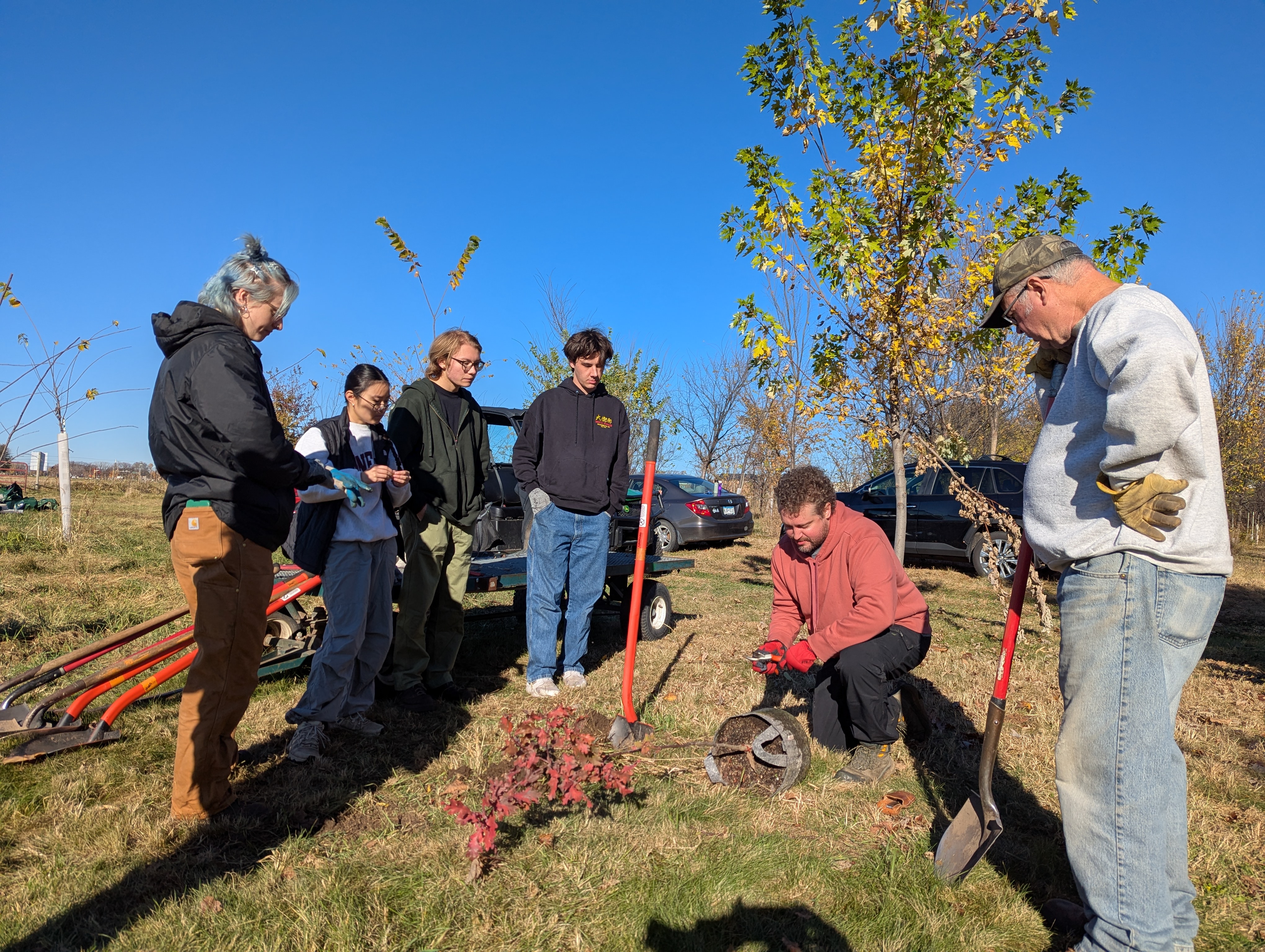
Ralph Waldo Emerson once wrote, “The creation of a thousand forests is in one acorn.” For those of us thinking about the future of Minnesota’s forests, that idea feels especially fitting. A single acorn, seedling, boulevard tree, or woodland planting can hold clues to help us plan a resilient ecosystem.
That is why urban trees matter to woodland stewardship. As Minnesota’s climate changes, woodland stewards are asking hard questions about which trees will survive, thrive and support resilient forests in the future. One way to answer those questions is to watch how native and near-native trees are already performing across the state, not only in woodlands, but also in yards, boulevards, parks and communities.
Several years ago, Extension launched the Climate-Ready Woodlands program, which includes native and near-native trees that woodland stewards can experiment with as they adapt to a changing climate. Quickly, it became clear we needed more information about how near-native trees from a little farther south might survive and adapt in neighboring, but new, ecoregions.
We launched two participatory science projects to help answer that question. Early project findings revealed something important: most of the near-native trees planted in Minnesota are growing in urban areas as yard or community trees.
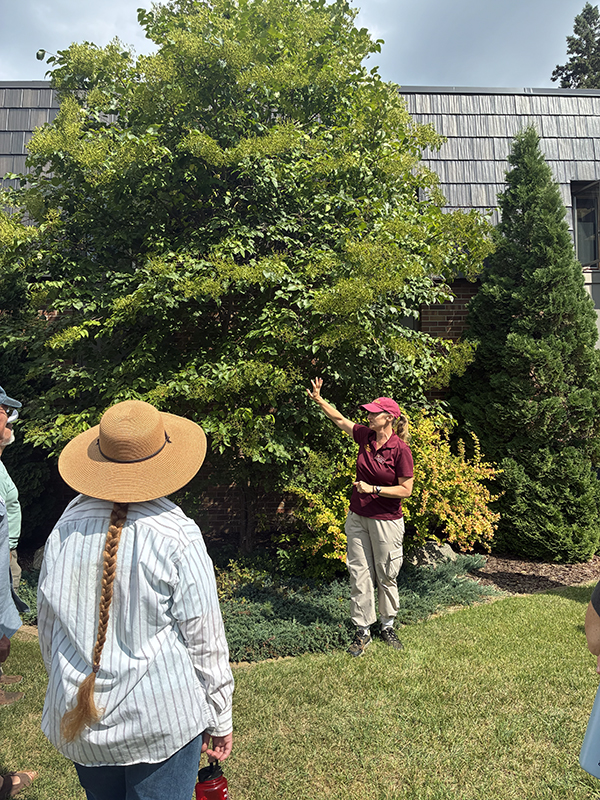
That realization led to a collaborative project between the University of Minnesota Urban Forestry Outreach and Research Lab and Extension Forestry to track urban near-native trees and learn as much as we can. These trees may be growing along streets or in backyards, but what we learn from them can help inform decisions about future forests.
So when folks ask, “Is that Climate-Ready Trees workshop for me? I own woodlands, not boulevard trees.” The answer is yes! Forests don’t follow property lines or municipal boundaries. Stewarding trees across a continuum of urban to rural forests supports resilience across all of Minnesota’s forested landscapes.
Stewardship, like trees, comes in many shapes and forms. I’m grateful for the city forestry staff who water the near-native eastern redbud tree on the boulevard, the suburban homeowner who protects their sycamore from rabbits, and the woodland owner who shelters a swamp white oak in a tree tube in the woods.
I’m also very grateful for the stewardship opportunities made possible by the Legislative-Citizen Commission on Minnesota Resources through the Minnesota Environment and Natural Resources Trust Fund. Their support has allowed us to launch our Trialing Climate-Ready Woodland Trees in Urban Areas project.
Every tree we plant, protect and learn from gives us a little more information about what Minnesota’s future forests may need. Whether that tree is growing along a city street, in a backyard, or deep in the woods, it has something to teach us.
And when many stewards are learning together, those lessons can grow into something much larger — healthier, more resilient trees, forests and communities across Minnesota.
Learn more
Creating climate-ready woodlands: You can foster a healthy, resilient woodland by adding species predicted to adapt well to climate change.
Permission is granted to news media to republish our news articles with credit to University of Minnesota Extension. Images also may be republished. Check for specific photographer credits or limited use restrictions in the photo title.